What Causes It Around Here
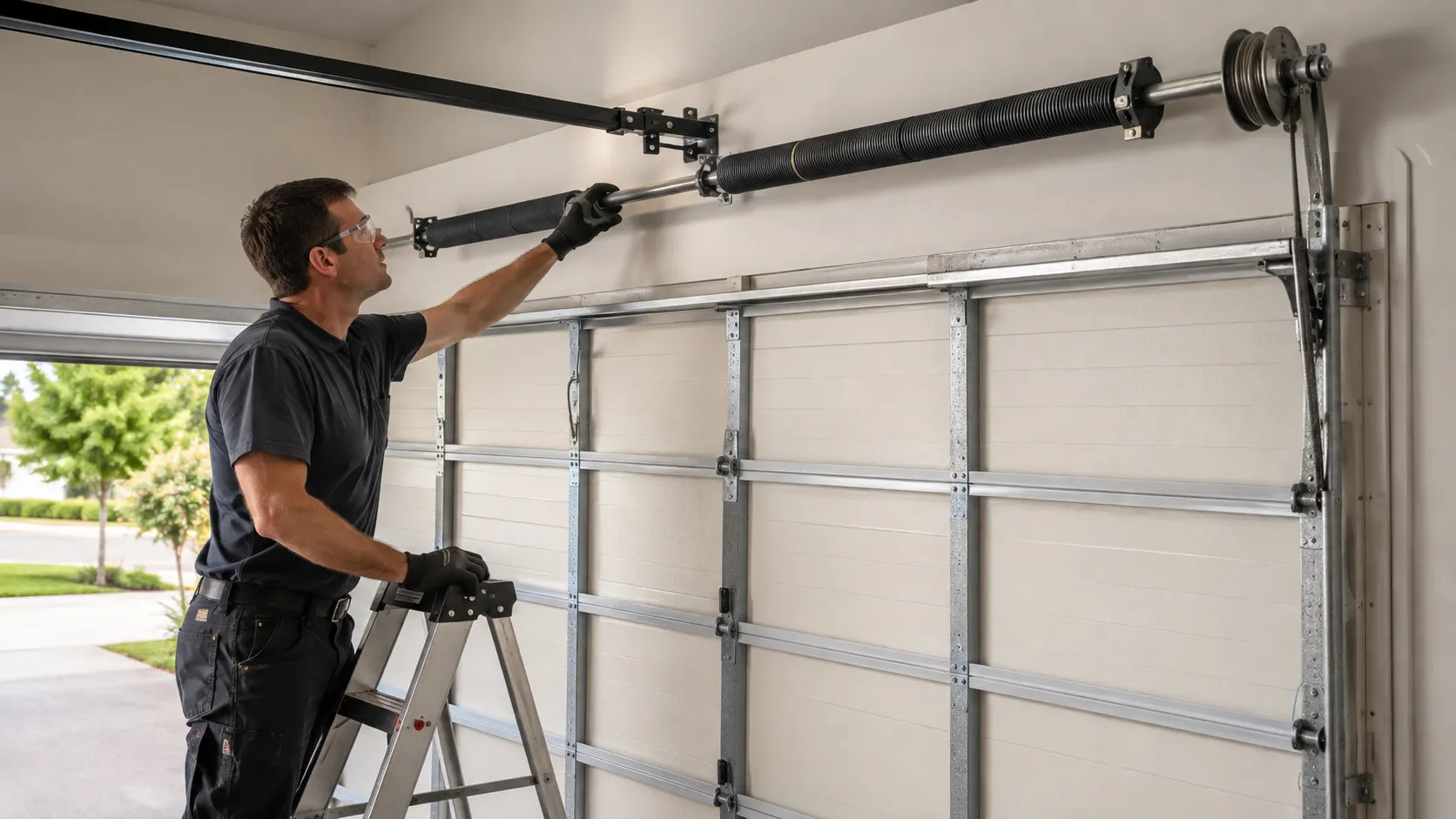
Most houses on this side of Springfield went up between 1957 and 2002, with a lot of that stock clustering in the 1960s and 70s across the older neighborhoods. That matters because a door installed in 1971 has been through fifty-plus winters of a cold, moderate climate that swings the steel from freezing overnight to warm sun by afternoon. Torsion springs lose tension gradually with every temperature cycle and every open-close, and a spring that was rated for a certain number of cycles when Nixon was president has usually spent that budget years ago. Original galvanized springs on these older homes also tend to be the smaller-wire type builders used before higher-cycle springs became standard, so they fatigue and snap sooner than what goes in new construction today. Cold makes the lubricant in old rollers and hinges stiffen up too, which is why a lot of these calls come in on the first hard-freeze morning of the season - the door was already weak, and the cold just found it. Openers from that same building era are also reaching the end of their gear-and-sprocket life, which is a separate failure from the spring but often gets blamed on it.
Booking a Visit
We work Springfield itself along with the nearby areas - Rochester, Riverton, Sherman, Chatham, Athens, Williamsville, Buffalo, Pawnee, New Berlin, Pleasant Plains, Auburn, Elkhart, Thayer, and Petersburg - plus the closer-in spots like Old Aristocracy Hill, Downtown, the Lake Shore Improvement area, and New City. Tell us what the door is doing - won't open, opens crooked, makes a specific noise - and whether it's stuck open or stuck closed, since that changes what we bring on the truck. If your opener is original to a 1960s or 70s build, mention that too; it helps us guess at the spring size and gear type before we're standing in your driveway. Book a visit.