Where It Sits
Springfield Lake Shore Improvement sits about 6 miles SSE of downtown Springfield, closer in than several of the outlying towns we cover but far enough out that it has its own housing character rather than the newer builds you'd find right around downtown, which is about a mile north of the center itself. Distance matters for scheduling more than anything else - a call here doesn't compete with the same traffic patterns as a job in Rochester five miles out or Riverton seven miles out, and it's a shorter run than jobs toward Chatham or Athens further southeast and south. We mention this because it affects how fast a truck can get to you, not because the neighborhood has any landmark worth pointing to - we don't have specific streets or cross-points for this area, so we're not going to invent any. What we can say is that the location keeps it within the same climate band as the rest of the metro: cold winters, moderate rather than extreme, which is relevant to door material and weatherstripping choices covered below.
The Short Version
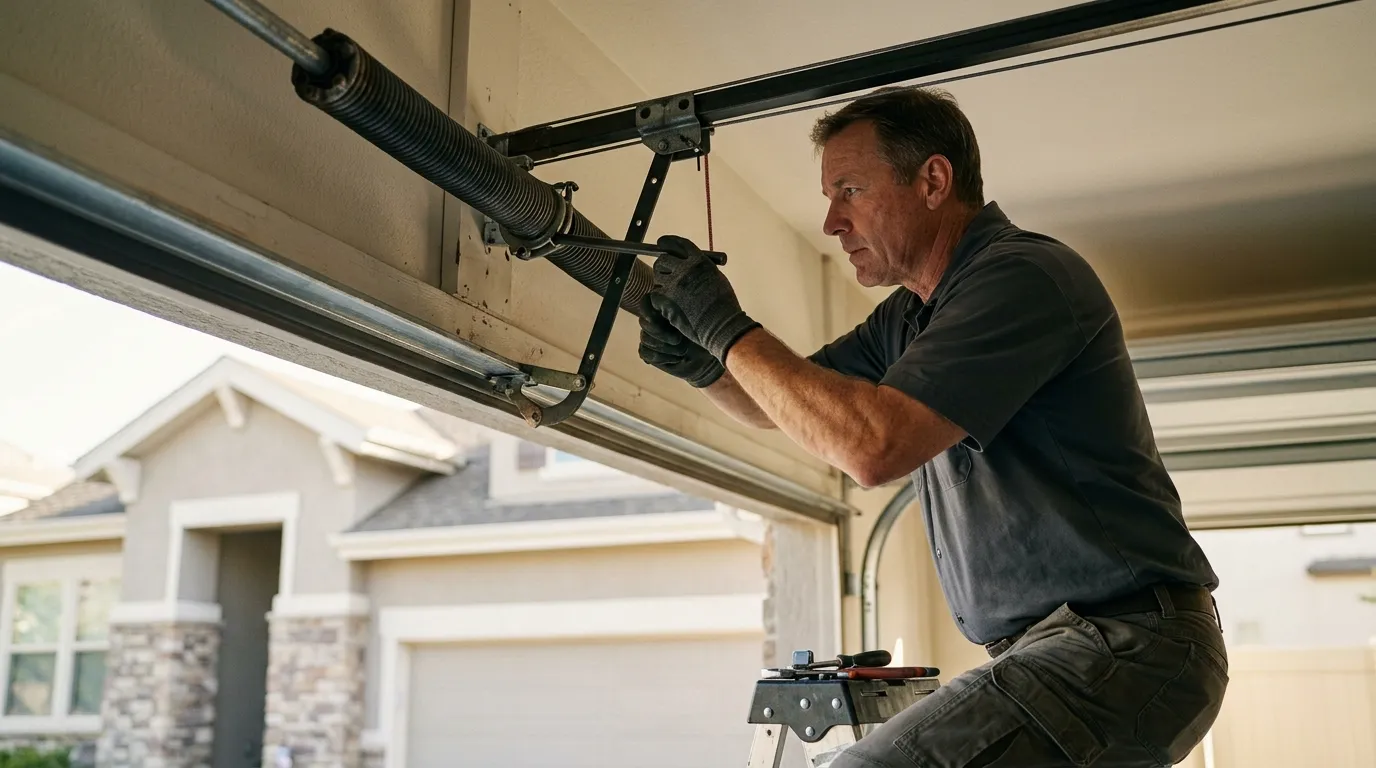
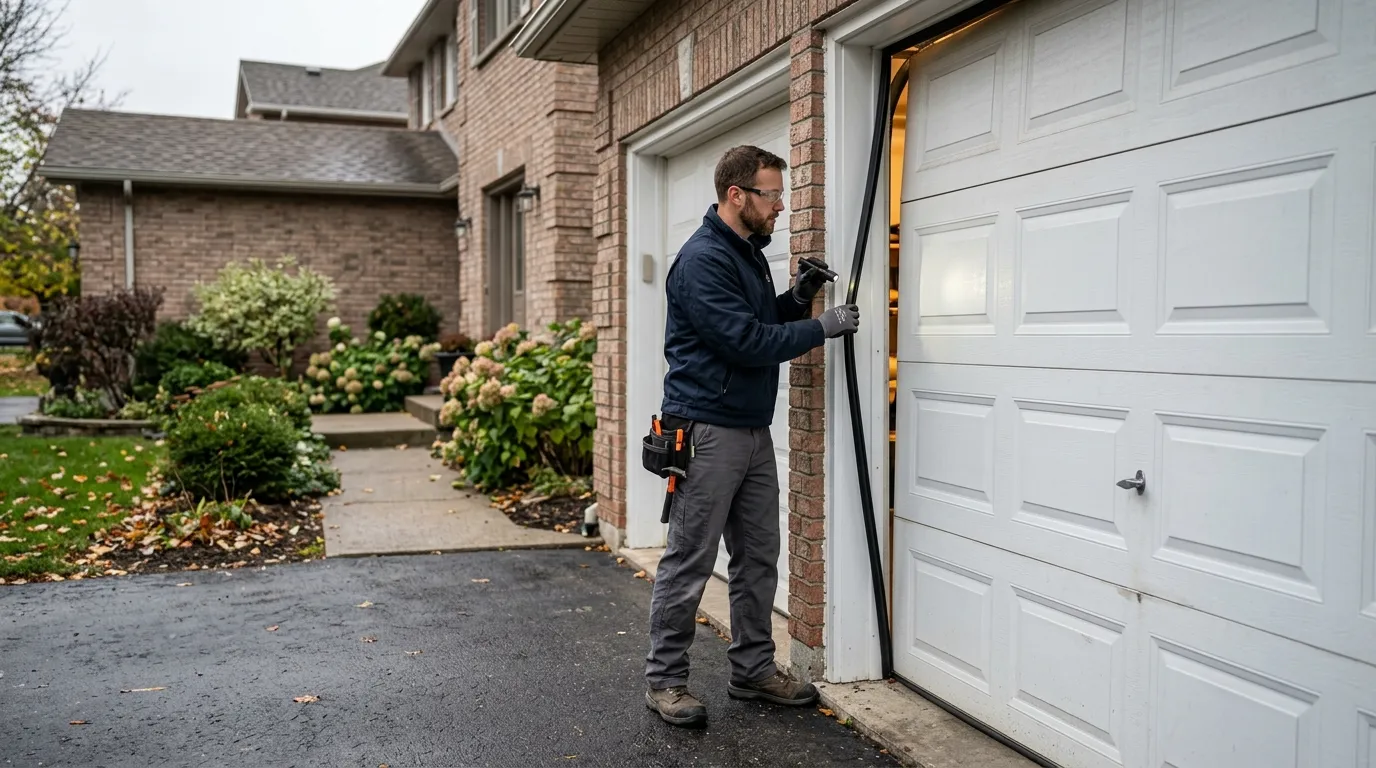
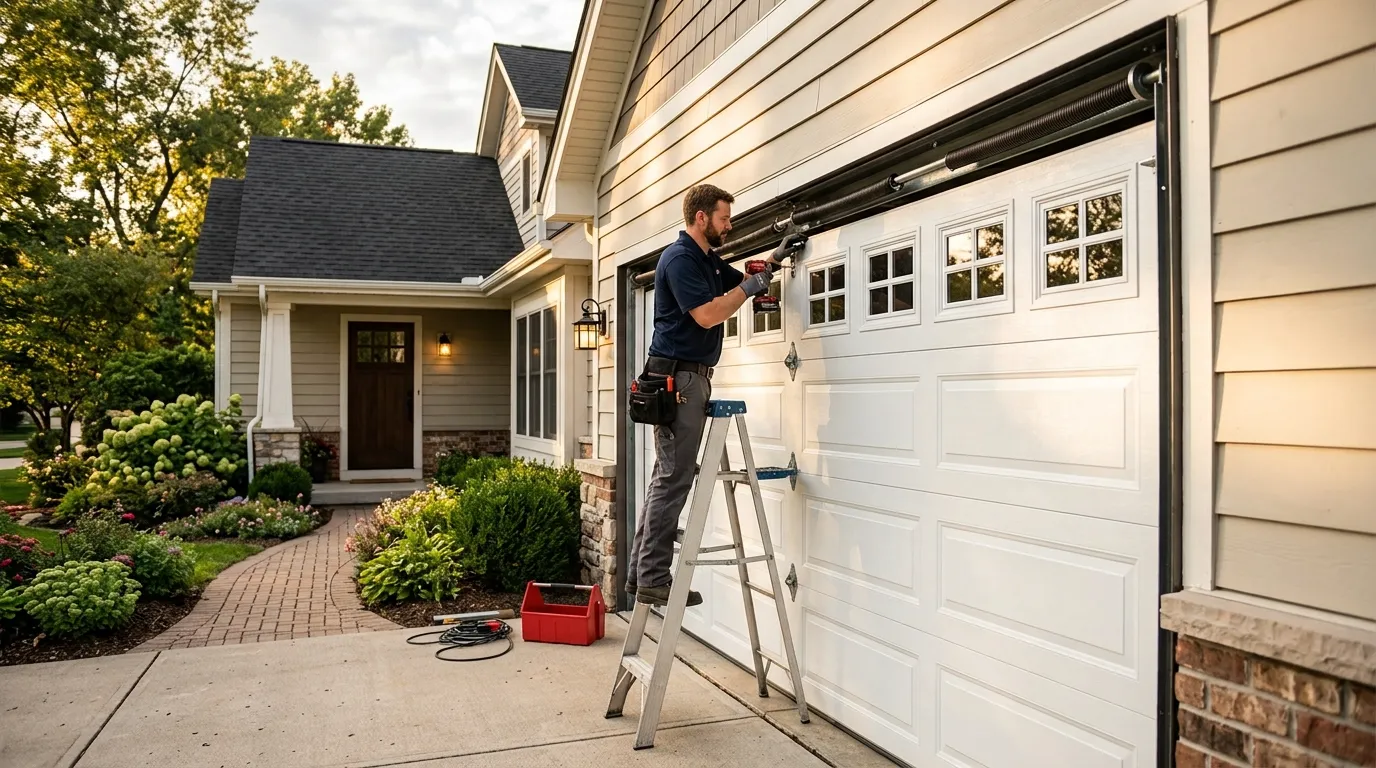
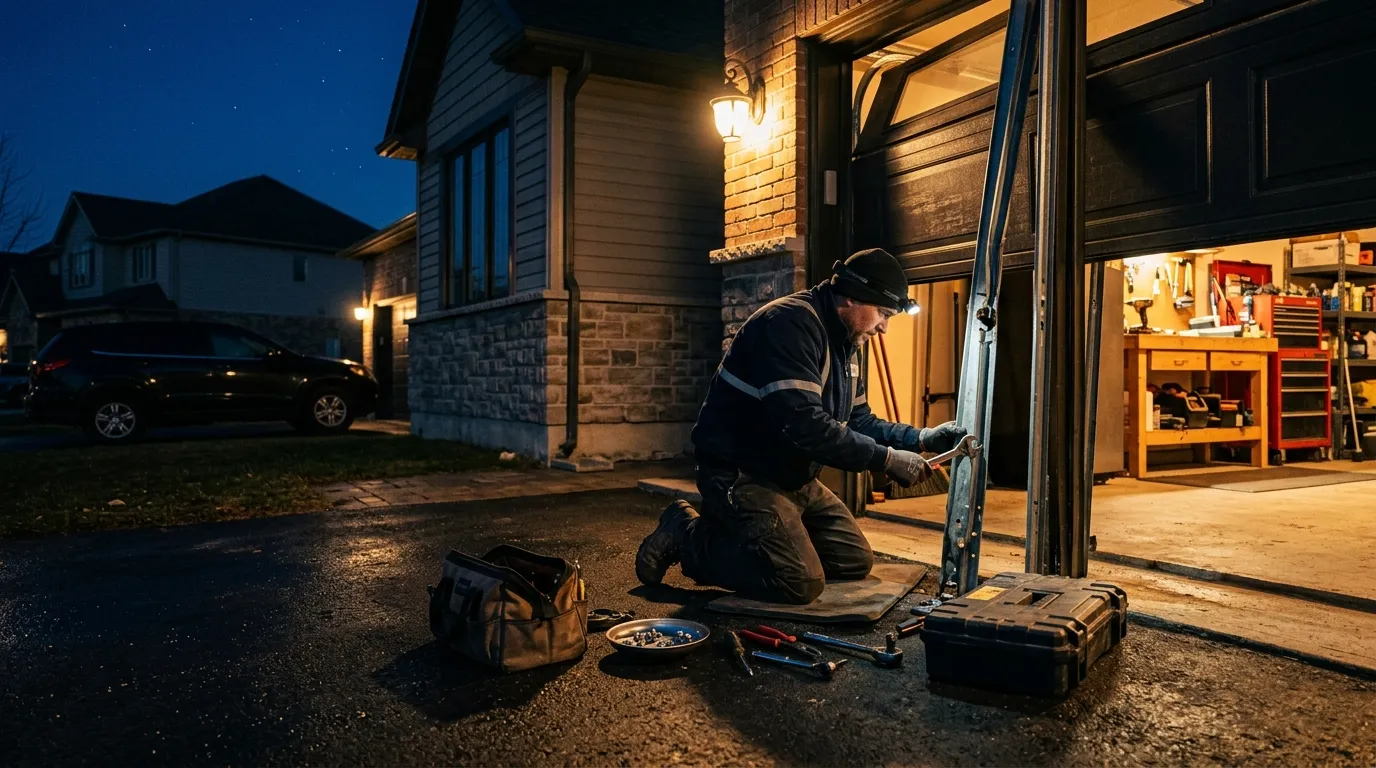
Springfield sits in a cold-moderate climate band, which means garage doors here deal with freeze-thaw cycles more than brutal sustained cold. That's enough to stiffen grease in old rollers and crack weatherstripping that's gone dry, but it's not the kind of cold that demands a heavy insulated door on every house. For a neighborhood built mostly in the 1960s-70s window, the honest recommendation is usually a hardware inspection before a full replacement - springs, cables, and rollers first, because on doors this age those are almost always the actual problem, not the panel. Median household income across the service area sits at $79,008, which is enough to support a proper repair rather than a patch job, but we won't tell you to replace a door that's still sound just because it's old. If the panel's straight and the track isn't bent, fixing the moving parts is usually the right call. We don't have address-level detail for this neighborhood beyond its distance and direction from the center, so we're keeping this page to what the housing era and climate actually tell us.