What a Service Call Actually Covers in Springfield
A look at what a Springfield Garage Door Pros service call covers, tuned to the 1957-2002 housing stock and cold winters common across Springfield, IL.
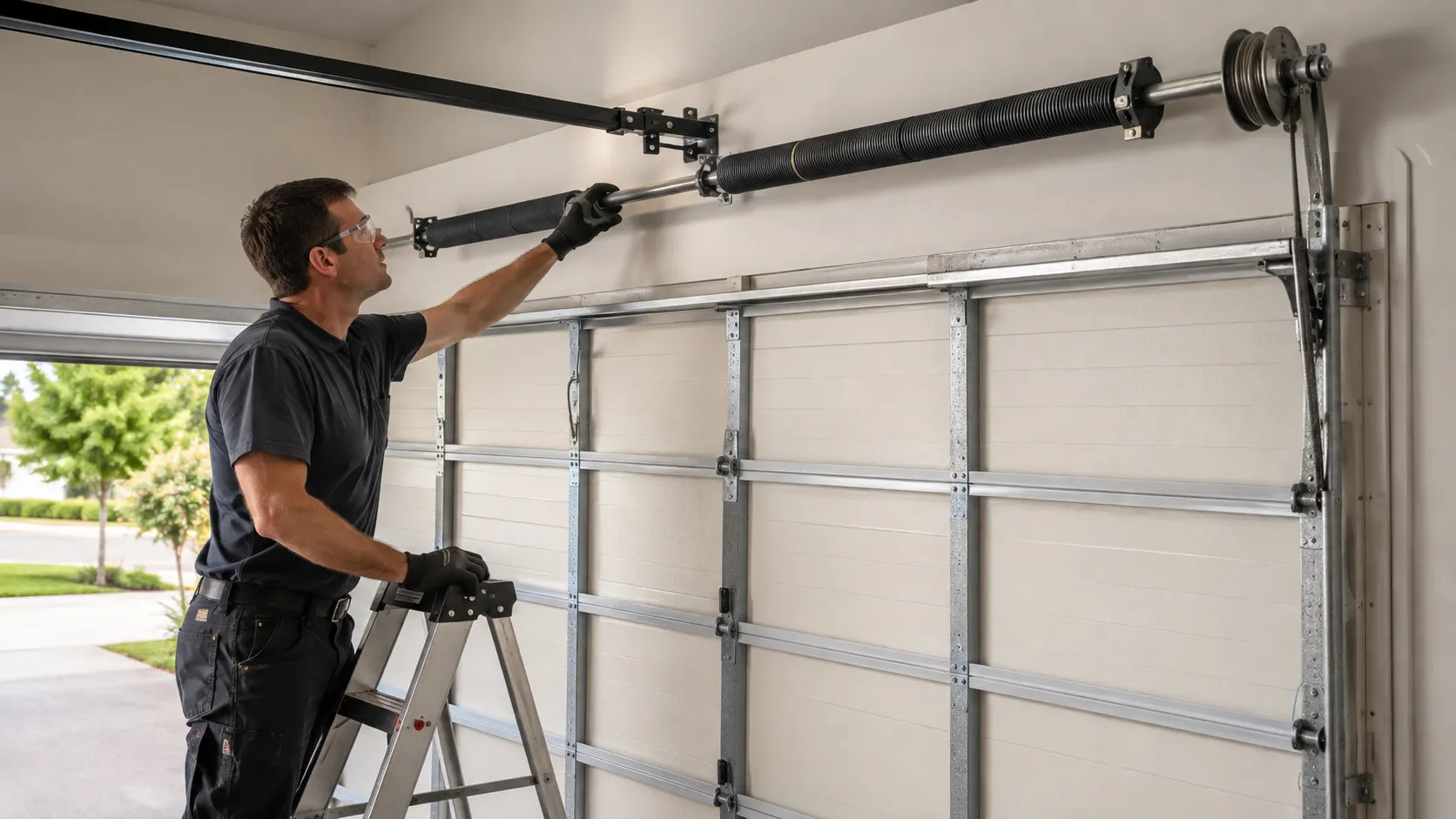
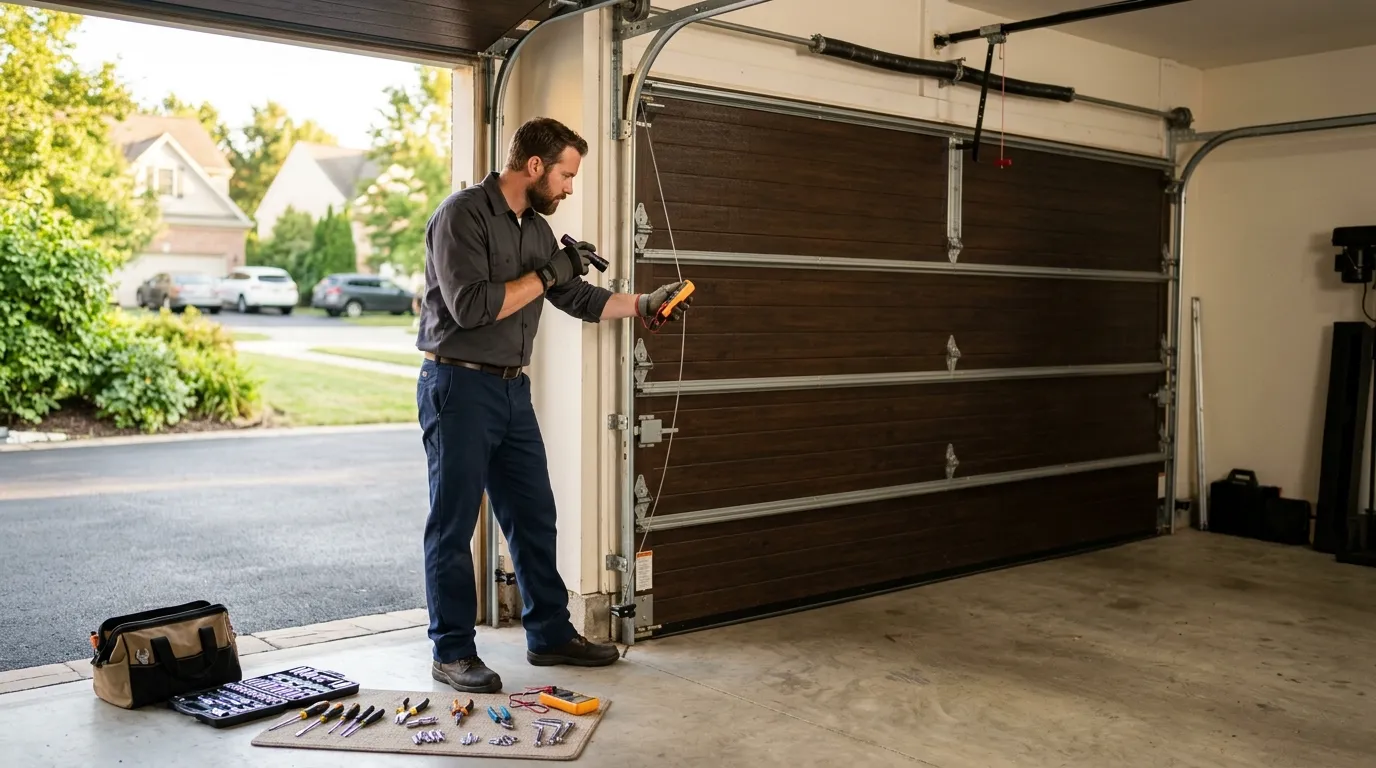
Before you call anyone, pull the release handle and move the door by hand. If it's balanced, it should stay put at waist height and not slam down or fly up. A lot of the houses built between 1957 and 2002 around here - which is most of what's on the ground across the 14 named areas we work in - still have their original torsion springs or a first replacement from decades back. Springs weaken slowly, so an unbalanced door is often the first sign, not a sudden failure. Check the rollers too. If the house is on the older end of that range, say built in the 60s or 70s, you're likely looking at steel rollers that have gone out of round, which shows up as a grinding sound more than a stuck door. Listen for the opener motor running longer than it used to before the door actually moves - that's usually the gears inside the unit, not the door itself. None of this fixes anything, but it tells you whether you're dealing with a spring, a track, or an opener before anyone shows up, and it means the call covers the right thing on the first visit instead of a second trip.
The Situation
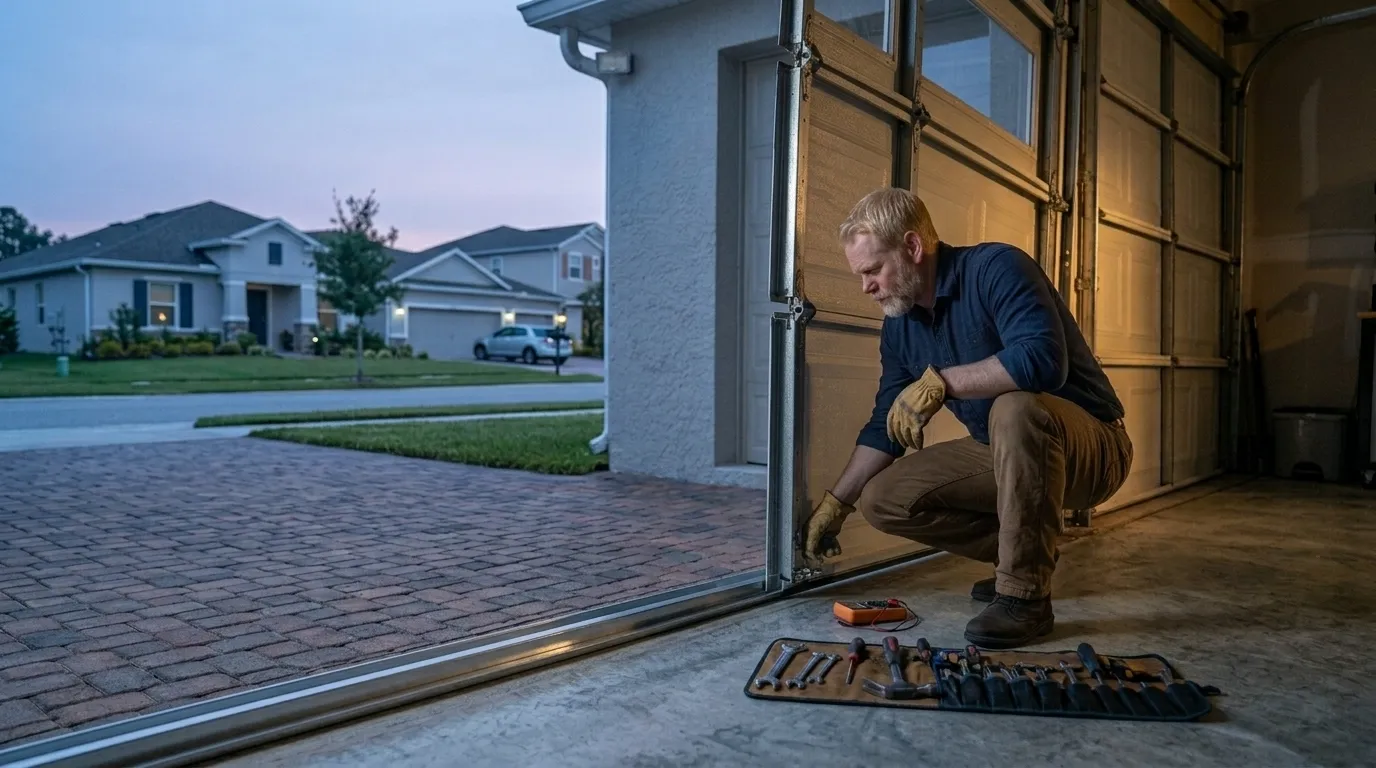
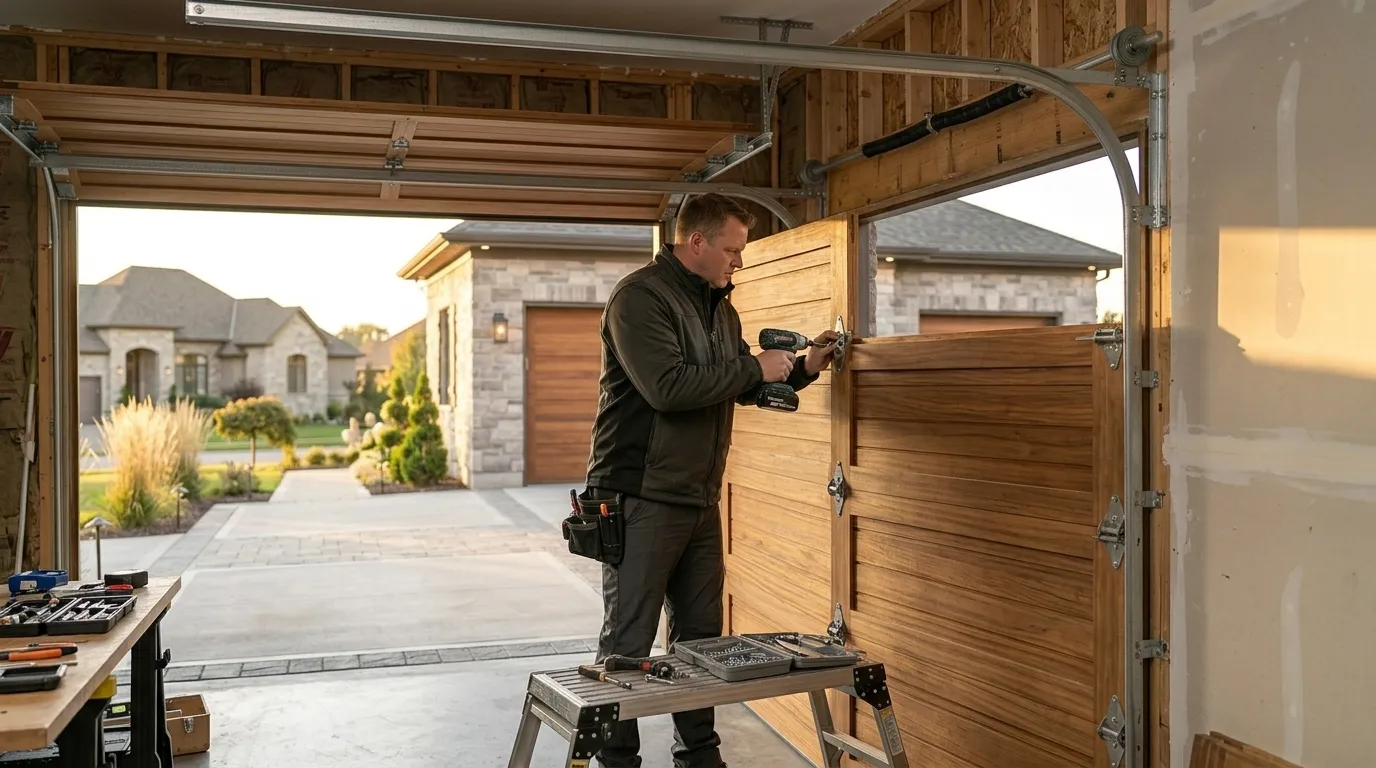
A service call here starts with the door's age and what era of hardware came with the house. With housing across the service area running 1957 to 2002 and a median build year around 1973, we see a real mix - original one-piece doors on older side-mounted torsion setups next to newer sectional doors with center-mount openers from remodels or replacements done in the 90s and 2000s. The call covers a full check of the spring (or springs, for double doors), the cables, the track alignment, the rollers, the hinges between panels, and the opener's force and travel settings. On the older stock, especially anything built before the mid-70s, the hardware often doesn't match what's sold new, so a repair sometimes means adapting a part rather than a straight swap. That's the one limitation worth saying up front: a 50-year-old door frame sometimes needs a custom bracket or a part we have to source, not something off the truck, and that can add a day.
When Waiting Is Fine
Not everything needs same-day attention. A slightly noisy roller, a door that's a little slow to close, or an opener light that's out - none of that is urgent, and pushing a repair off a few weeks doesn't usually turn into a bigger job. Where it matters more here than in a warmer climate is anything touching the spring or the cable under tension, because a cold-weather cycle of contraction and expansion (this area sits in a moderate cold band) speeds up wear on metal that's already fatigued. If the door still opens and closes evenly and the spring isn't visibly gapped or stretched, it's fine to wait for a scheduled call rather than treat it as an emergency. With median household income around $79,000 across roughly 17,190 households in the area, most owners we see are budgeting a repair rather than treating it as a crisis, and that's a reasonable way to handle it.
What the Weather Here Does to It
This area sits in a moderate cold climate band, which means real winter temperature swings but not the deep sustained cold of the upper Midwest. That matters for garage doors in a specific way: steel contracts in cold air, which tightens tolerances on tracks and can turn a slightly bent rail - something that wouldn't matter in summer - into a door that binds or jumps the roller in January. Torsion springs also lose a bit of tension as steel cools, so a door that was balanced in August can feel heavier in February even with nothing broken. On the roughly 11,632 owner-occupied houses across this service area, most with detached garages built in that 1957-2002 window, we see this show up most on unheated garages with older, unlubricated hardware. A service call in cold months usually includes checking track alignment and re-lubricating hinges and rollers, since that's the part most affected by the swing, not just the spring.
How it works
From “it’s stuck” to “it’s fixed”
01
Tell us what’s wrong
Describe the symptom - won’t open, loud bang, opener runs but the door won’t move.
02
On-site diagnosis
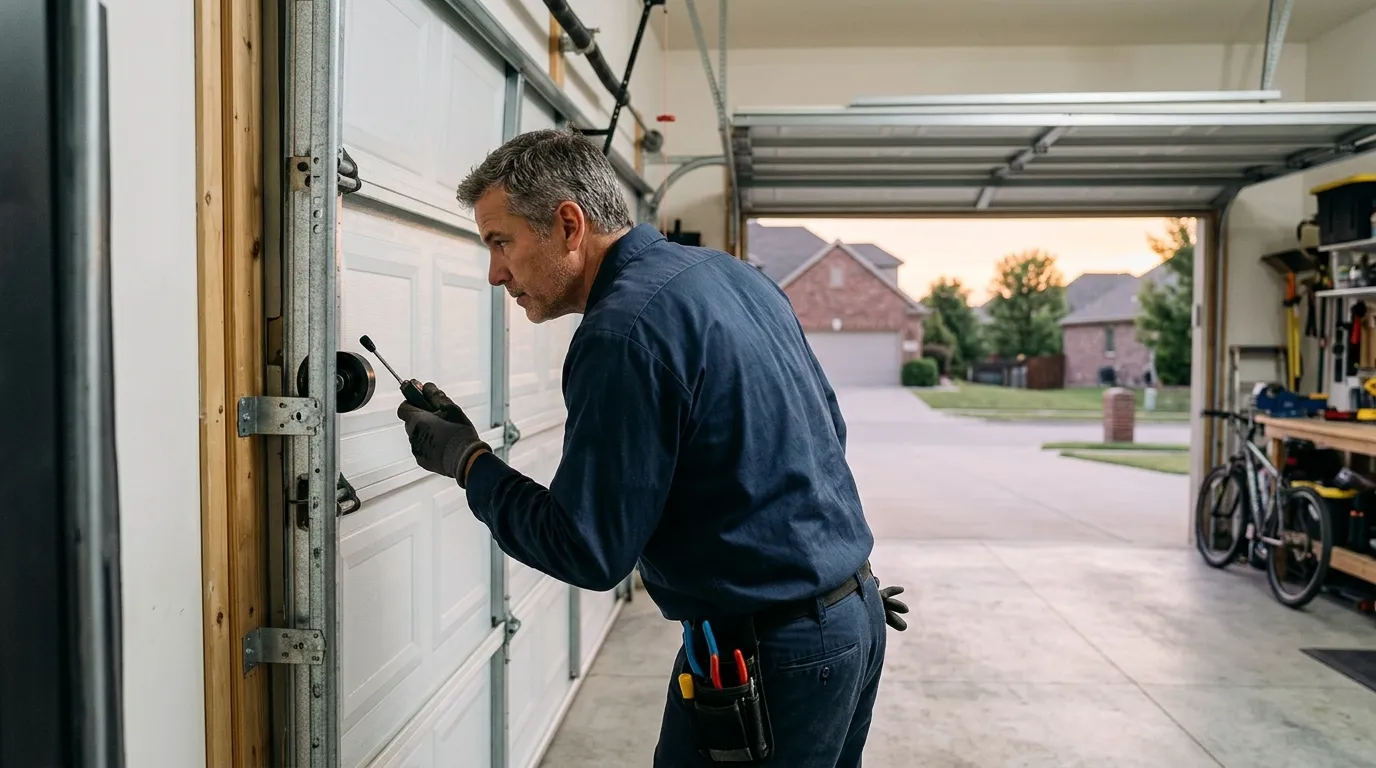
A technician tests the door under power and by hand and finds what actually failed.
03
Clear, up-front plan
You get the fix that’s needed and what drives the cost - before any work starts.
04
Repaired & tested
The repair is done, the door is set true and tested, and the work area left clean.
Serving Springfield, IL - tell us what your door’s doing and we’ll take it from there.
We don't have a flat number to quote here without seeing the door, since it depends on whether it's a spring, opener, or track issue. What we can say is the visit includes a full check of the door's balance, cables, rollers, and opener settings, not just the one complaint you called about.
My door is from the 1970s - can you even get parts?
Often yes, but not always off the truck. A lot of the housing stock here dates to the 1957-2002 range, and older torsion hardware sometimes needs an adapted bracket or a sourced part rather than a direct replacement, which can add a day to the job.
Does cold weather actually damage garage doors here?
It doesn't damage them outright, but Springfield sits in a moderate cold band, and the temperature swings tighten track tolerances and reduce spring tension. That's why doors that felt fine in summer sometimes bind or feel heavier in winter without anything actually breaking.
Is a noisy roller an emergency?
No. A noisy or slightly worn roller is safe to schedule rather than treat as urgent, as long as the door still opens and closes evenly. Waiting a few weeks for a scheduled visit doesn't typically make it worse.
Ready to get your garage door sorted?
Tell us what it’s doing and where you are in Springfield - we’ll take it from there.