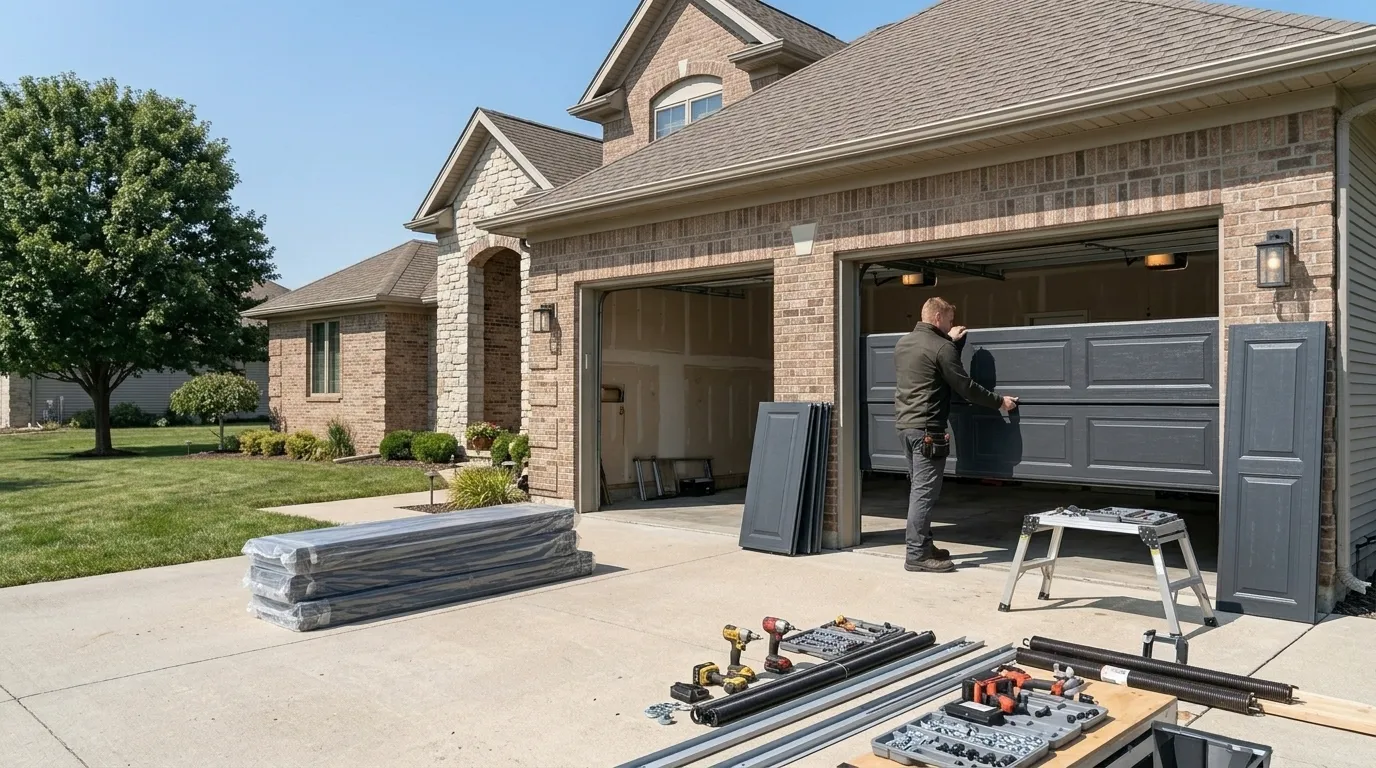
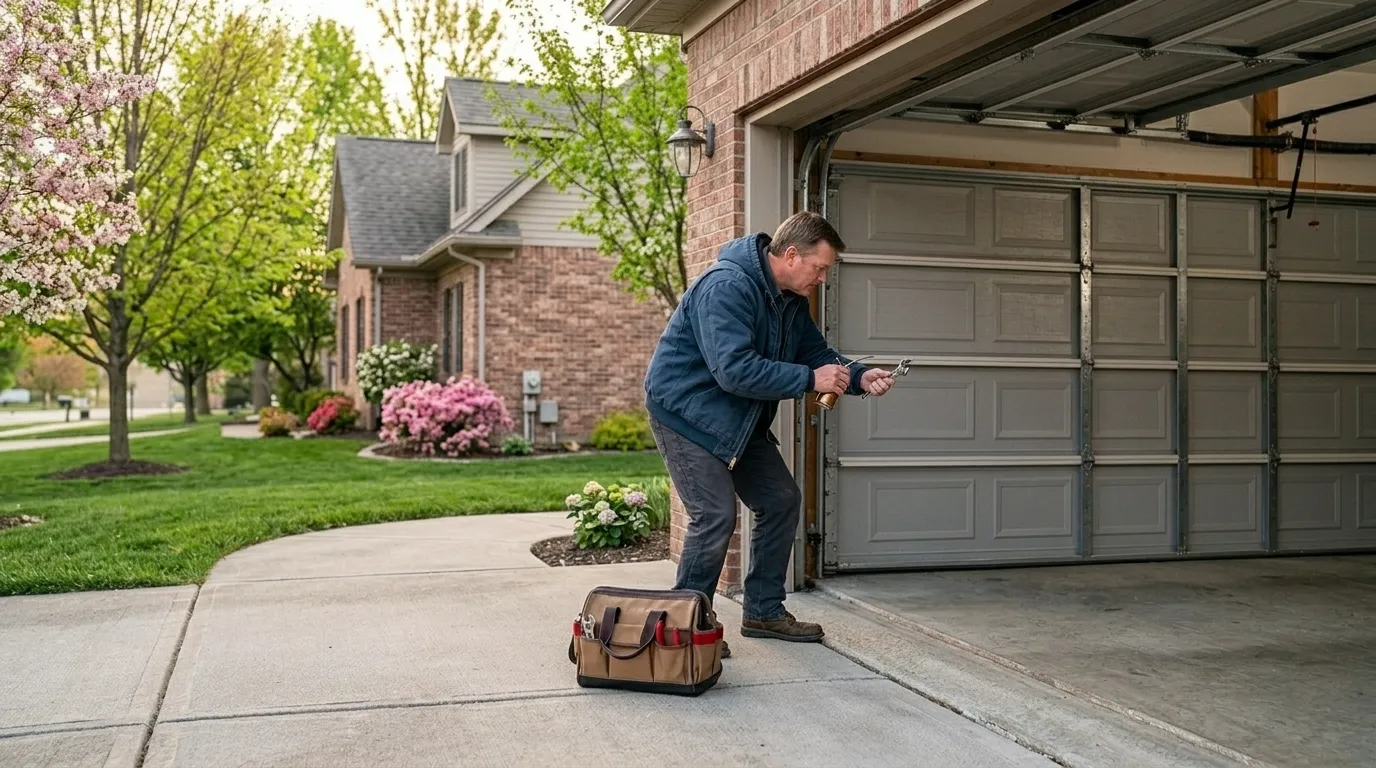
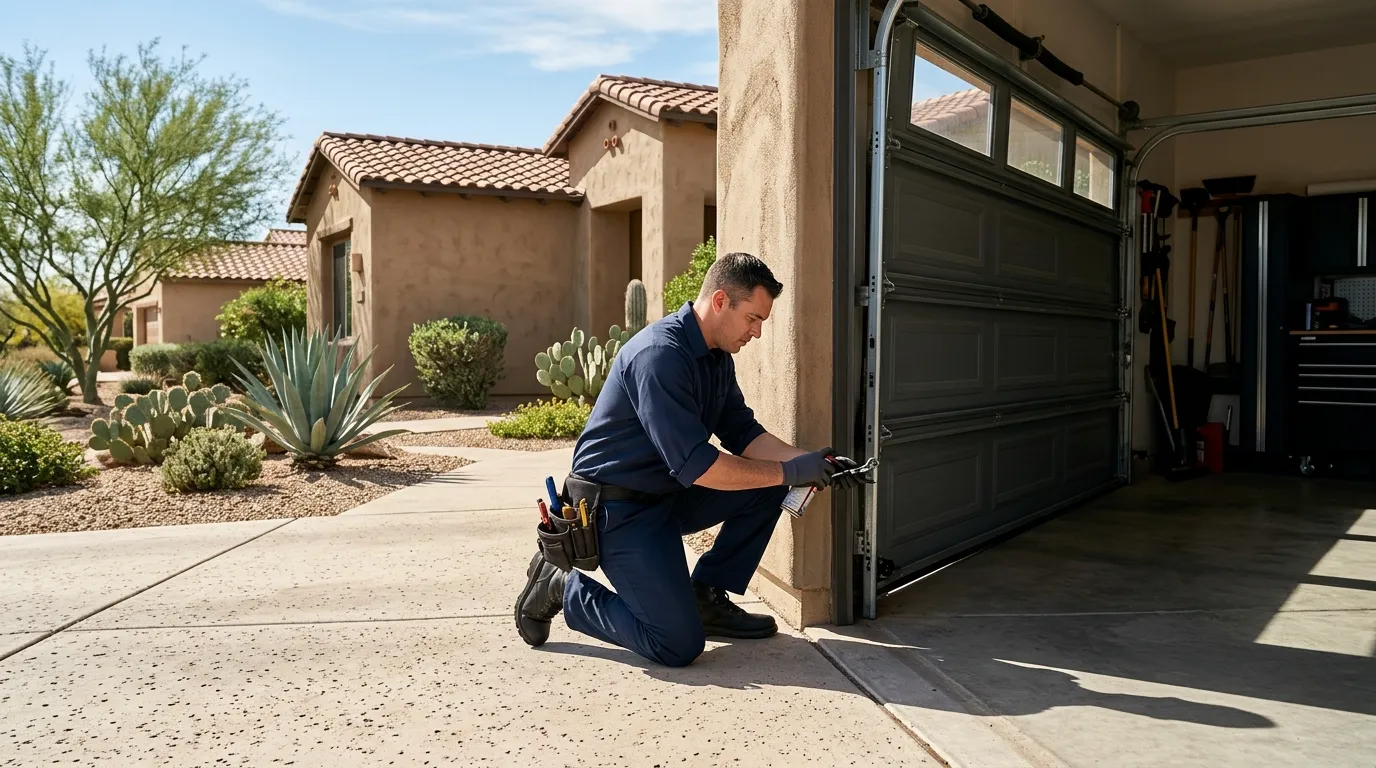
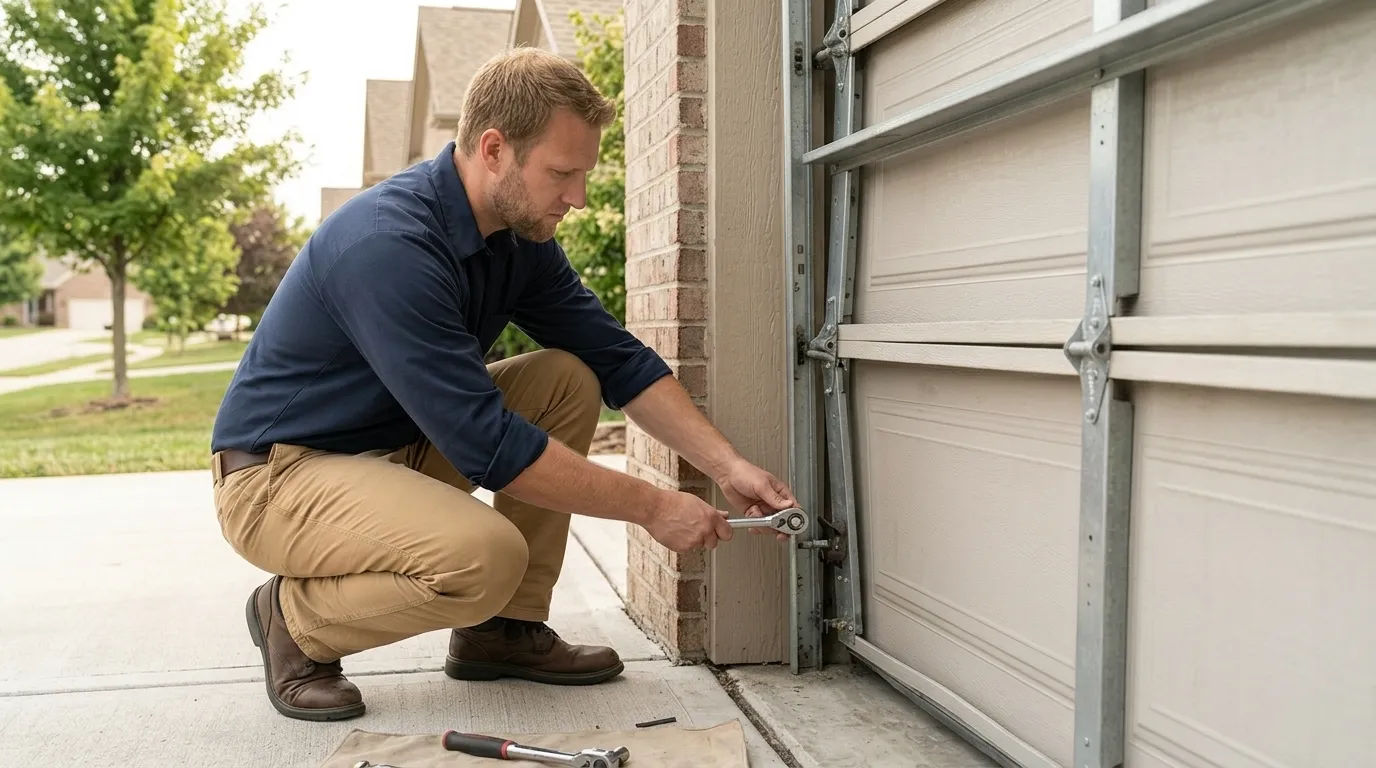
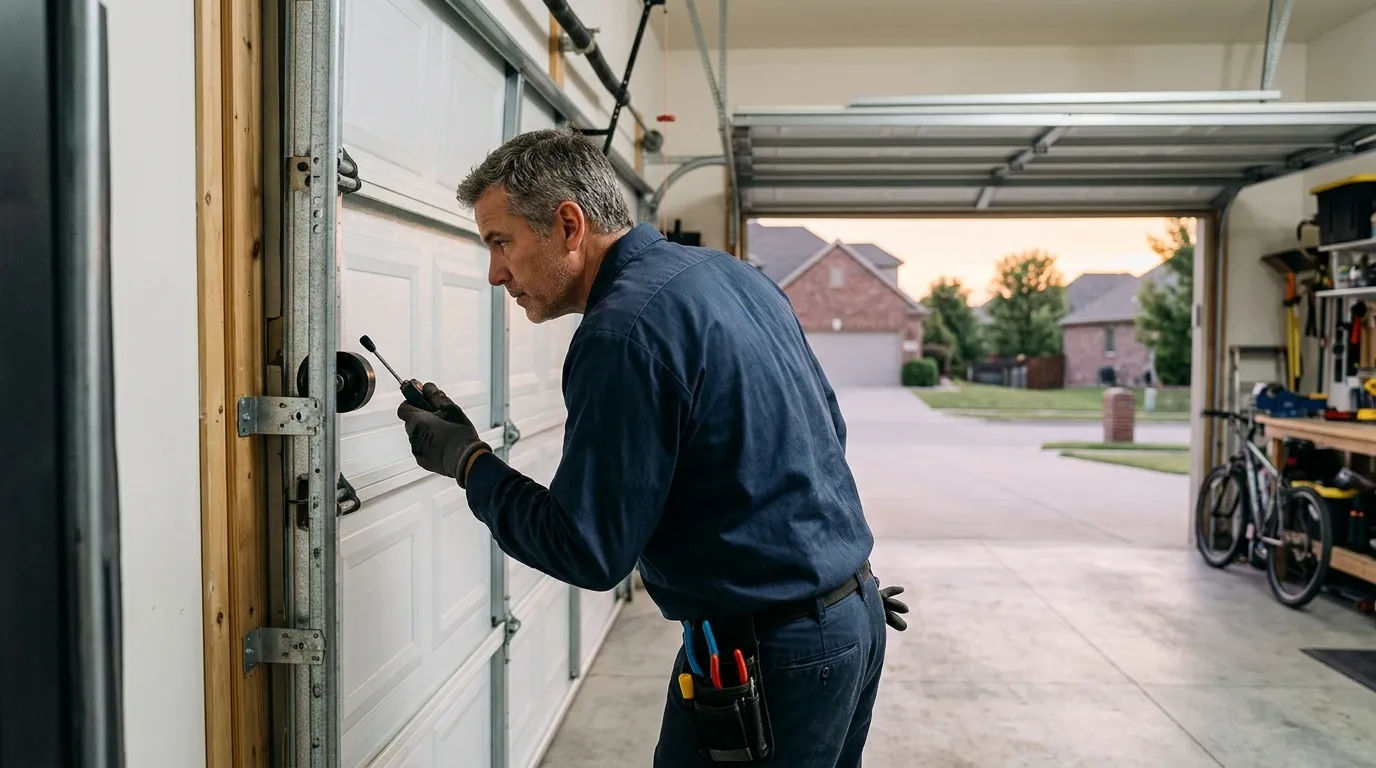
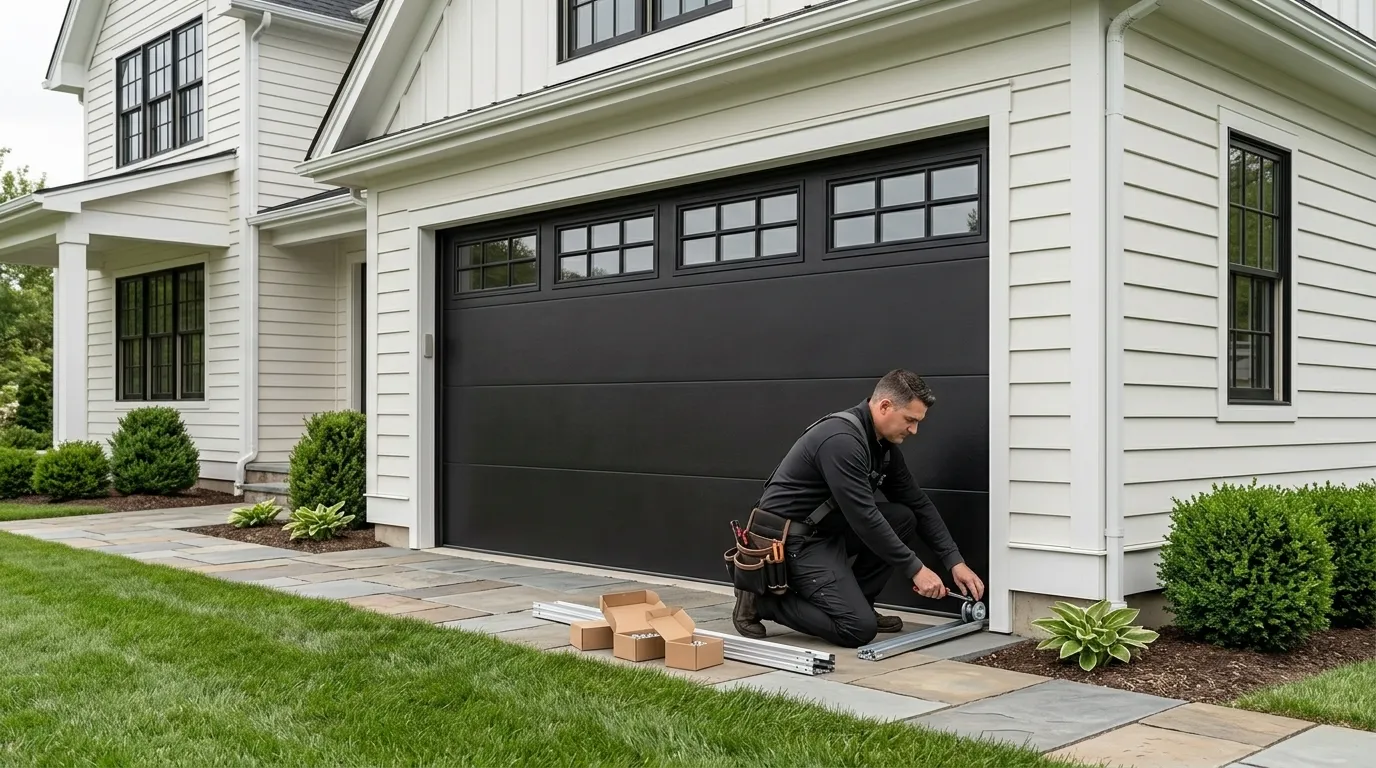
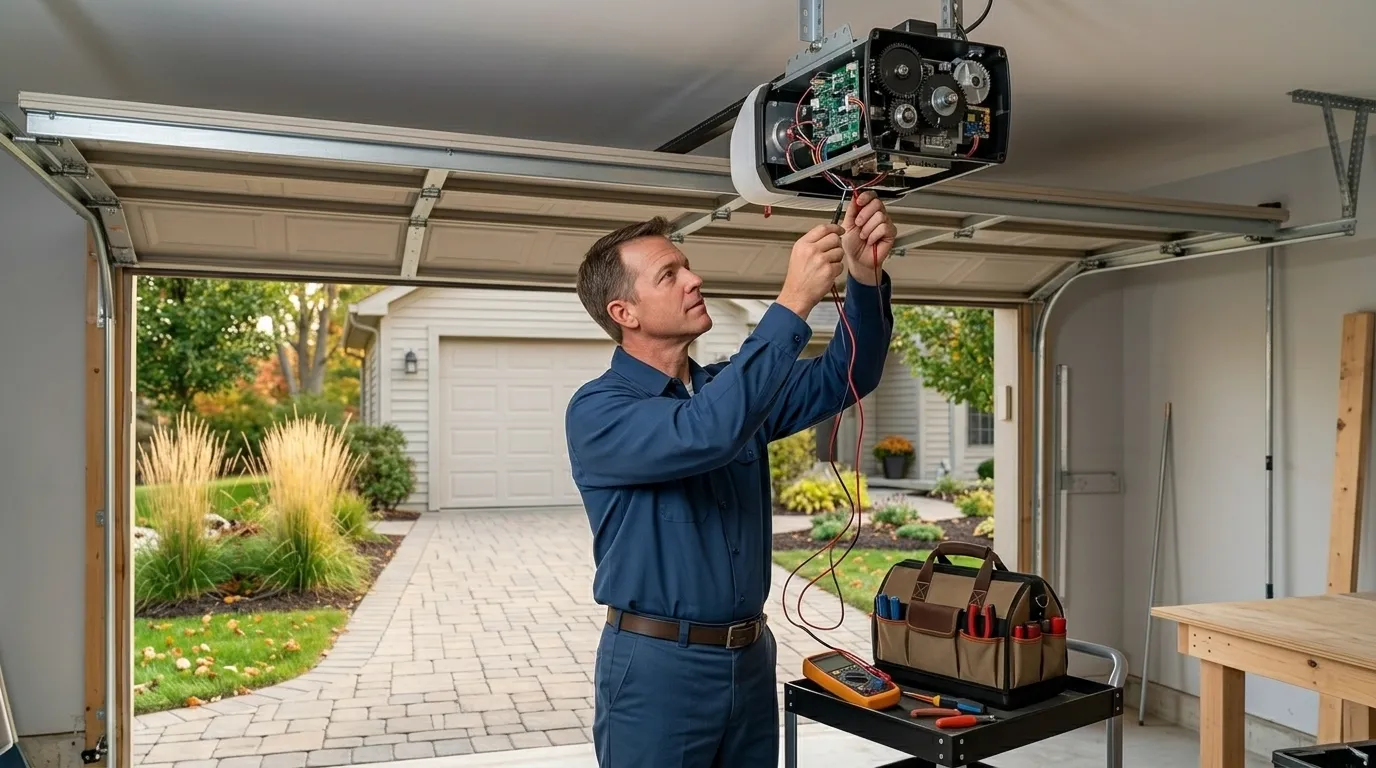
Before you call anyone, look at three things. First, the panels: hairline rust at the bottom seam is normal, but a panel that flexes or has a soft spot when you press on it is a different problem. Second, the spring - if it's the old-style single torsion spring on a door that's been in the house since it was built, you're likely looking at original hardware that's outlasted its rating. Third, the track: pull the door halfway by hand (opener disconnected) and see if it binds. A lot of the houses across this service area went up between 1957 and 2002, with the bulk of that stock from the 1960s and 70s, so a large share of doors out there are on their second or third opener but still riding the original track and spring set from construction. If your house falls in that window, that's the first thing worth checking, not the last.
Write down the size stamped on the spring if you can read it, and note whether the door is one-piece or sectional. That alone tells a technician most of what they need before a truck even shows up.
The Situation
A door built for a 1973-median house wasn't engineered for the openers, insulation packages, or R-value expectations homeowners want now. That's not a knock on the door - it's just a different era of hardware. If you're in Old Aristocracy Hill or Downtown, where some of the oldest stock in the area sits, the original door may predate the opener currently bolted to it by a decade or two, which means the spring counterbalance and the opener's lift capacity were never matched to begin with. That mismatch is what shows up as a door that opens fine by hand but strains or reverses under the motor.
Further out - Rochester, Riverton, Sherman, Chatham - houses trend toward the later end of that 1957-2002 range, so the doors there are more likely mid-life than original. The fix isn't always the same fix. A door with sound panels and a tired spring is a repair. A door with rot, warped track brackets, or a panel that's cracked at the hinge is a replacement conversation, and no amount of spring work changes that math.
When Waiting Is Fine
Not every noise or stiff spot means book a call this week. A door that's slow to close but still seals at the bottom, a roller that squeaks but tracks straight, or cosmetic rust that hasn't reached structural steel - those can wait for a scheduled visit rather than an emergency one. With 11,632 owner-occupied houses in the service area and a good chunk of them sharing that same 1960s-70s hardware generation, we see a lot of doors that are annoying, not dangerous.
Here's the honest limit: if a spring has already let go, or a cable is frayed and visibly under tension, that's not a wait-and-see item regardless of the door's age. But a door that just feels heavier than it used to, on a house from that mid-century stretch, is often a spring nearing end of life rather than a door nearing the end of its own life. That's worth knowing before you assume the whole unit needs replacing.
What the Weather Here Does to It
This area sits in a cold, moderate climate band, which means the yearly swing matters more than any single storm. Steel doors and their hardware go through repeated freeze-thaw cycling here, and that's what tends to fatigue springs and stiffen lubrication faster than the same door would age somewhere milder. On houses built in the 1960s and 70s especially, the tracks and rollers were sized for the standards of that decade, not for forty-plus years of seasonal contraction and expansion.
What this means practically: a door that's due for a spring anyway is a better candidate for full replacement once you're also seeing gaps at the bottom seal or panel flex, because the same cold cycling that wore out the spring has usually been working on the rest of the door too. A door that's still tight and flat, just with a tired spring, is worth fixing on its own.
How it works
From “it’s stuck” to “it’s fixed”
01
Tell us what’s wrong
Describe the symptom - won’t open, loud bang, opener runs but the door won’t move.
02
On-site diagnosis
A technician tests the door under power and by hand and finds what actually failed.
03
Clear, up-front plan
You get the fix that’s needed and what drives the cost - before any work starts.
04
Repaired & tested
The repair is done, the door is set true and tested, and the work area left clean.
Serving Springfield, IL - tell us what your door’s doing and we’ll take it from there.
My house was built in the 1970s - is the door original?
It's possible. A large share of the housing across this area was built in the 1960s and 70s, and plenty of those doors and their springs are original or close to it. Check the spring size stamp and ask whoever inspects it whether the hardware looks period-correct for the house.
Is it worth fixing an old door instead of replacing it?
If the panels are sound and flat and the track isn't warped, a spring or cable repair is usually worth it even on an older door. Once you're dealing with panel damage plus worn hardware together, replacement usually costs less over time than repeated repairs.
Does the cold here actually wear out garage doors faster?
The service area sits in a cold, moderate climate band, and that seasonal freeze-thaw cycling is harder on springs and lubrication than a milder climate would be. It doesn't ruin a door outright, but it shortens the practical life of the hardware compared to a warmer region.
Ready to get your garage door sorted?
Tell us what it’s doing and where you are in Springfield - we’ll take it from there.