A grinding, popping, or slamming garage door in Springfield usually points to something specific in this area's 1960s-70s housing stock. Here's how to read it.
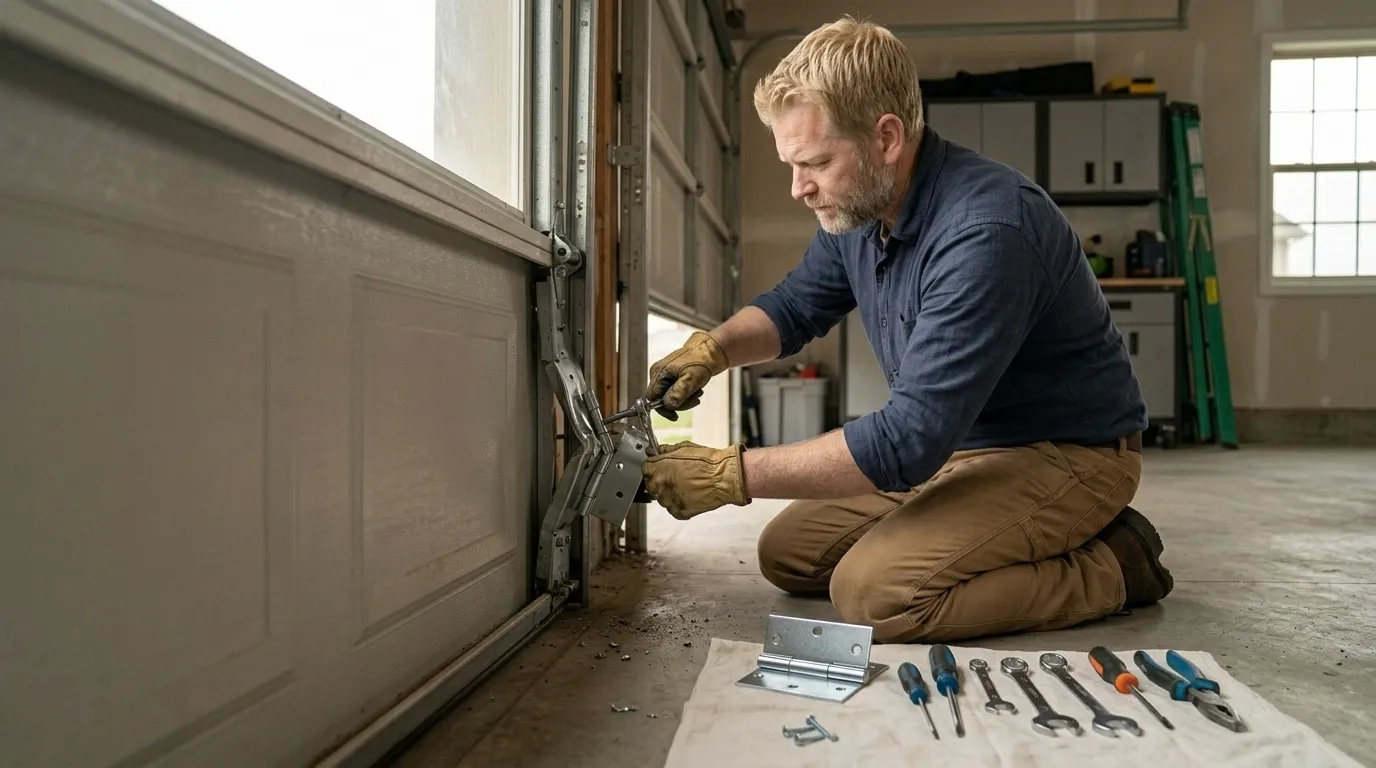
Stand next to the door with it closed and run it up and down once. A sharp bang at the top usually means the door is hitting the frame because a cable has gone slack or a spring has lost tension - common on the original torsion setups still found on a lot of houses built between 1957 and 2002 in this area. A rhythmic thump every foot or so as the door travels is almost always a bent track section or a roller that's worn through its bearing, and on the 1960s and 70s stock that makes up most of what we see, that roller is often the same one the house came with.
A grinding sound that gets worse in the cold is different from a grinding sound that's steady year-round. Steady grinding points to a dry or worn roller track. Cold-weather grinding points to grease that's thickened up or hardware that's slightly out of alignment and only binds once the metal contracts. Popping on the way down, not up, usually means a spring is winding down unevenly rather than failing outright - annoying, not yet an emergency.
If the door reverses partway up for no reason, check the opener's force setting before you assume the door itself is broken. None of this replaces a real inspection, but it tells you which kind of call to make.
The Situation
Housing across the areas we cover - Old Aristocracy Hill, Downtown, and the dozen or so other named areas out to Athens and Pawnee - was mostly built between 1957 and 2002, with the median landing around 1973. That means the majority of doors and openers we're called to weren't installed new in the last decade. They were installed, replaced once maybe in the 90s or 2000s, and left alone since.
That matters for noise diagnosis specifically. A door on original 1960s hardware doesn't fail the same way a door installed five years ago fails. Springs on older torsion setups tend to go gradually, announcing themselves with pops and uneven travel for weeks before they snap. Newer doors with modern extension springs tend to just stop working one day with far less warning.
With roughly 17,190 households in the service area and about 11,632 owner-occupied houses, a good share of what we work on is exactly this kind of aging original hardware rather than anything installed in the last few years. If your door is making noise and the house was built anywhere in that 1957-2002 window, the odds favor a wear issue on original parts over something exotic.
When Waiting Is Fine
Not every noise is a call-today noise. A single pop with no change in how the door moves is often just a spring settling - worth noting, not worth a service call by itself. A squeak that only happens on the coldest mornings and goes away once the day warms up is usually just stiff grease, and a can of the right lubricant on the rollers and hinges will quiet it down without a truck visit.
Here's the honest limit: if the door still opens and closes smoothly, holds its position, and the noise doesn't change week to week, you can wait and watch it. We'd rather you call once, when the pattern is clear, than three times chasing a noise that hasn't actually gotten worse. What we can't tell you over the phone is whether a specific noise on your specific door is safe to ignore - that part does need eyes on it, eventually, just not necessarily today.
What the Weather Here Does to It
Springfield sits in a cold-moderate climate band, which means the door hardware goes through a real seasonal swing rather than staying in one condition all year. Steel contracts in the cold, which tightens tolerances on tracks and rollers that were set up in warmer weather. That's why a door that runs quiet in July can start grinding or catching in January without anything having actually broken - the metal itself moved.
On the older torsion hardware common in this area's 1960s and 70s housing, that seasonal tightening also shows up as a spring that sounds louder in cold weather than it did a month earlier, simply because the coil is stiffer when it's cold. It's not a sign of failure by itself, but it's worth listening for whether the sound is only there in the cold or has started showing up regardless of temperature - that's the difference between weather doing its normal thing and a part actually wearing out.
How it works
From “it’s stuck” to “it’s fixed”
01
Tell us what’s wrong
Describe the symptom - won’t open, loud bang, opener runs but the door won’t move.
02
On-site diagnosis
A technician tests the door under power and by hand and finds what actually failed.
03
Clear, up-front plan
You get the fix that’s needed and what drives the cost - before any work starts.
04
Repaired & tested
The repair is done, the door is set true and tested, and the work area left clean.
Serving Springfield, IL - tell us what your door’s doing and we’ll take it from there.
My door only makes noise on cold mornings - is that normal?
Yes, to a point. Cold-moderate winters here mean steel hardware tightens up and grease thickens, so a door that's silent in summer can grind or catch on a 20-degree morning. If the noise disappears once things warm up and the door still travels smoothly, it's weather, not failure. If it starts happening on mild days too, that's worth a call.
My house was built in the 60s and the door still has its original springs - should I worry?
Original torsion springs on 1960s and 70s houses are common in this area, and plenty are still working fine. The concern isn't age alone, it's how they're behaving - uneven travel, popping, or visible gaps in the coil. If it's running smooth and quiet, there's no reason to replace it just because of the decade it was installed.
Can I just oil the noisy part myself?
Often, yes - rollers, hinges, and the track itself take a light lubricant fine, and that clears up a lot of cold-weather squeaking. Springs are the one part we'd say leave alone; they're under real tension and not something to grease or adjust without the right tools.
Ready to get your garage door sorted?
Tell us what it’s doing and where you are in Springfield - we’ll take it from there.