This Area's Housing
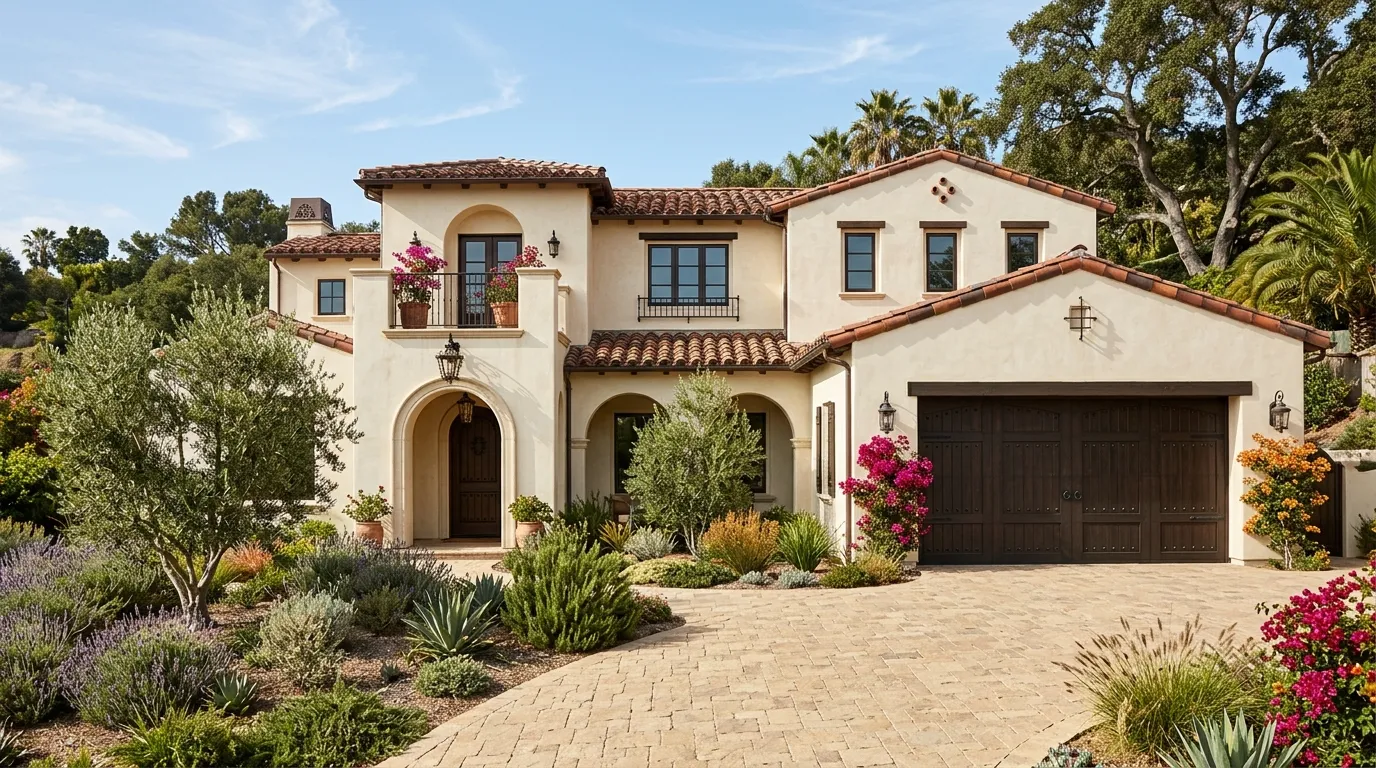
Thayer's housing dates mostly to 1960, which puts it on the early end of the service area's overall range of 1957 to 2002. Across the wider coverage area, home construction spans four decades and 14 named communities, but this particular pocket is closer to the original wave than to the later infill built through the 70s, 80s, and 90s. A median household income of $63,125 here runs below the service-area median of $79,008, which we mention only because it tends to line up with more repair calls and fewer full-replacement calls - people fix what they have rather than swap it out early. Winters here fall into the same cold-moderate climate band as the rest of the region, so temperature swings work on old steel and old lubricant the same way they do everywhere else in the service area, just on hardware that's had more years to accumulate wear.
How That Shows Up in the Door
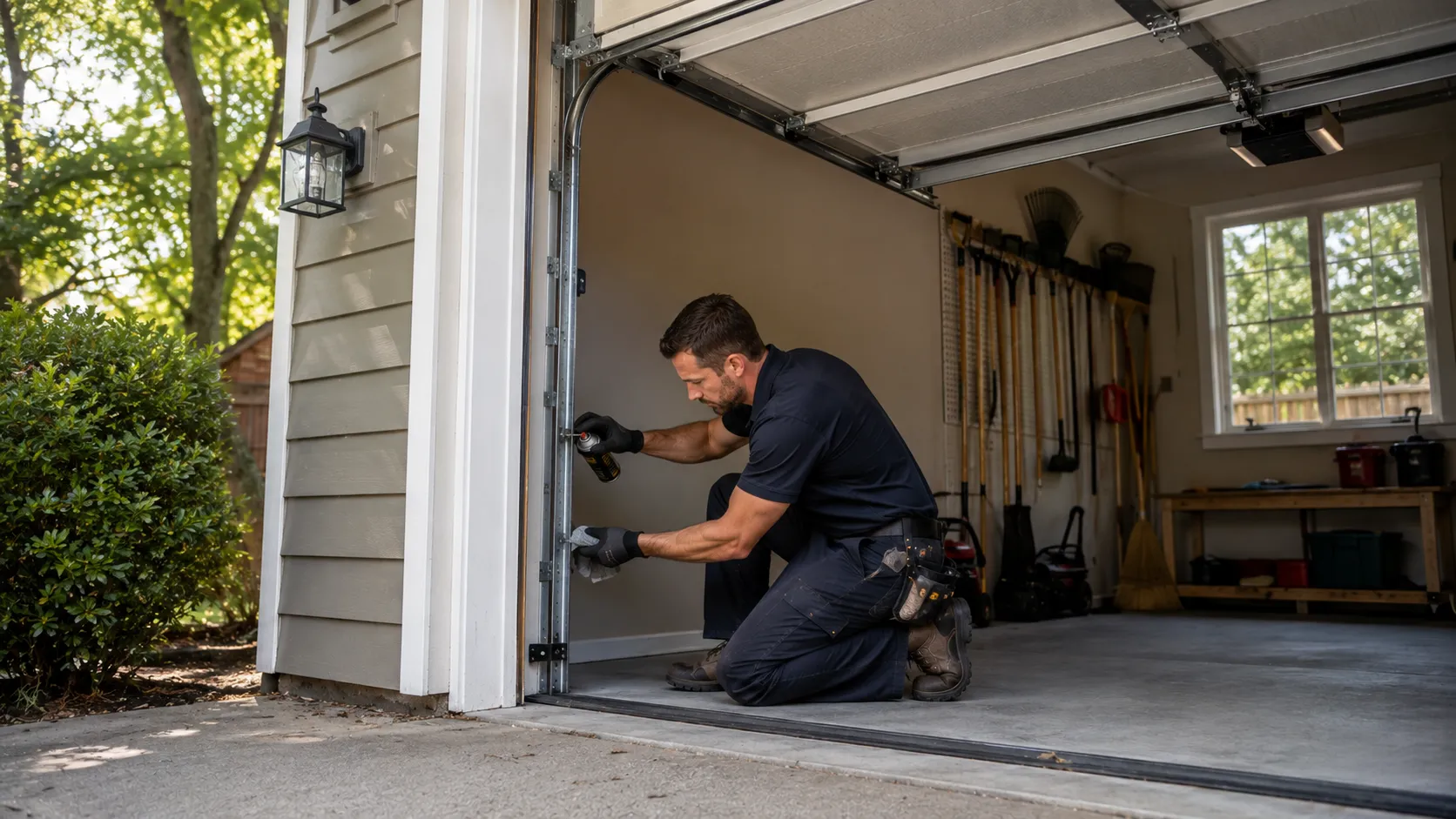
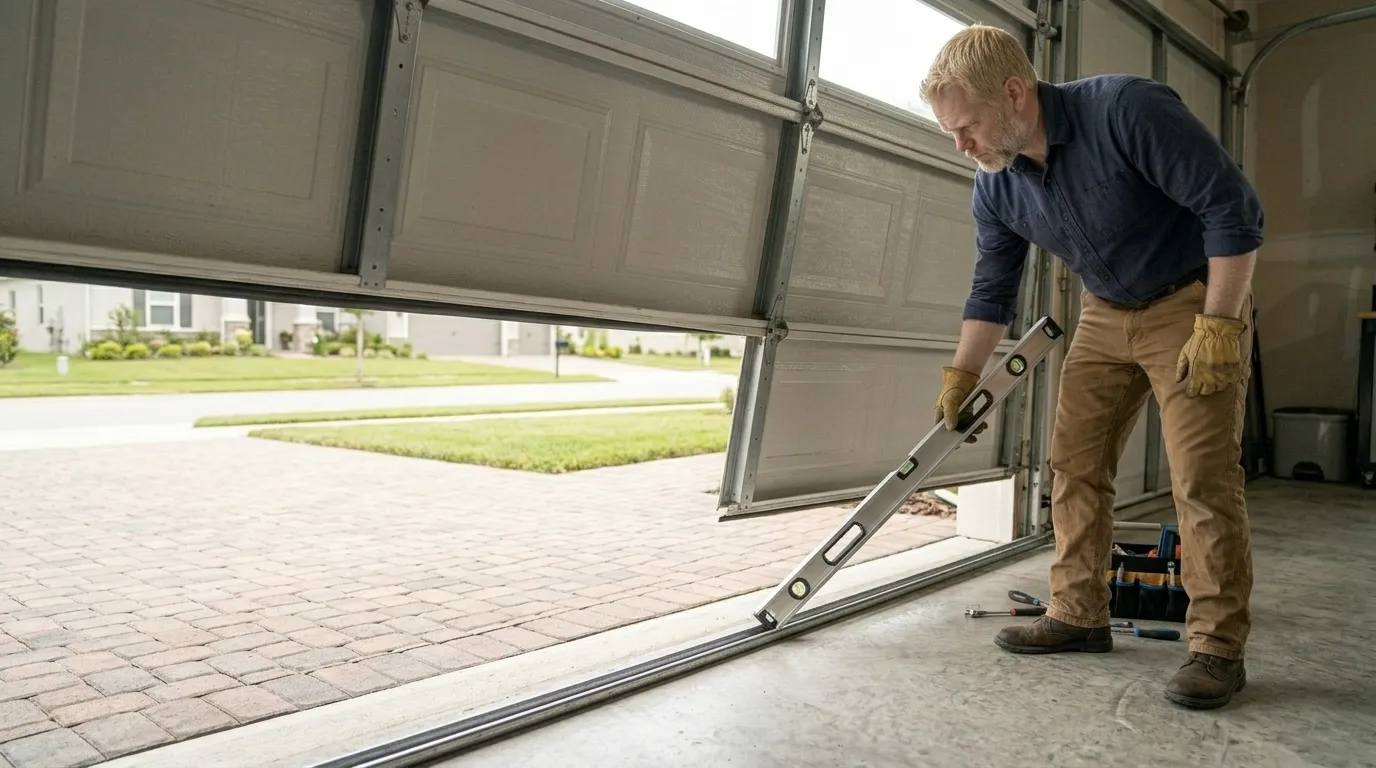
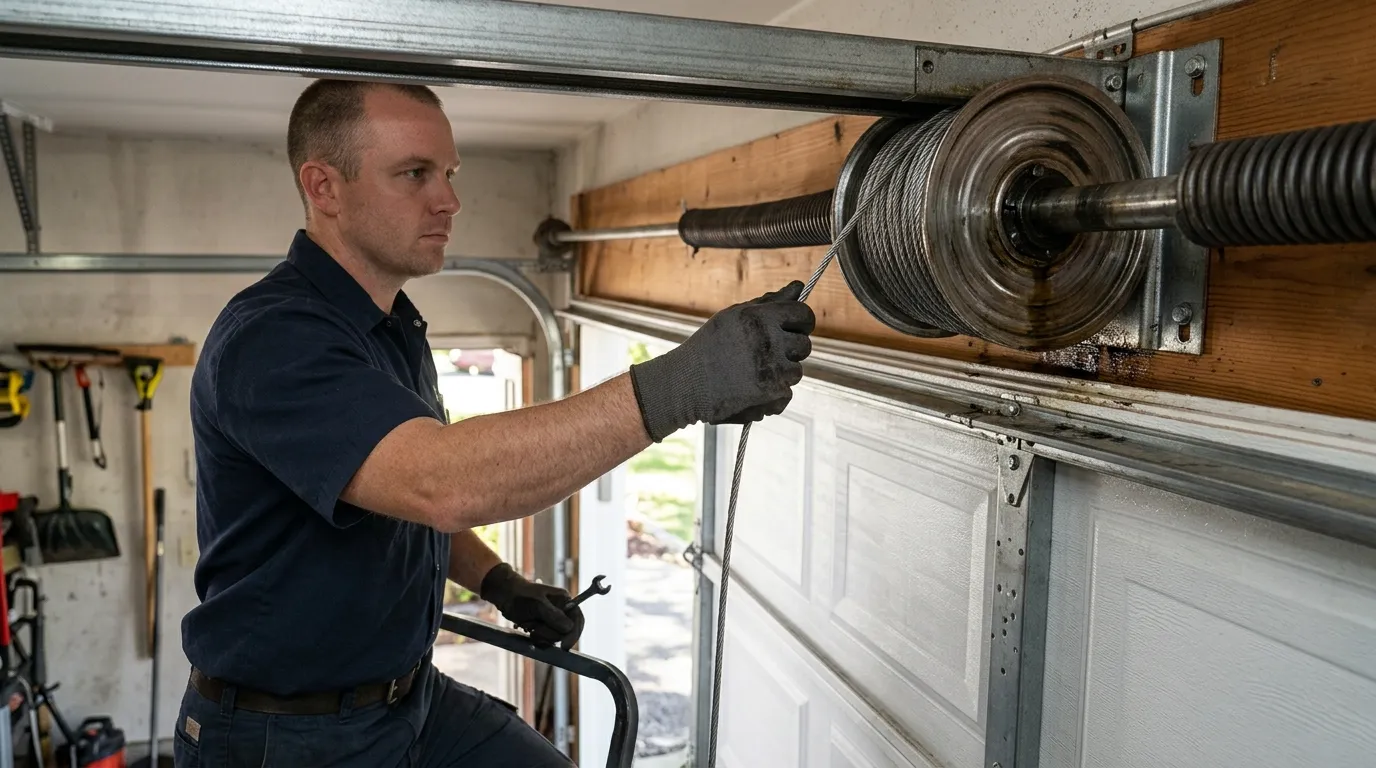
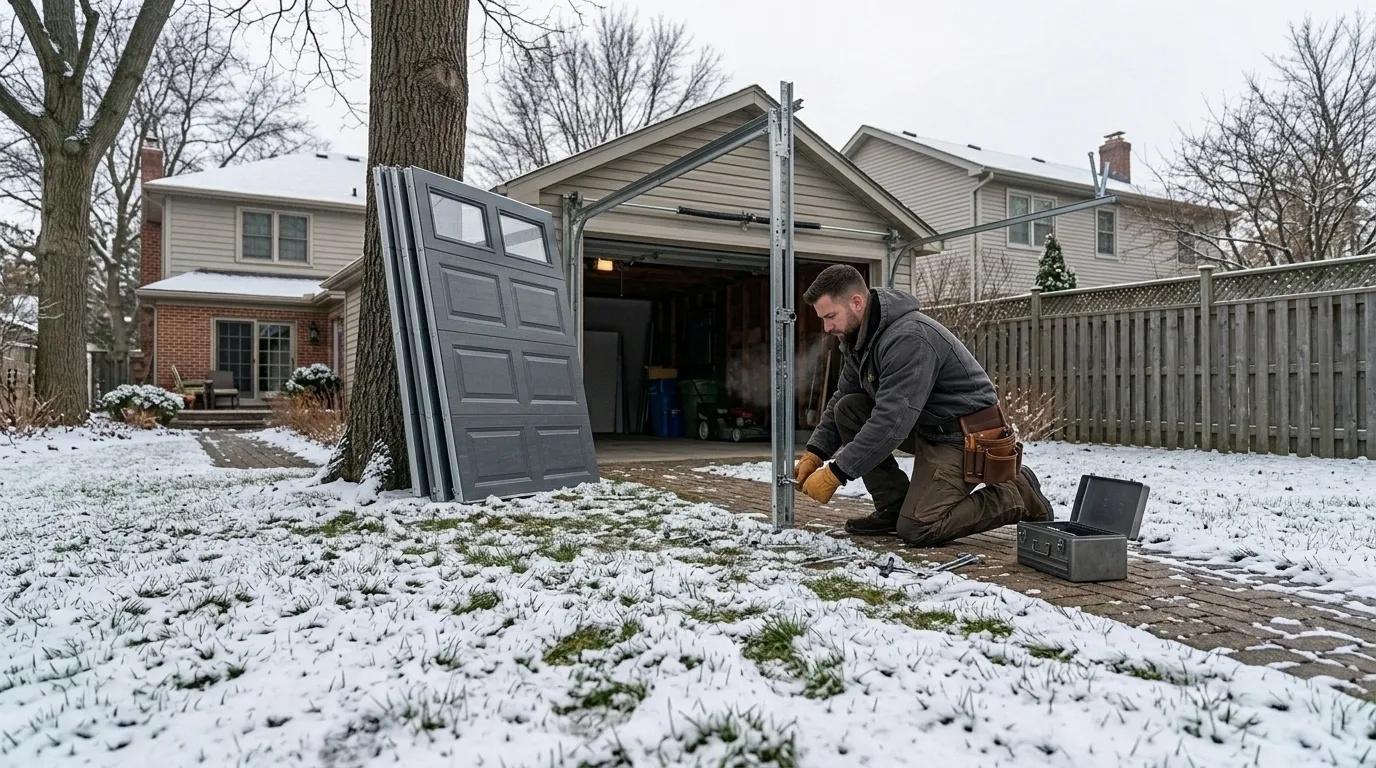
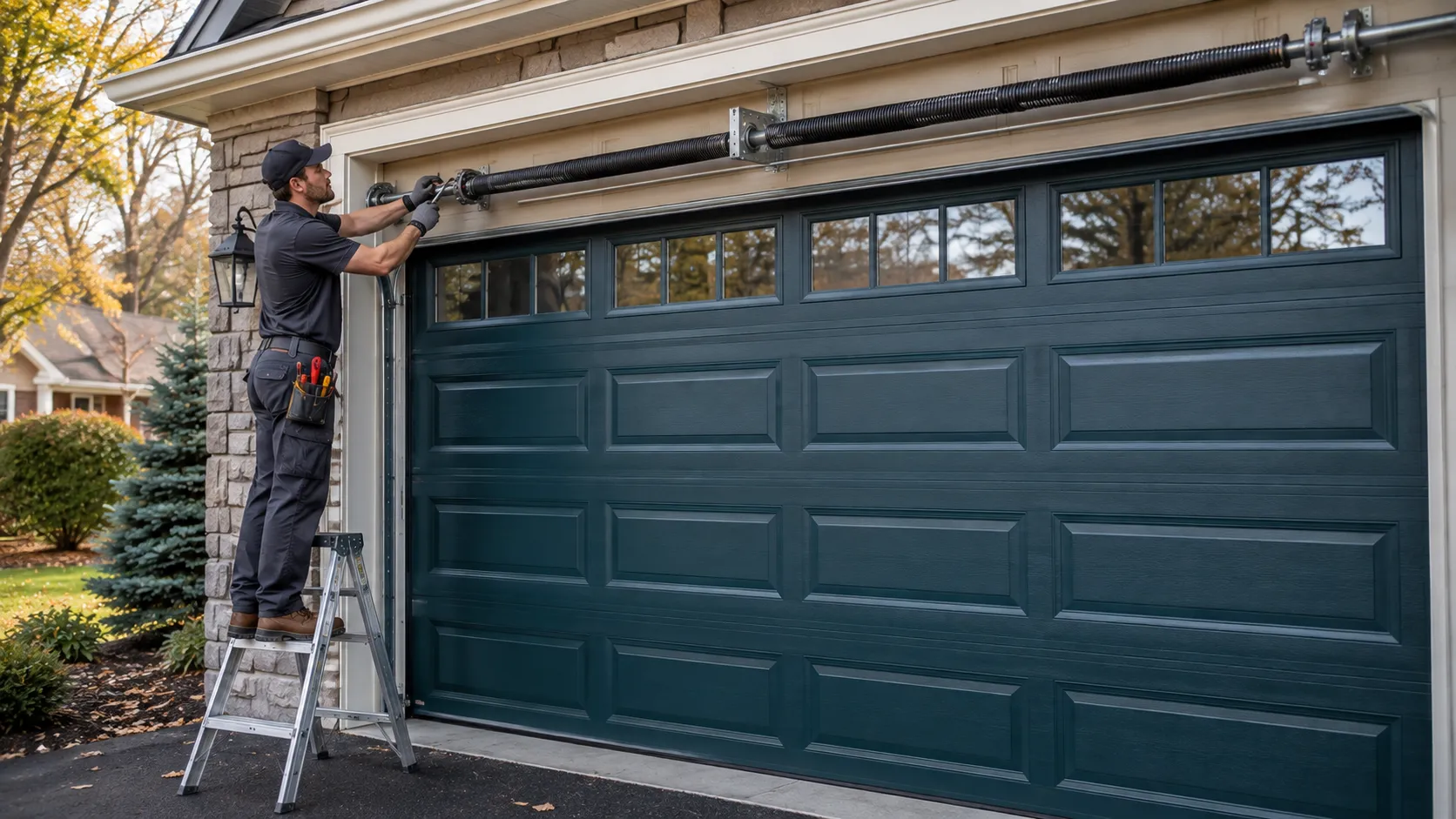
A door and track installed around 1960 was built to a different standard than what's gone into houses over the last 20 years. Track gauge tends to be lighter, torsion springs are sized for the panel weights common at the time, and a lot of these openers were installed as retrofits later, sometimes bolted onto hardware that predates them. The mismatch shows up as doors that reverse for no clear reason, openers straining against springs that have lost tension, or tracks that have shifted slightly out of plumb after decades of thermal cycling in a cold-moderate climate. We also see rollers that were never upgraded from steel to nylon, which means more noise and more wear on the track edges than a newer setup would produce. None of this means the door is a lost cause - a lot of these units are solid steel and outlast their springs many times over - but it does mean the fix usually isn't as simple as swapping in a generic part off a truck shelf.