
Booking a Visit
We're based in Springfield and cover Sherman from there - it's a 7-mile drive, so there's no branch or drop box in town, and we're not going to pretend otherwise. What that means practically: we schedule the visit, load the truck with the roller stock and track hardware for the job, and drive out. It's a routine trip for us, not a special dispatch, but we don't want to promise same-day or a fixed window here when the honest answer is that it depends on the day's route.
When you call, tell us the door's rough age and whether it's making noise on one side or dragging the whole way up - that tells us whether we're looking at a straight roller swap or something further along, like a bent track from rollers that have been grinding against it for a while. Sherman's newer housing stock means we're rarely dealing with the kind of worn-out side-mount torsion hardware you see on much older doors, which keeps most of these visits to a single, predictable job rather than a hunt for obsolete parts.
What Can Go Wrong
On a door built around 2002, the most common failure is a cracked nylon roller wheel - the roller stem is still fine, but the wheel itself has gone brittle from years of cold and split under load. You'll hear it as a knock or a thud on that corner of the door rather than a smooth roll.
Second most common: a roller that's worn down unevenly, so the door starts riding crooked in the track. Left alone, that wear transfers to the track itself, and a straight roller swap turns into a track adjustment or track replacement job. Steel ball-bearing rollers, where they were used, tend to fail differently - the bearing dries out and starts binding, and the door gets noticeably heavier to lift by hand well before the roller actually breaks.
We also see rollers pop out of the track entirely on a door that's been dragging for months without attention. That's usually the point where a homeowner finally calls, but it's also the point where a bent track is more likely, which changes the scope of the job from what it would have been six months earlier.
What the Fix Involves
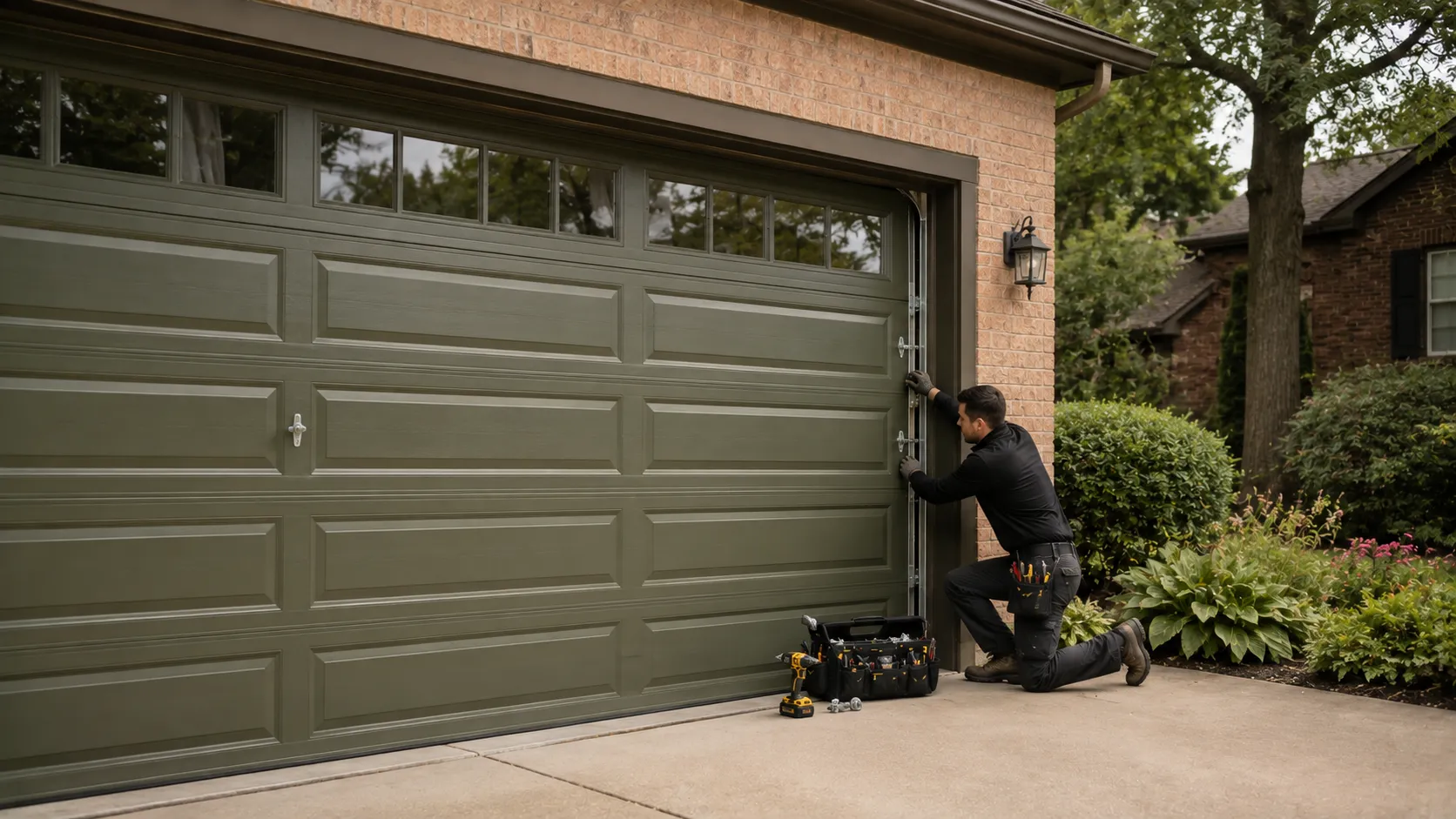
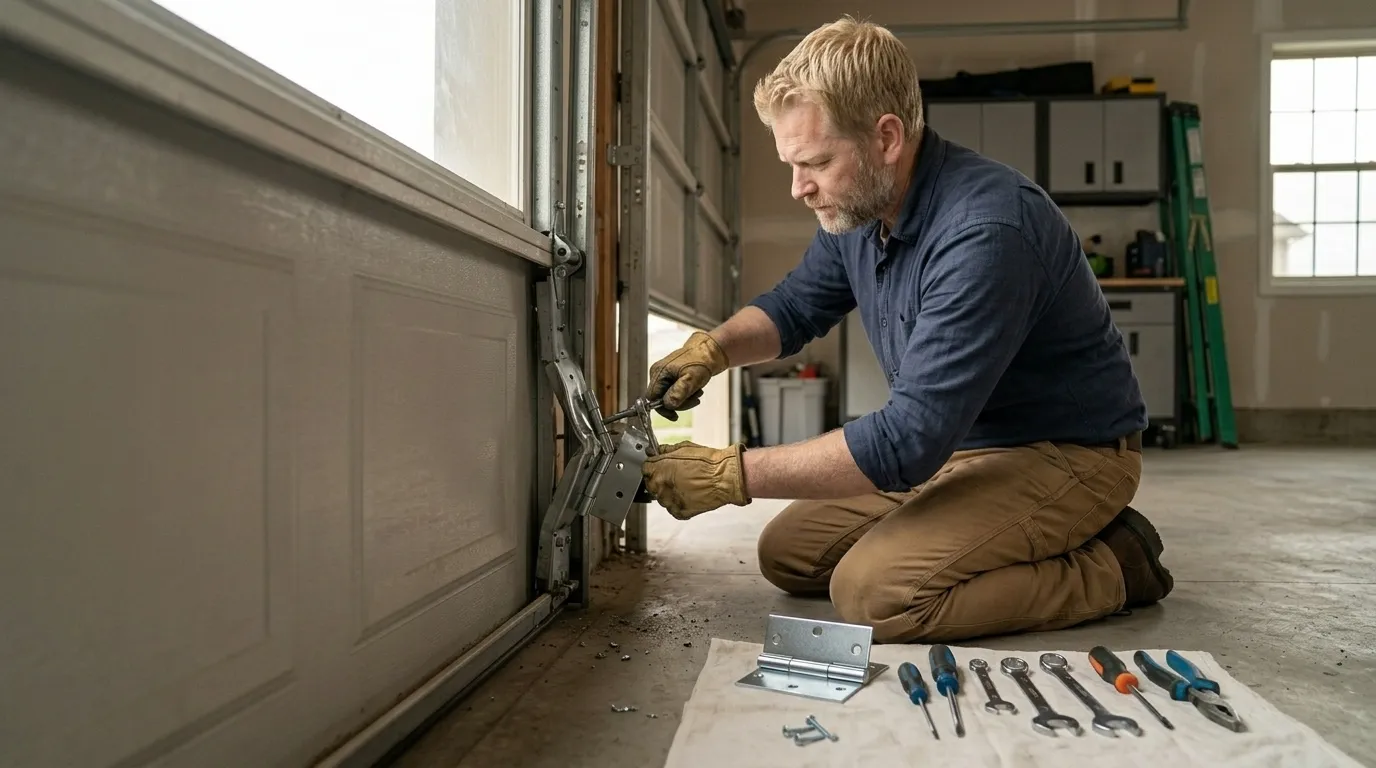
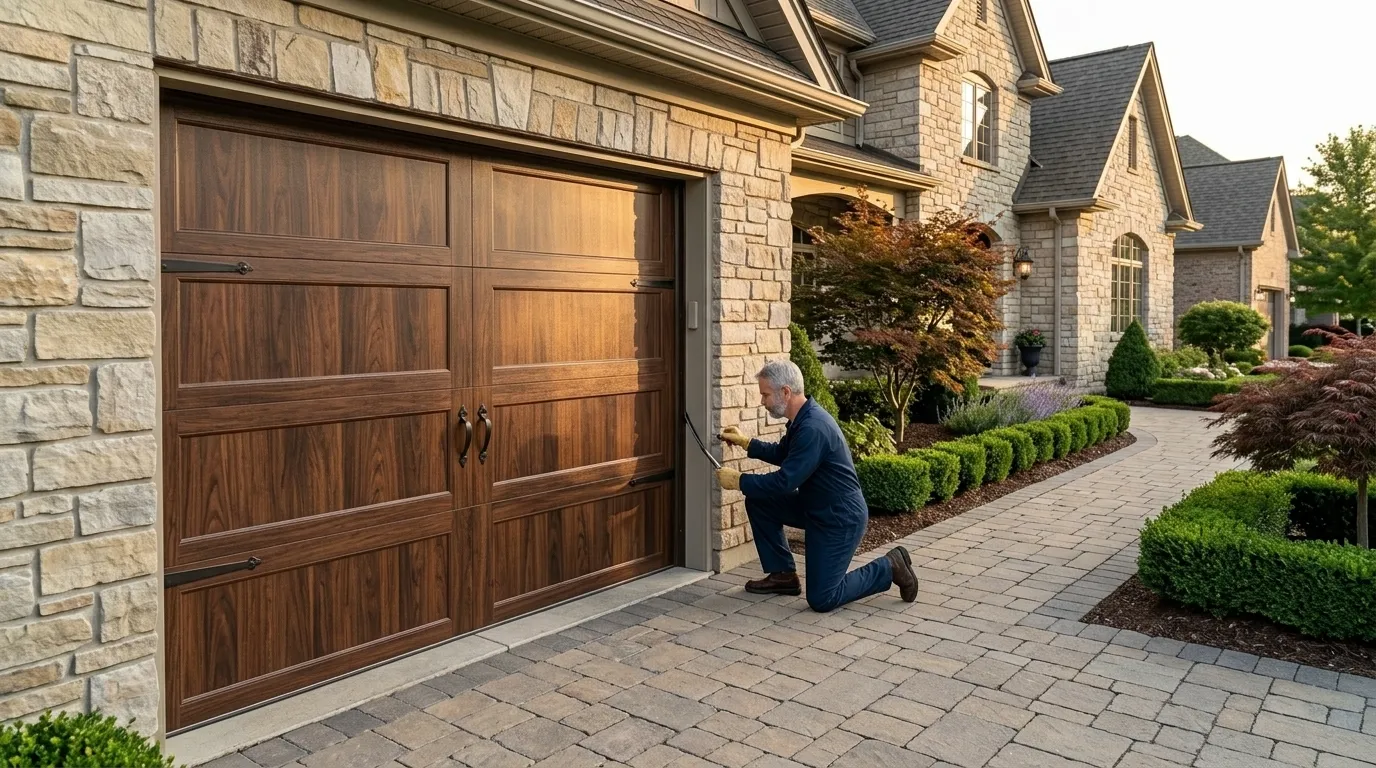
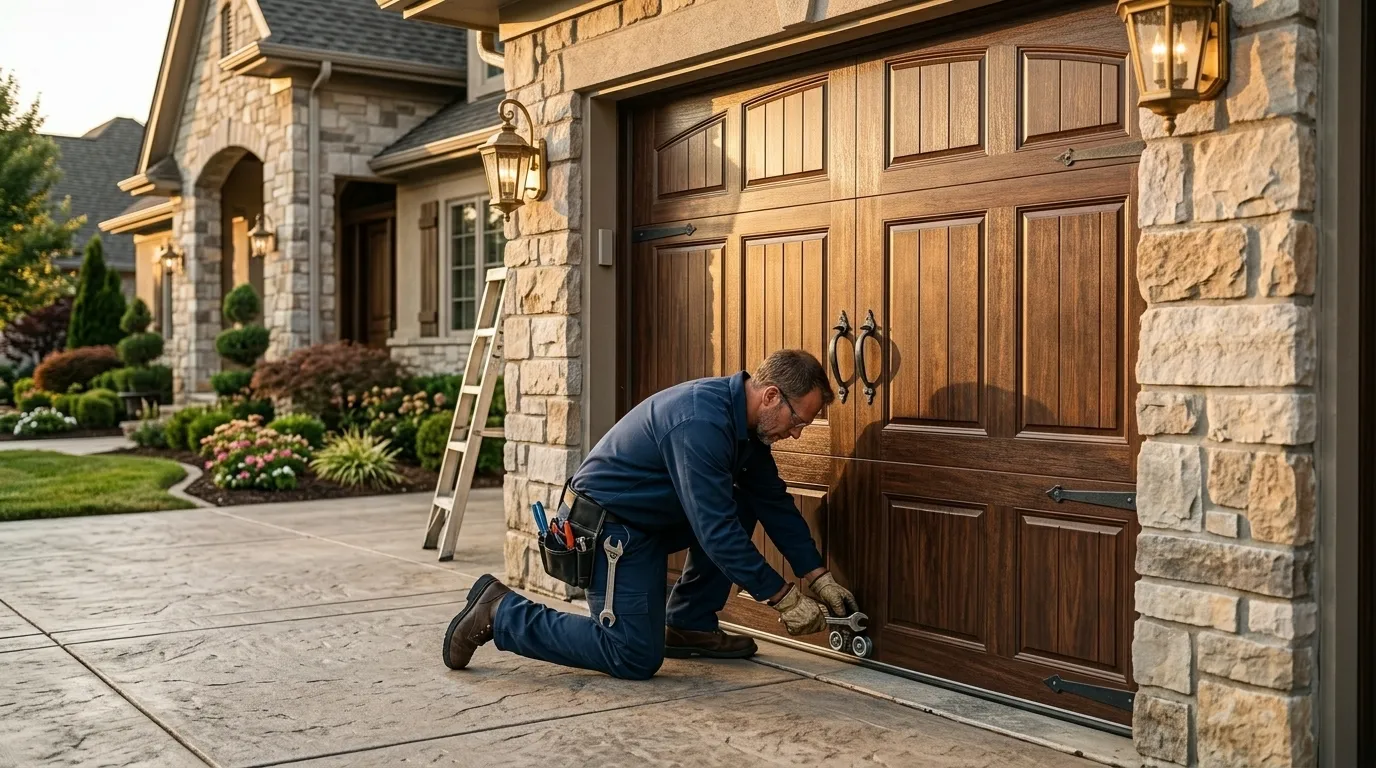
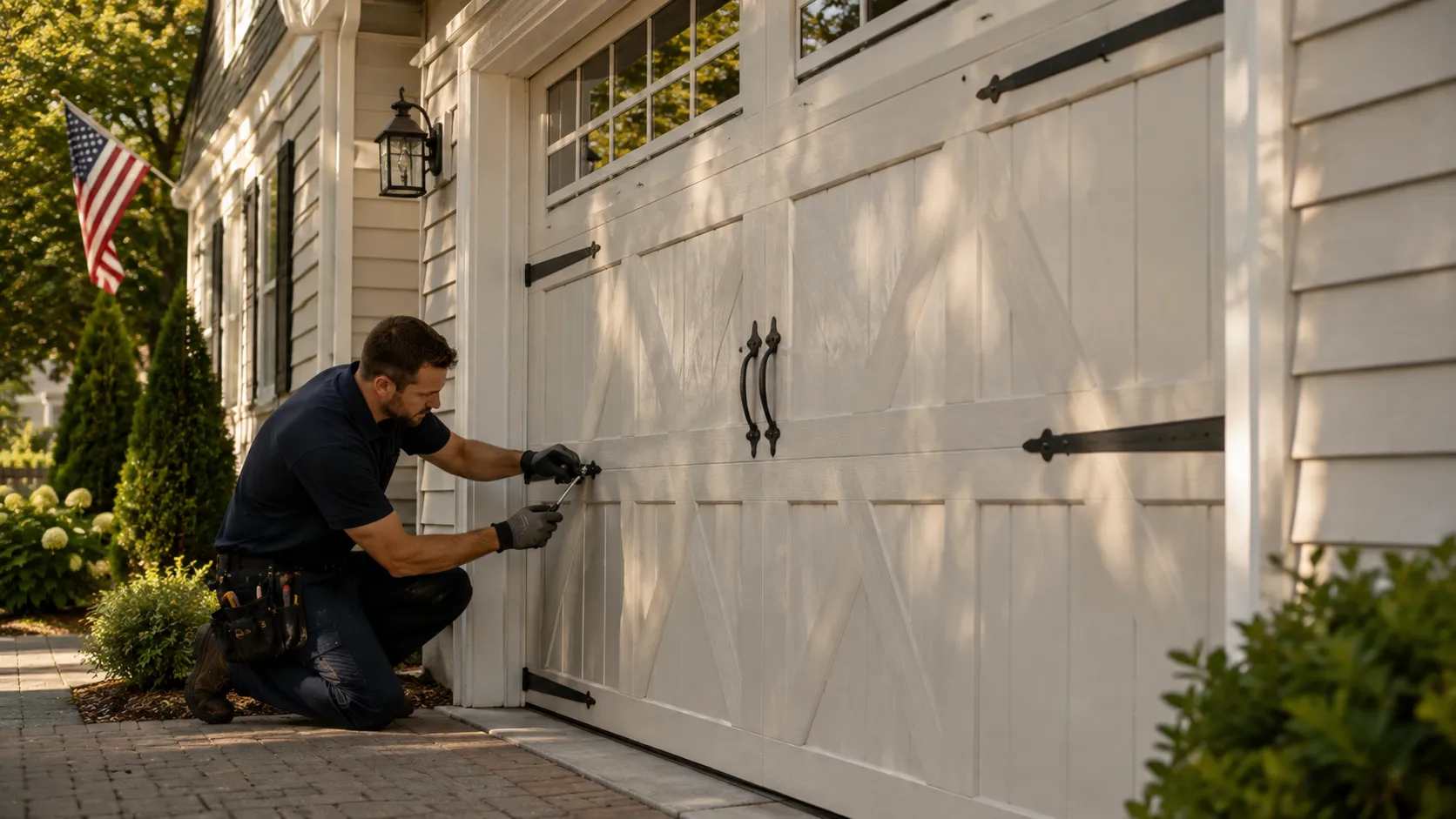
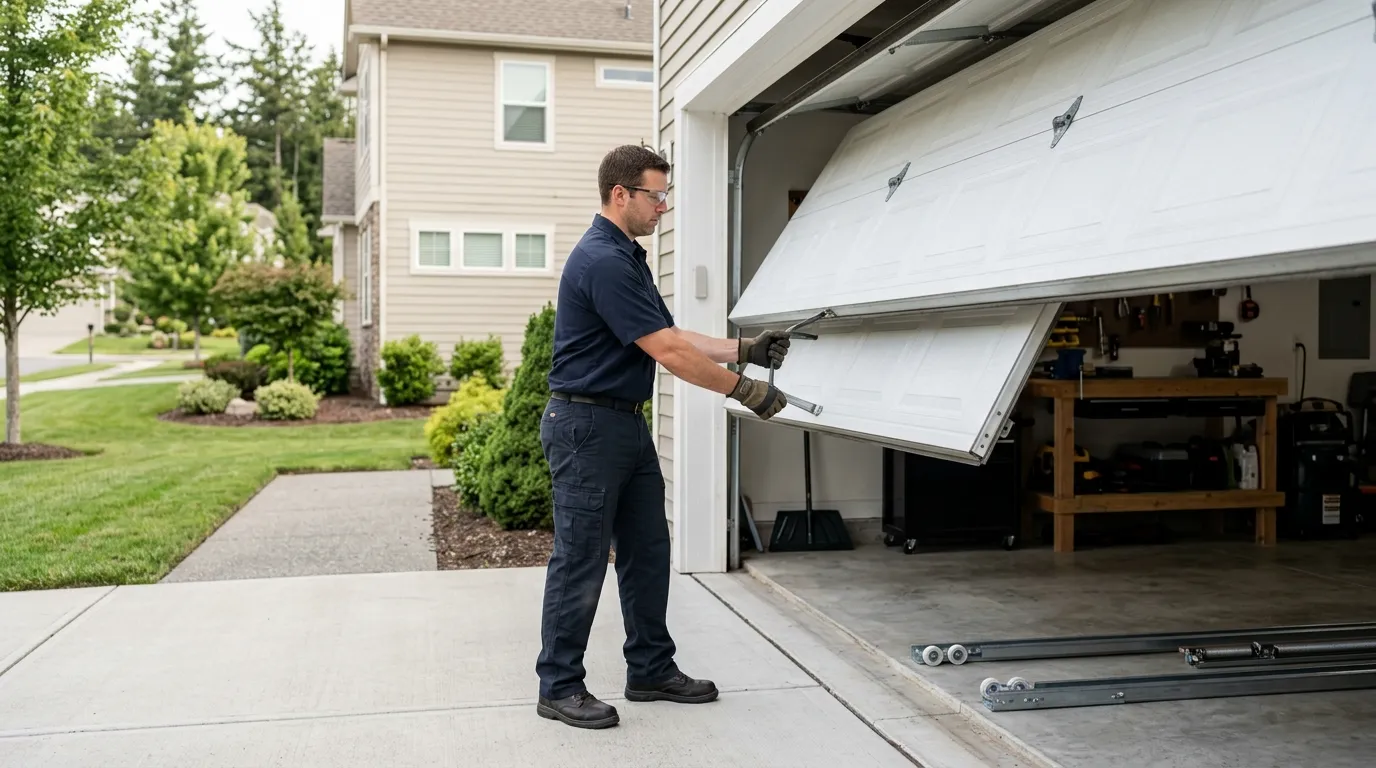
The job itself is mechanical and doesn't take long once we're on site. We release tension on the door, pull the old rollers out of the track one at a time - usually starting from the bottom so the door stays supported - and seat the new ones. If the track has picked up dents or a slight bow from rollers that were dragging, we true it up before the new rollers go in, because a straight roller in a bent track will just wear the same way again.
For a door on 2002-era hardware, we're generally swapping like-for-like sizing, so there's no cutting or refitting of brackets involved. Where a homeowner wants a quieter door, we'll switch steel rollers for sealed nylon, which is a straightforward swap on this era of track and doesn't require touching the opener or the springs. We test the full travel of the door before we leave, both by hand and on the opener, to make sure nothing's binding anywhere along the track.