Booking a Visit
There's no Springfield Garage Door Pros branch sitting in Sherman - the crew drives out from Springfield, about seven miles down the road, for every job here. That's a short trip, and it's the same run for a full installation as it is for a quick look at a door that won't close right. We don't advertise a fixed response time for Sherman specifically, because we haven't measured one and won't guess at it.
When you call, tell us the door's age if you know it and what it's doing - won't open, opener runs but the door doesn't move, panel dented, that kind of detail. If your house was built close to 2002, mention that too. It tells us before we even arrive whether we're likely looking at original hardware or something replaced along the way, which changes what we load on the truck.
What Can Go Wrong
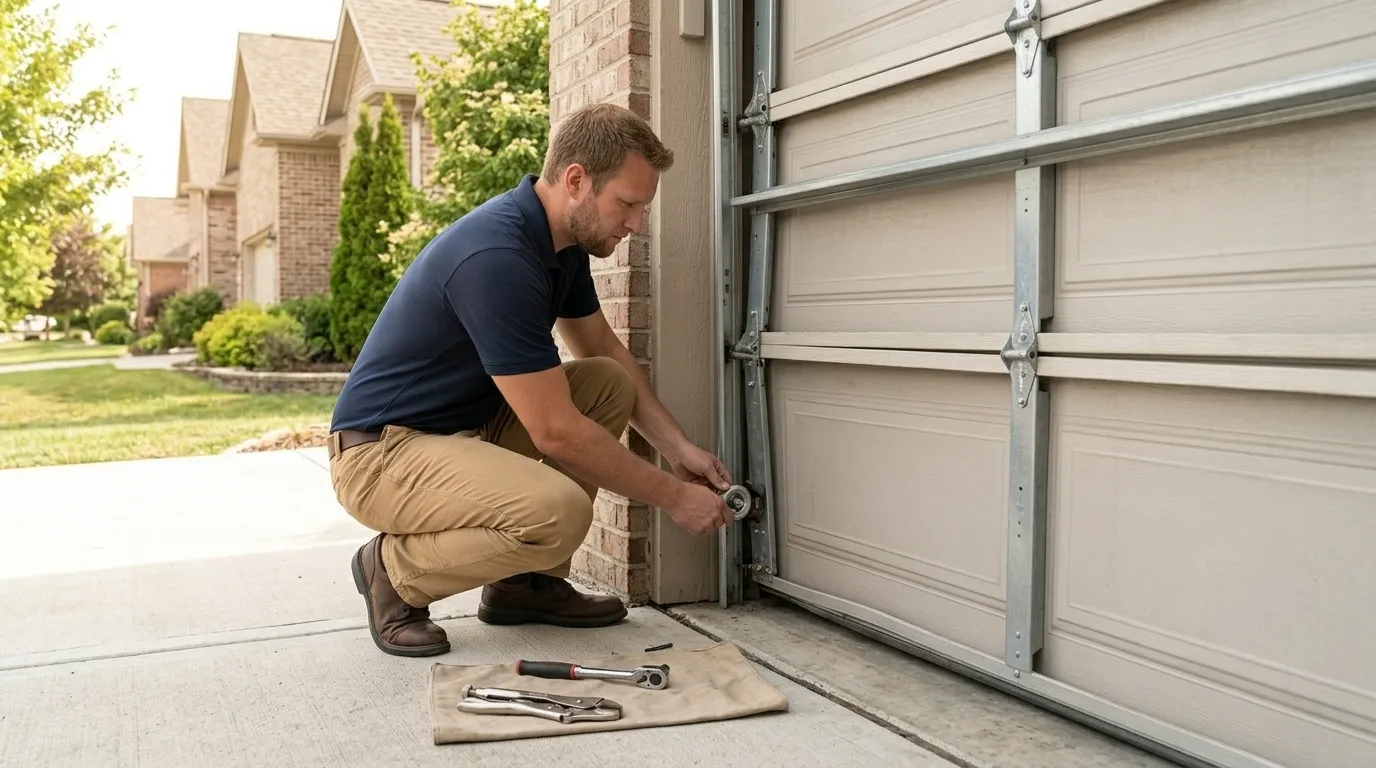
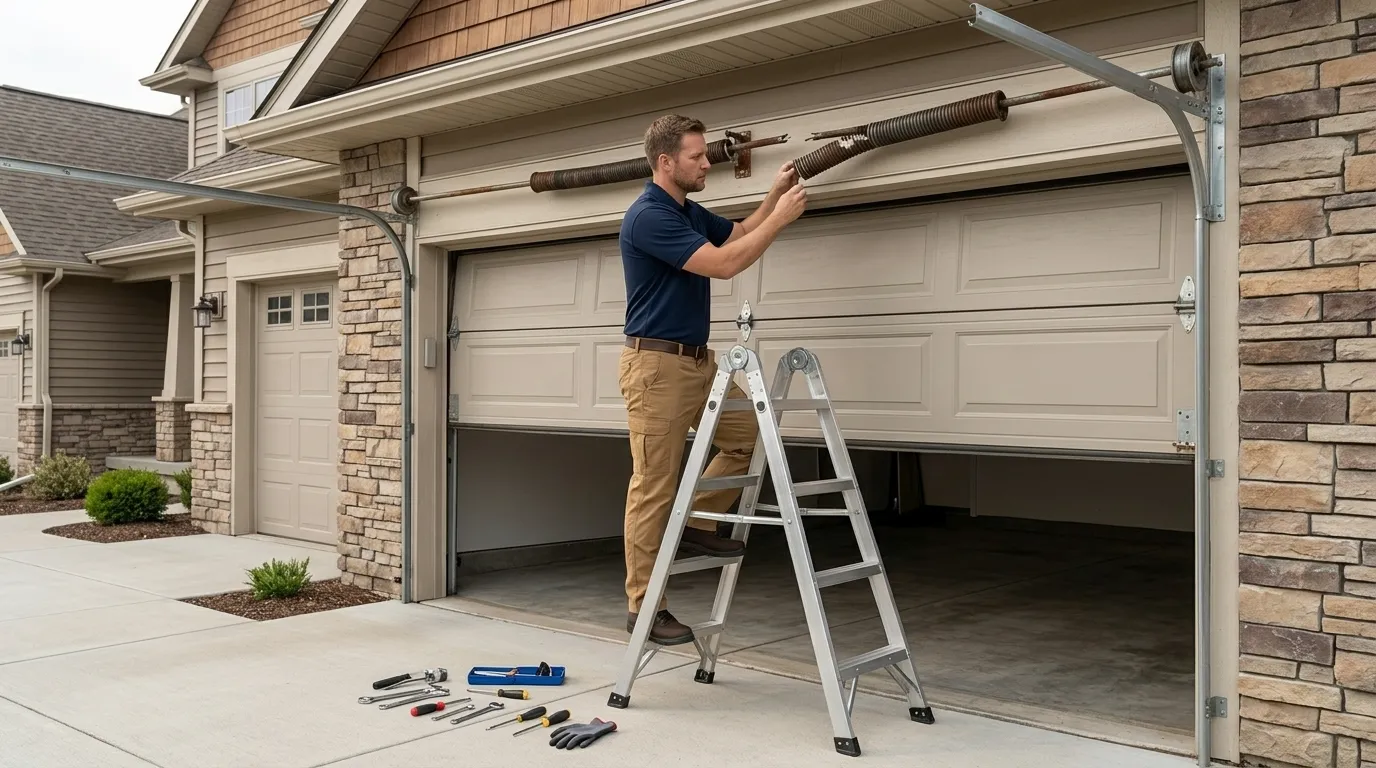
On a Sherman door installed when the house was new, the torsion spring was sized for the door's weight at the time - which is fine, unless a previous owner swapped in a heavier insulated panel door without resizing the spring to match. That's a mismatch we see on newer housing stock more than old, because it's more likely someone upgraded once already and didn't get the spring re-rated.
Sensor alignment is another common one. Photo-eye sensors from a 2000s-era opener installation sit low near the track, and two decades of lawn equipment, bikes, and general garage traffic nudges them out of true without anyone noticing until the door refuses to close on a cold night. Builder-grade panels from that period also tend to be thinner-gauge steel than what's sold today, so hail dents and impact dings show up more easily than on a heavier door.
The honest limitation here: if the frame or header around the opening has shifted or rotted, that's a carpentry problem before it's a door problem, and it's outside what a door installation alone will fix.
What the Fix Involves
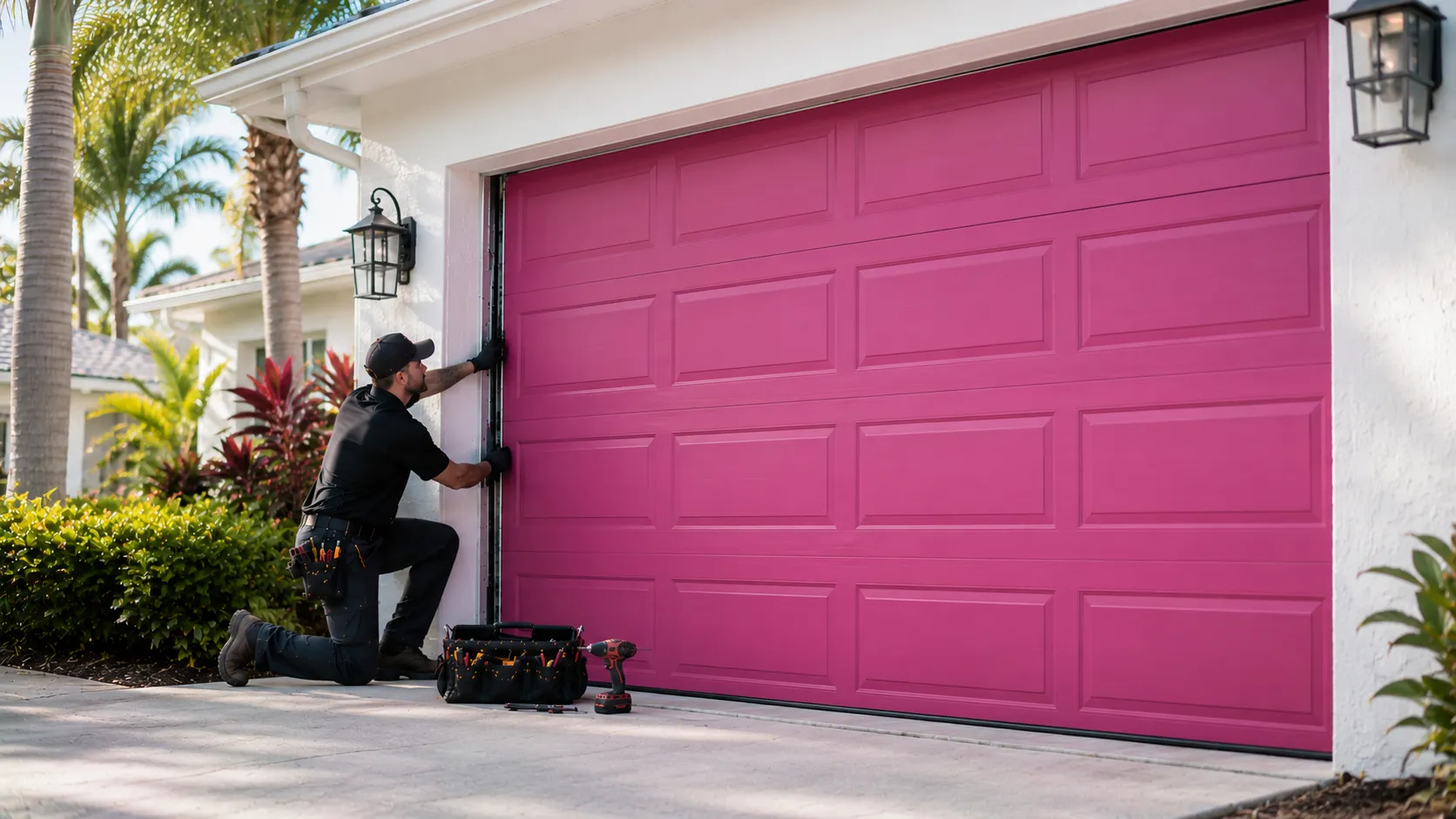
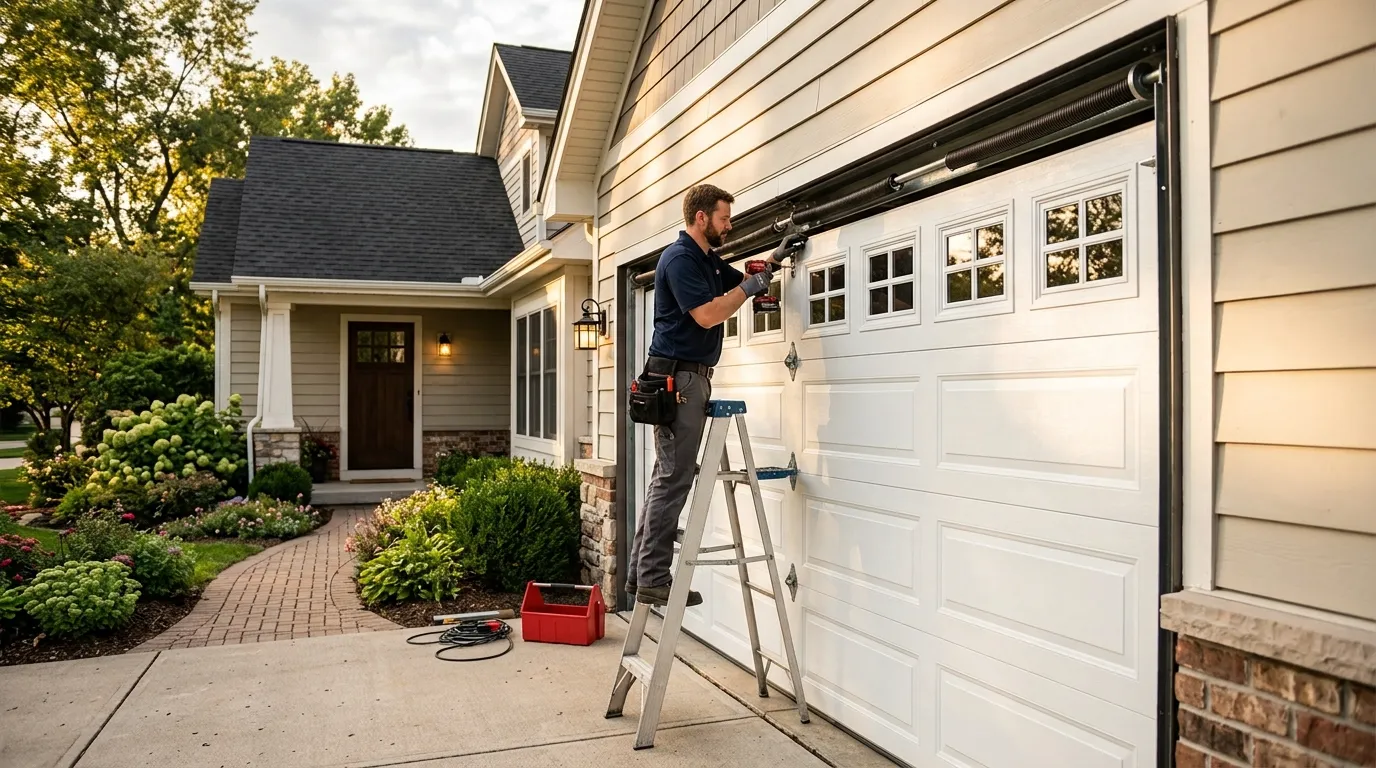
A full installation starts with pulling the old door and checking the header and track alignment - on a house from 2002, the framing is usually square and true, so this step is quick compared to older stock. We size the new torsion spring to the actual weight of the door going in, not the one coming out, which matters if you're stepping up to a heavier insulated panel.
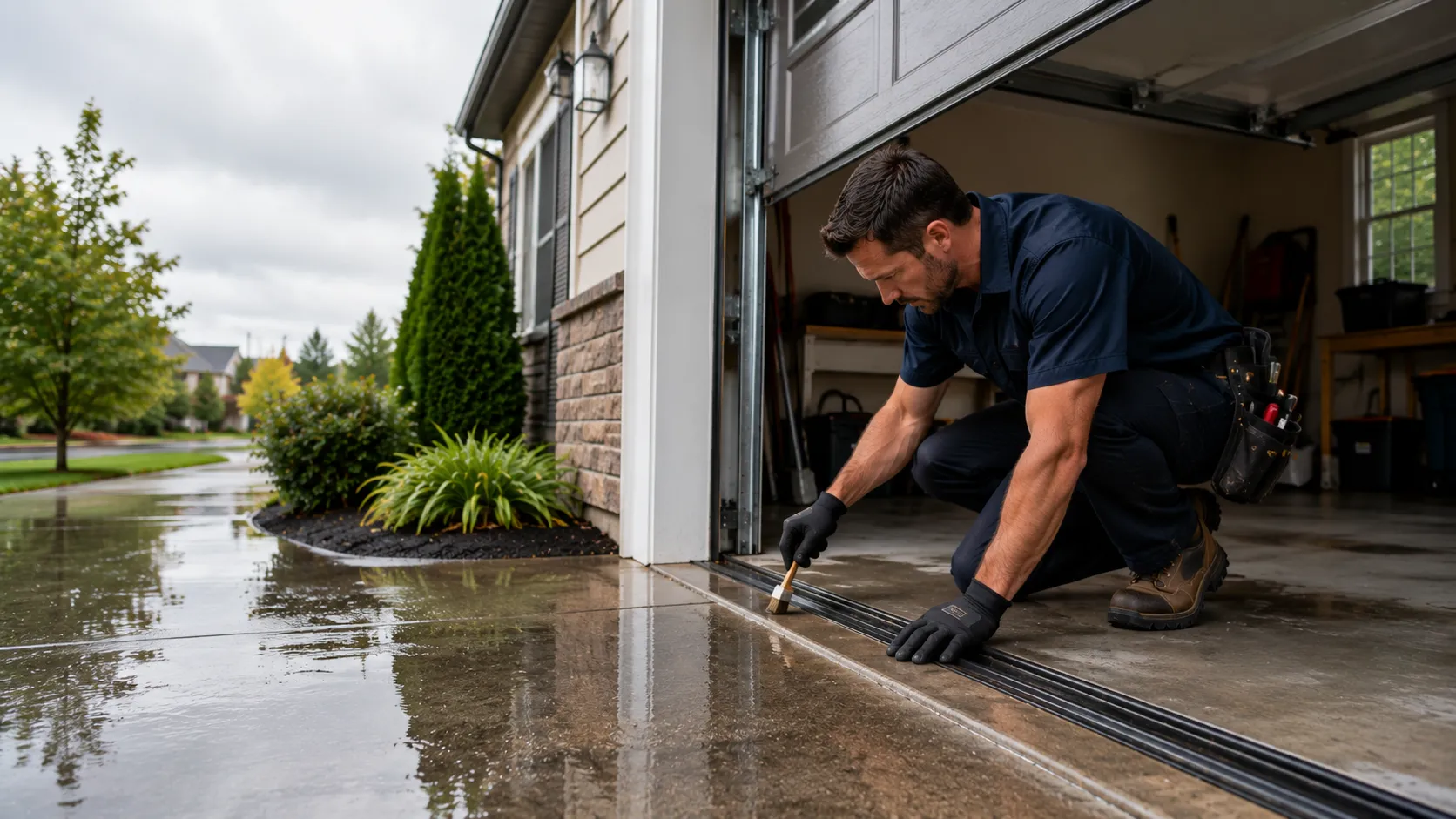
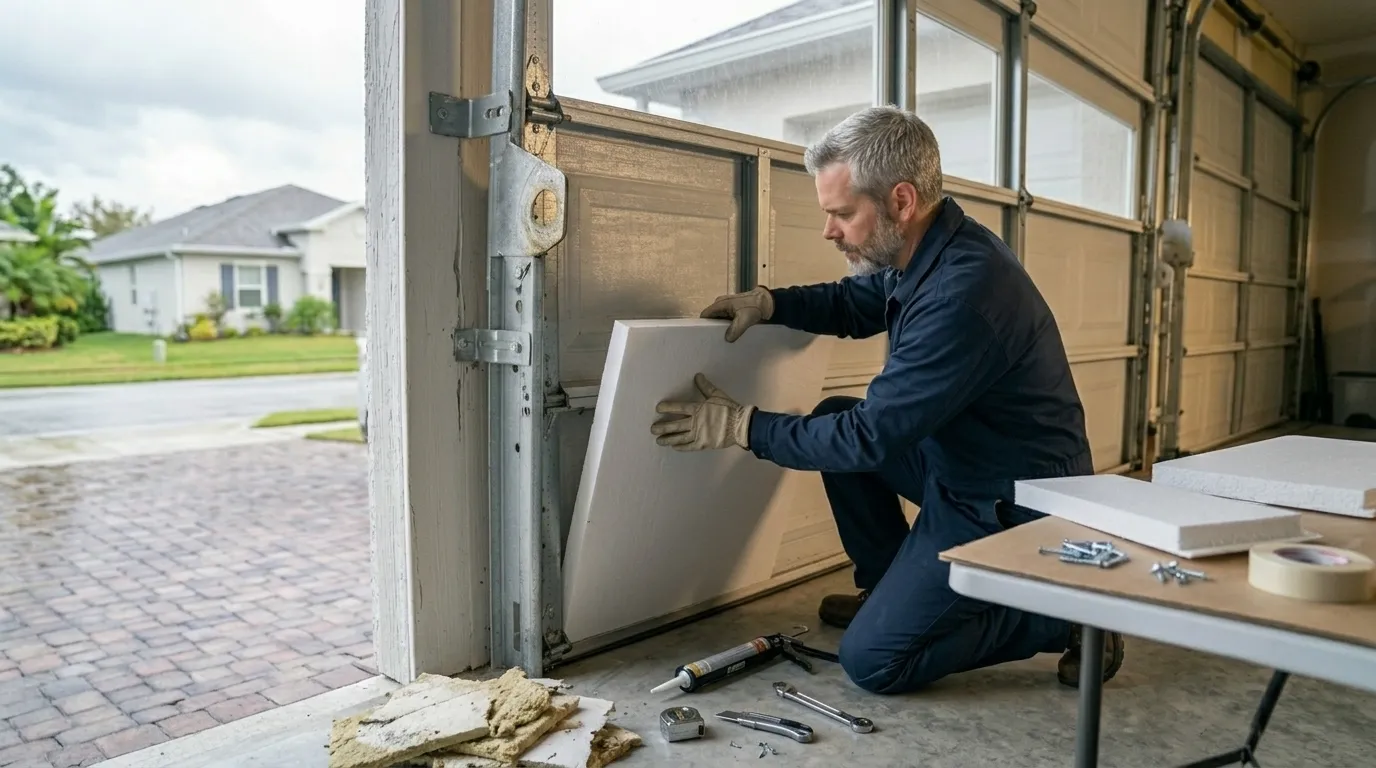
Given the cold band this area sits in, we pay attention to bottom seal and weatherstrip fit, since a gap that seems minor in October becomes a real draft by January. If the opener is original to the house, we'll check whether it's worth keeping or replacing alongside the door - a 20-year-old chain-drive opener is often near the end of its useful life even when the door itself is sound, and there's no point installing a new door on a motor that's about to quit.