Booking a Visit
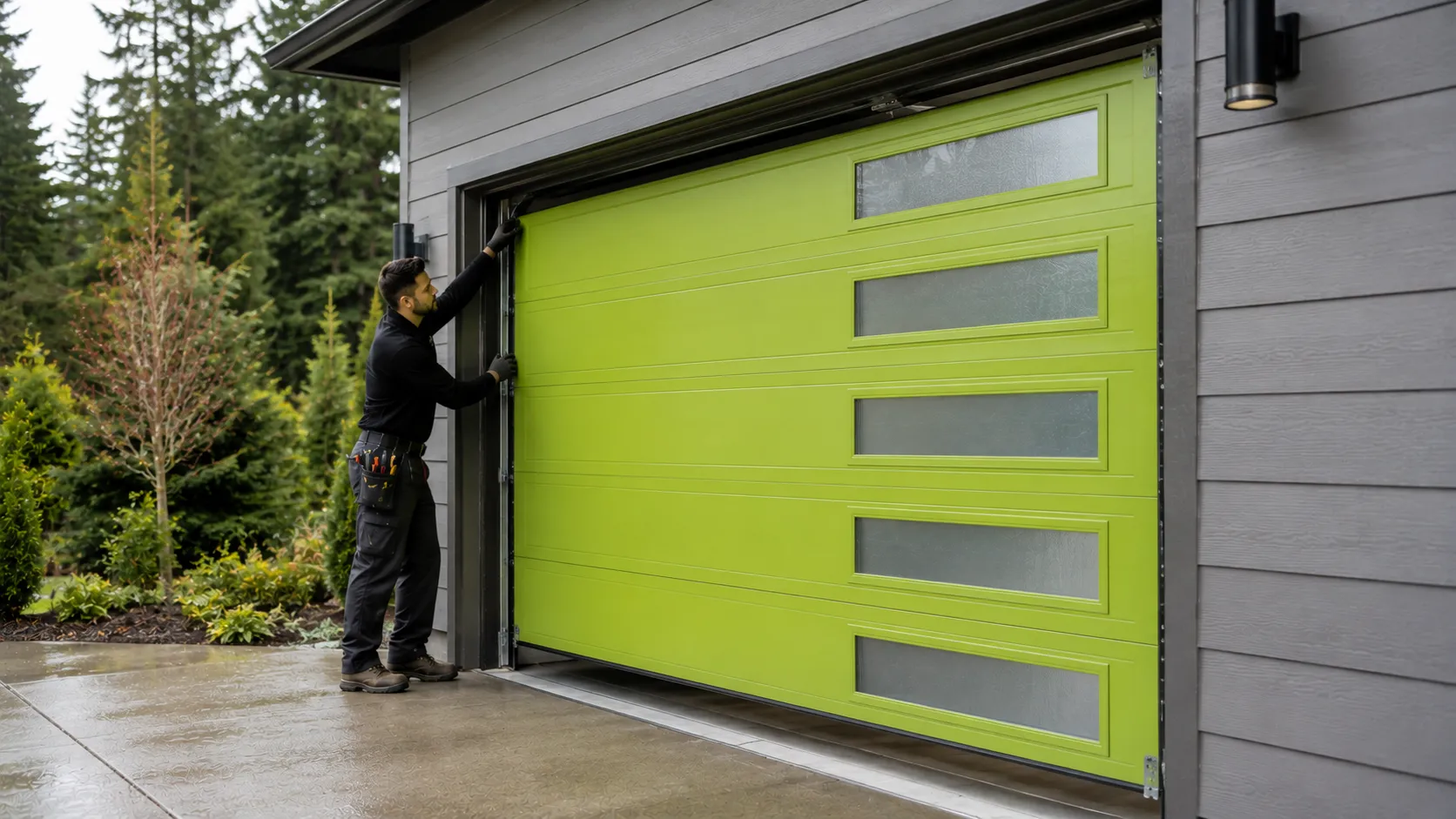
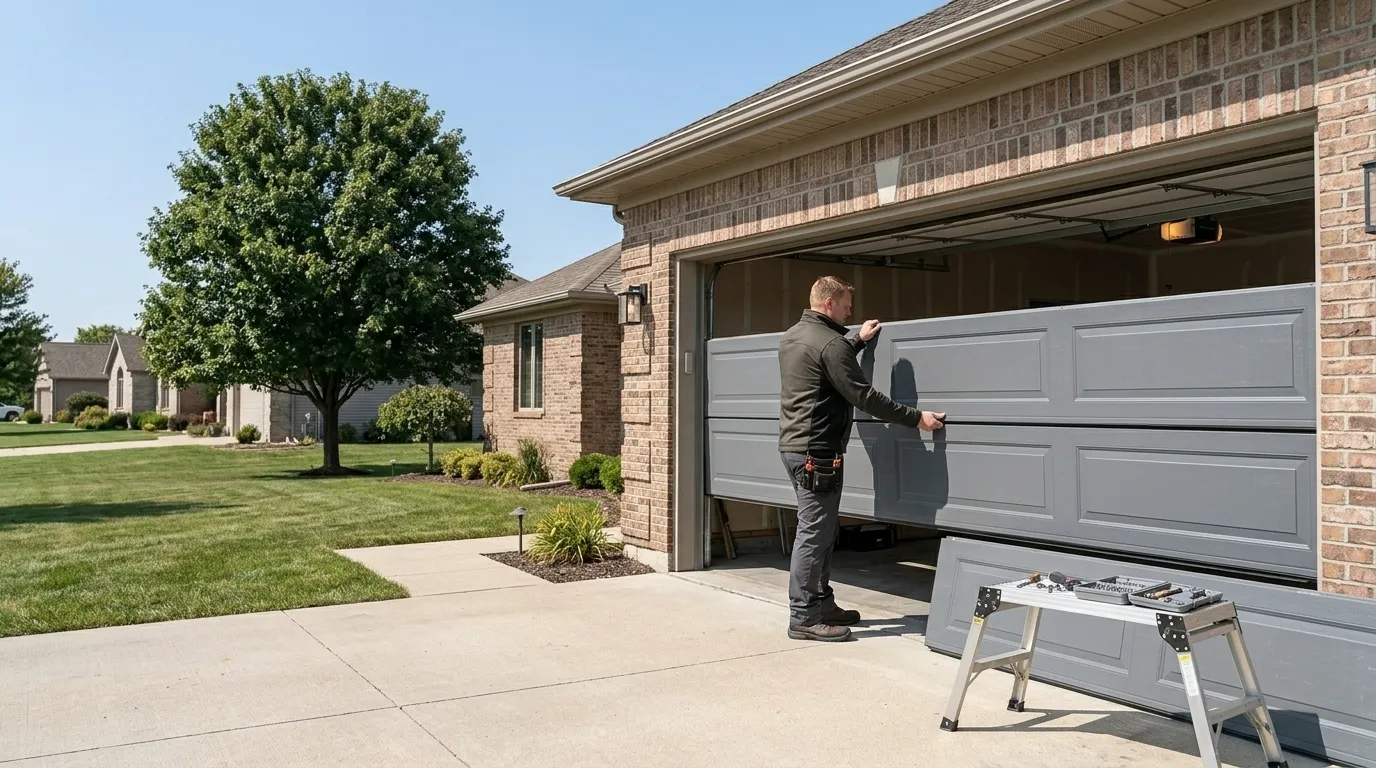
We run this call out from Springfield, about 7 miles to Sherman. There's no branch or depot in town - the truck comes from Springfield same as it does for the rest of the service area, so when you call, tell us what the door is doing: stuck partway, hanging crooked, one side lower than the other. That tells us whether it's a single roller off the track or something worse, like a bent track section that needs to come off the wall.
Don't try to force the door up or down once it's visibly crooked. That's the fastest way to turn a roller job into a track-and-panel job.
What Can Go Wrong
On a door this age, the most common off-track call is a roller that's popped out of the track on one side, usually the bottom two panels, while the opener still thinks the door is fine and keeps trying to run it. That's a five-minute realignment if you catch it early and nobody's forced the opener through another cycle.
Worse is a bent track. Steel track from a 2002-era install is lighter gauge than what you'd find in a garage built for heavier commercial-style doors, and a solid hit - a car bumper, a snow blower thrown against it - can put a permanent kink in it. A kinked track has to be replaced, not hammered straight; hammering it back gets you a track that looks straight but binds again in a month.
Less common but worth naming: a broken cable on one side of the door, which lets that side drop while the other stays up, walking rollers out of the track on both sides at once. That's not a roller fix, that's a cable and a full inspection of the drum and spring on that side before the door runs again safely.
What the Fix Involves
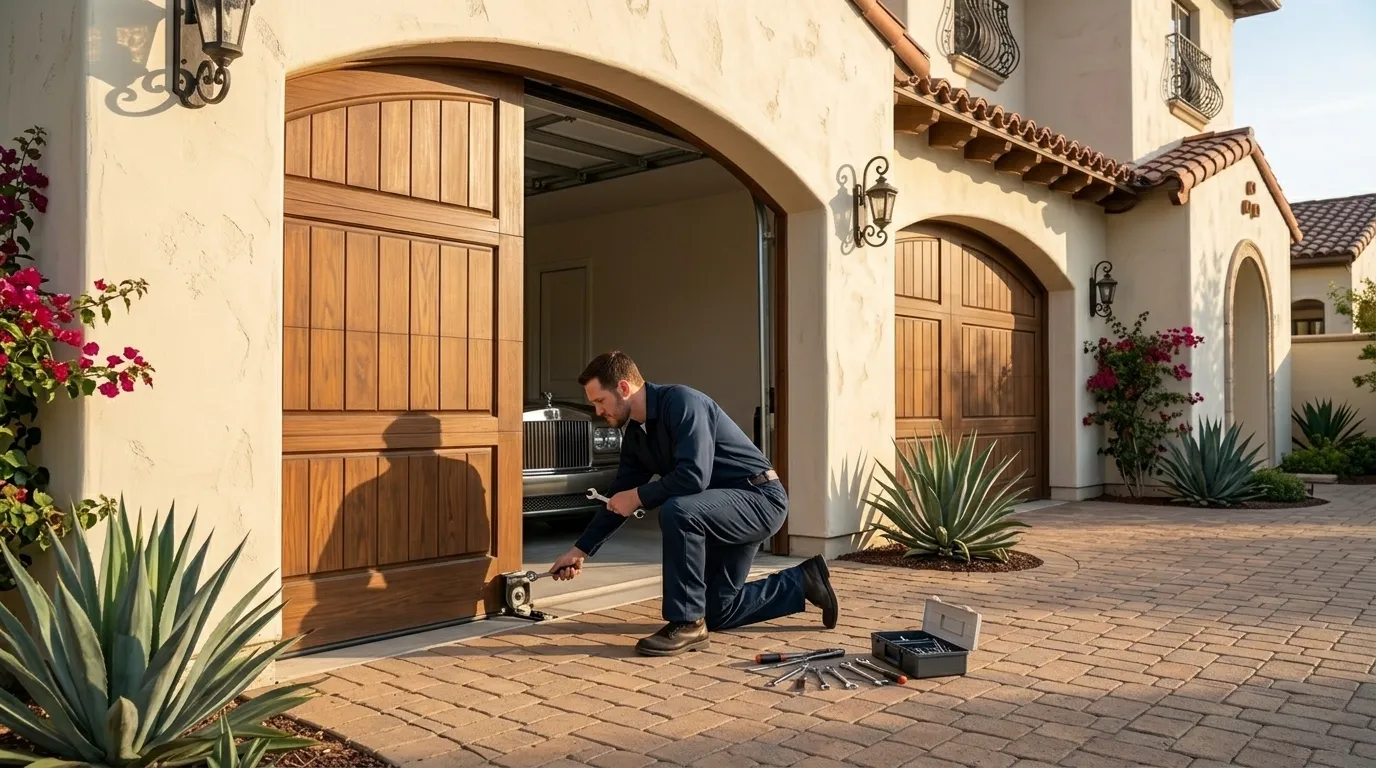
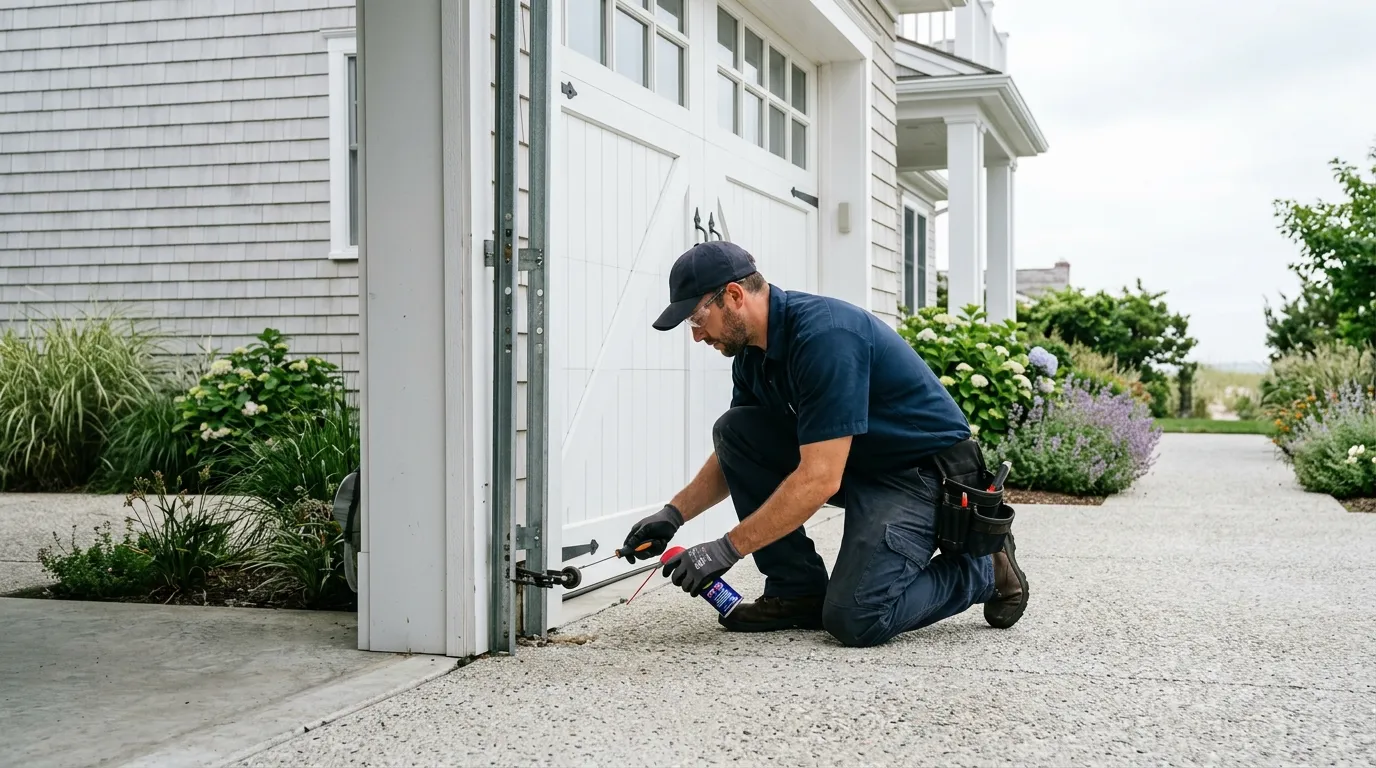
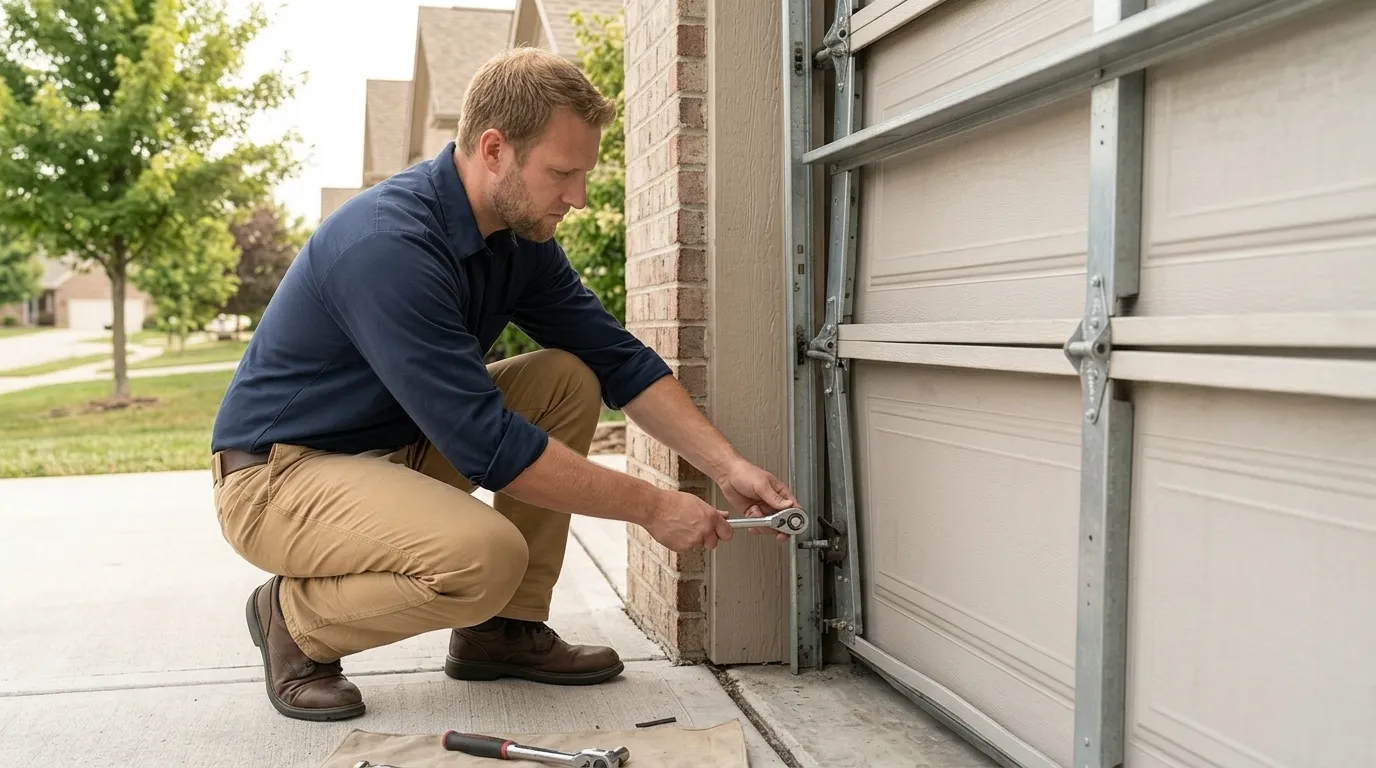
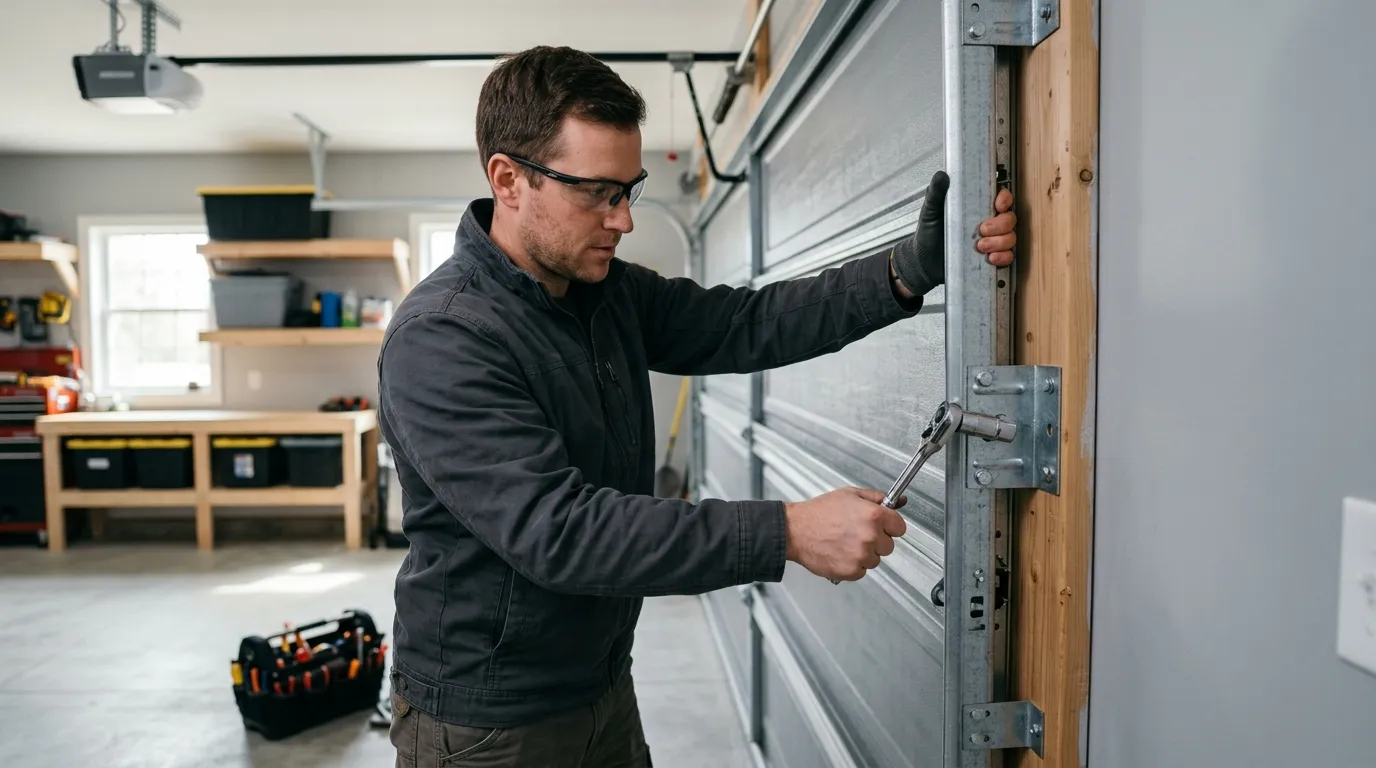
For a simple off-track roller, the job is: release the opener, walk the door to a stop, pull the roller back into the track channel, and run it through a full open-close cycle to check the other rollers haven't shifted too. On a 2002-era door with nylon rollers, this is usually a clean fix with no wear-and-tear surprises, since these rollers don't rust-pit the way older steel ones do.
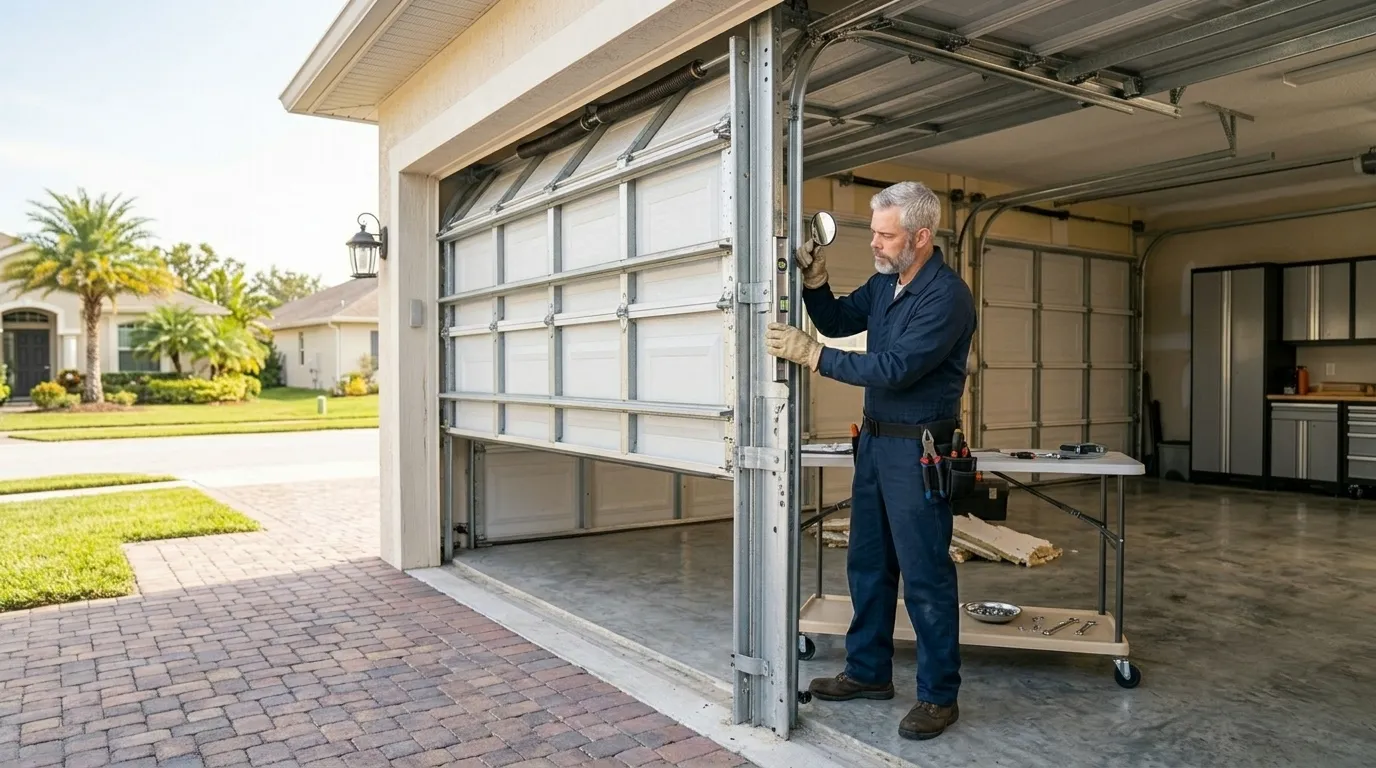
For a bent track, we pull the damaged section, check the wall brackets it's bolted to since a hard enough hit can bend those too, and set a new section plumb before rehanging the door on it. We check both sides for square once it's back up - a door that closes but isn't square on the track will walk itself back off within weeks.
One limitation worth saying up front: if the track damage runs the full length of one side, or the door itself is racked from the impact, replacing the door is usually the better call than patching hardware onto a bent frame. We'll tell you straight if that's what we're looking at instead of running up a repair bill on a door that's not going to hold anyway.