What Causes It Around Here
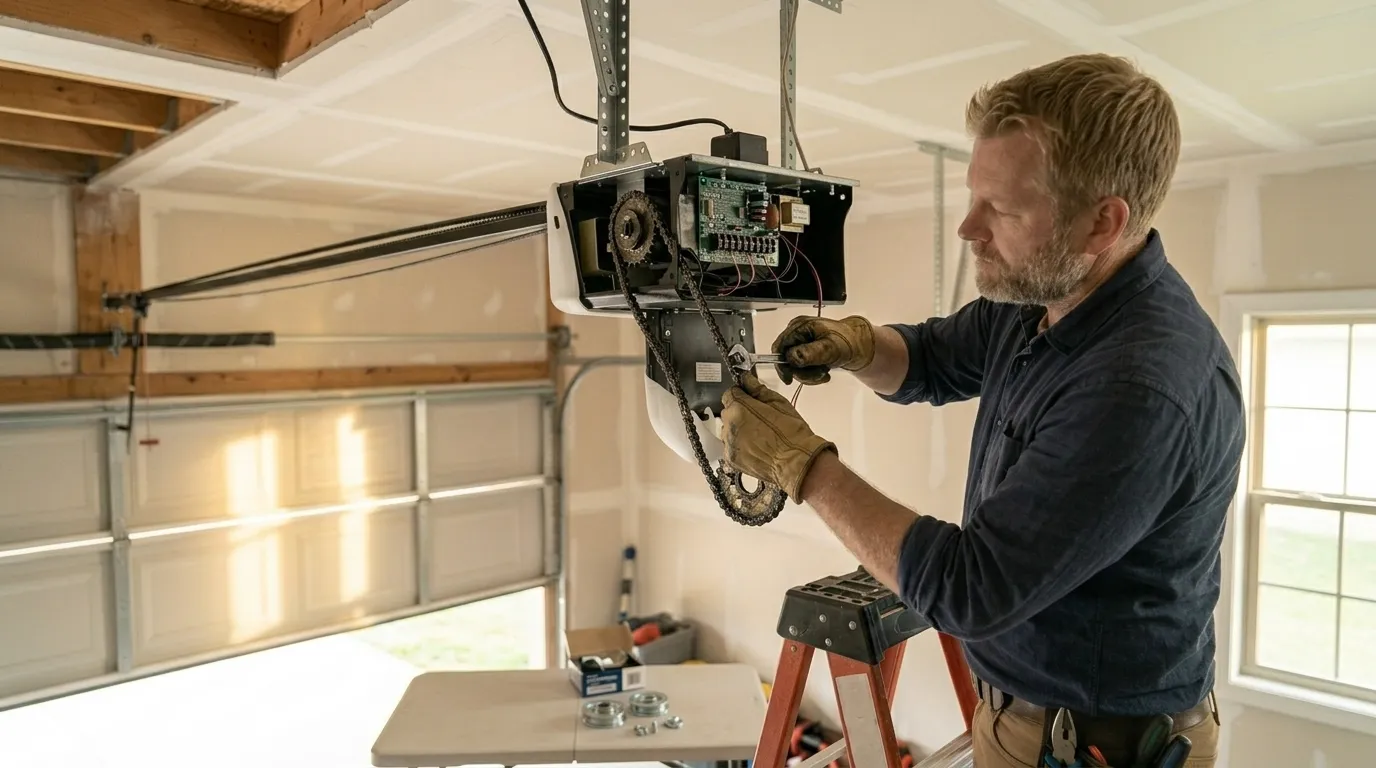
Most of the service area's housing dates back to 1957 through 2002, with the median landing around 1973 - but Athens itself skews newer, with most houses built closer to 1982. That decade matters for openers specifically. A house built in 1982 likely got a chain-drive opener with an early circuit board, the kind with a handful of relays and no surge protection worth mentioning. Those boards have had forty-plus years to corrode at the solder joints, and once a board starts dropping signal, it drops it randomly - works twice, fails the third time.
The cold moderate climate band this area sits in adds its own wear. Winter cold thickens the grease in the drive gear and tightens the chain, so the opener motor works harder every cold morning to pull a door that moved fine in October. That extra load is what finally kills a marginal capacitor or a tired board. It's not one dramatic failure - it's a slow one, and Athens homes built in that early-80s run are hitting the age where it shows up.
What You Pay
We don't quote a flat number over the phone for opener repair, and we won't pretend to here either - the cost swings hard depending on whether the fix is a $20 sensor eye, a logic board, or a gear-and-sprocket kit for a motor that's grinding itself apart. A wall-button or remote issue is usually the cheapest visit of the bunch; a dead board on an opener old enough to match Athens's 1982-era housing stock is usually the most expensive, because those boards aren't always in stock and sometimes get special-ordered.
What we can tell you is that Athens households run a median income around $85,000, noticeably higher than the roughly $79,000 median across the rest of the territory we cover - which is worth mentioning only because it's the kind of area where replacing an opener outright, rather than nursing an old board along, is often the call that makes more sense than a second repair visit six months later. We'll say so on-site if that's what we see, rather than sell a patch job.
The Symptom
The opener that hums but the door doesn't move usually means a stripped gear inside the motor housing - common on units old enough to have been running since the early 1980s building boom that shaped much of Athens. A remote that works from the driveway but not from the street is a signal-strength problem, often the antenna wire inside the motor cover, not the remote battery.
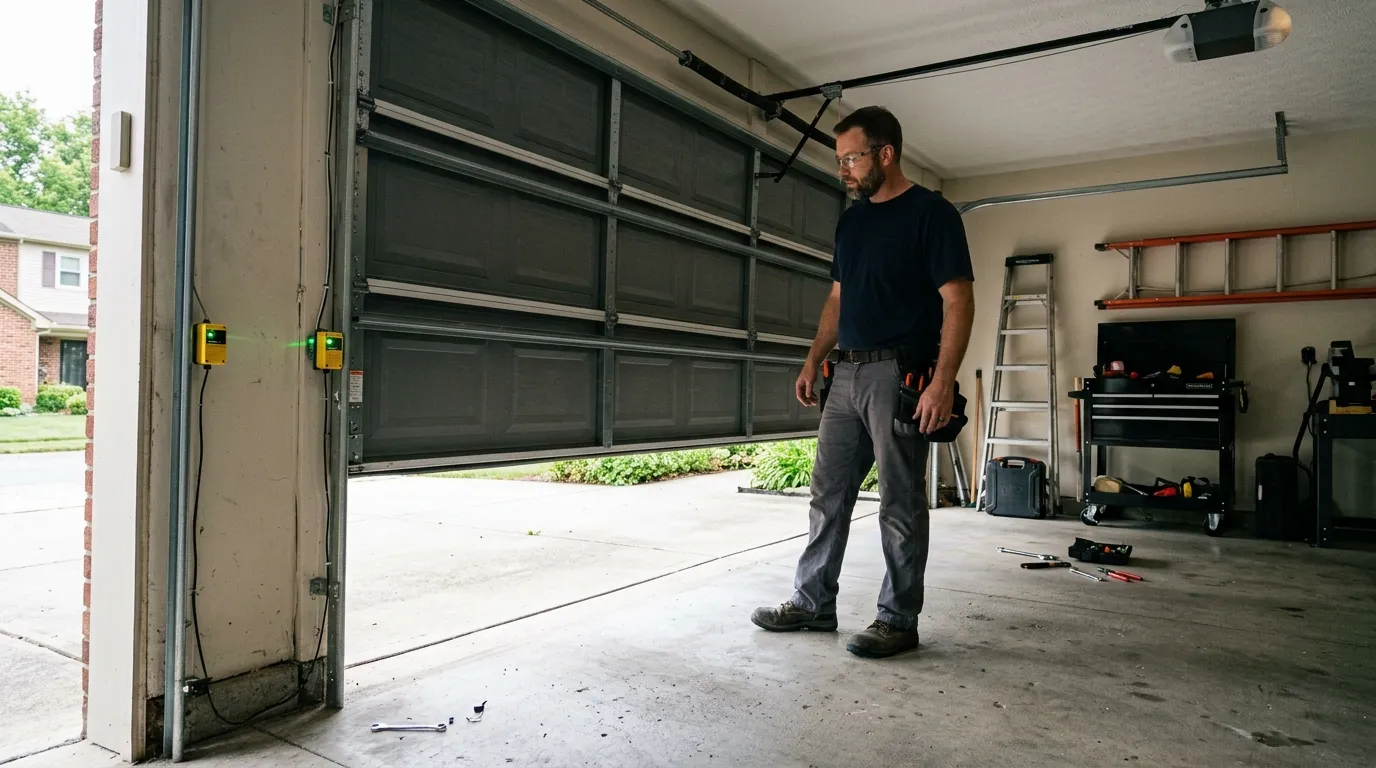
A door that reverses halfway down and won't finish closing is almost always the safety sensors - either misaligned by a bumped ladder or a cracked lens from age. And an opener that's gone completely silent, no light, no hum, no click from the wall button, points to the board or the power source, not the motor itself. Knowing which of these you've got before we drive out saves a trip: tell us what you hear and see, and we bring the part that matches.