What Causes It Around Here
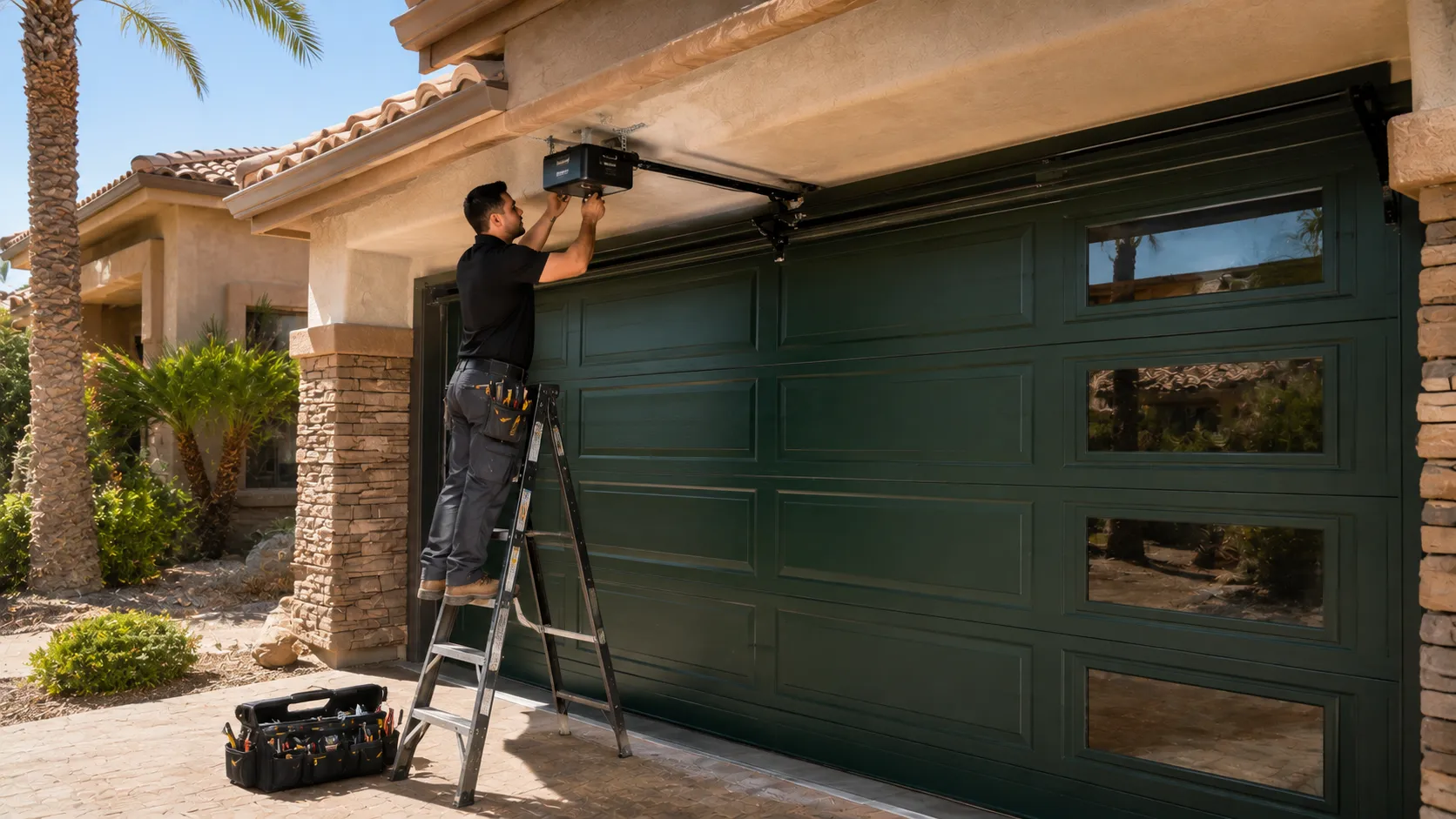
Athens homes cluster around a median build year of 1982, which puts most garages a good decade or more newer than the typical house across the wider Springfield service area, where the median sits closer to 1973 and stock runs from 1957 into the 2000s. That gap matters for parts. A door and opener installed new construction in the early '80s usually got a chain-drive opener with a relay board that's now well past its design life, and steel sectional doors from that period often carry the lighter-gauge rollers and hinges that wear thin sooner than people expect. The region sits in a cold-moderate climate band, and temperature swings are hard on steel door panels and on lubrication in torsion springs alike - cold makes old grease stiff, which is when a marginal spring finally lets go instead of holding on another winter. None of this means Athens doors fail more than newer builds elsewhere; it means the failure, when it comes, tends to be opener electronics or a spring at the end of its cycle life rather than rot or foundation settling you'd see in an older frame.
What You Pay
Median household income in Athens runs around $85,000, higher than the roughly $79,000 median across the broader service area. That number matters for one decision more than any other: whether a door is worth repairing or worth replacing. At that income level, a full door replacement is a real option rather than a stretch, so we don't default to patching a door that's fighting you every step just because repair is the cheaper line item today. If the opener is original to a house built in the early '80s and the springs are shot at the same time, the math often favors replacing the whole unit rather than repairing two failing systems back to back. We don't carry a published price list here - every job gets priced after we've seen the actual part - but we will tell you plainly when a repair is throwing good money after a door that's done, rather than running the invoice up.
The Symptom
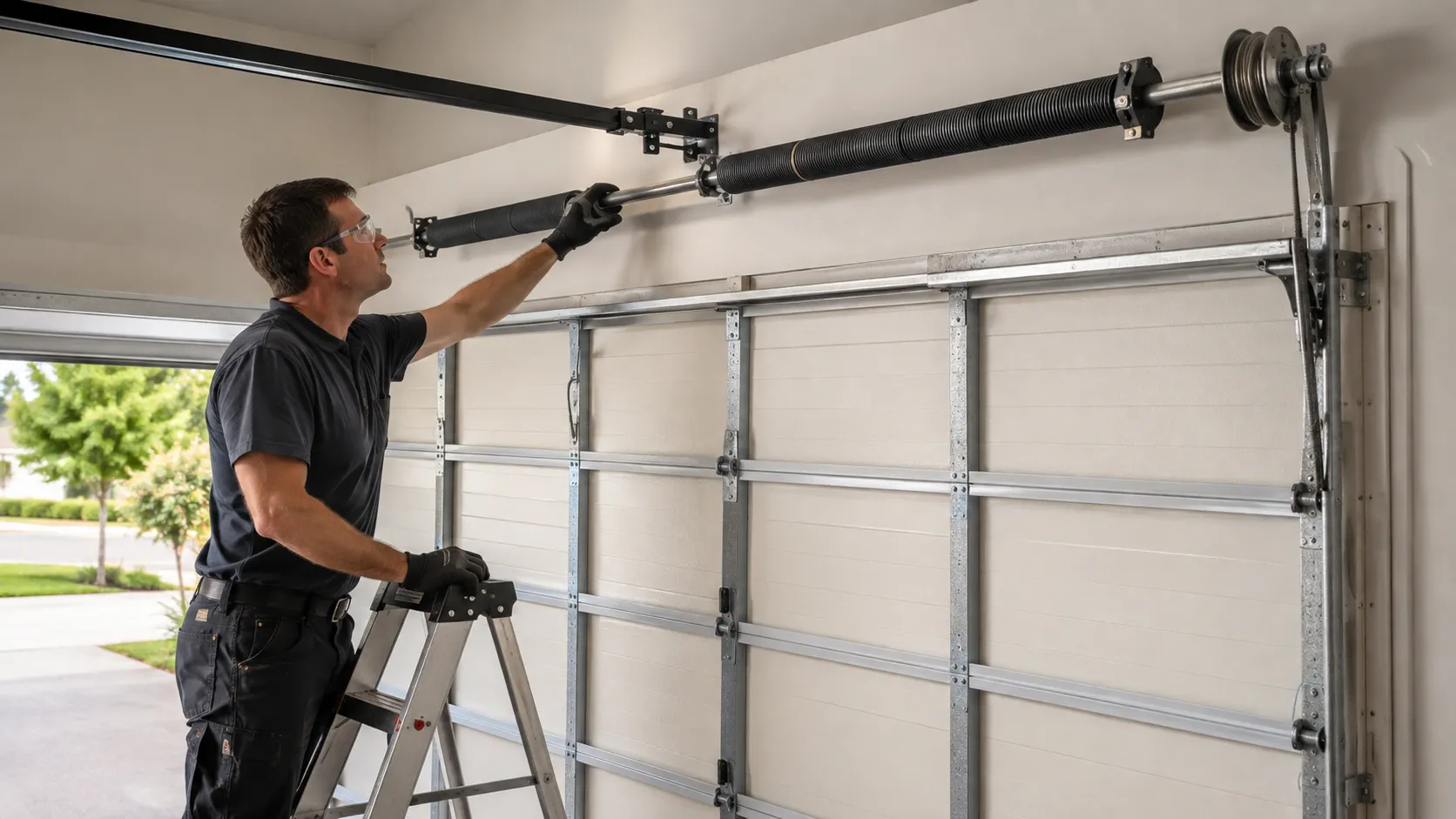
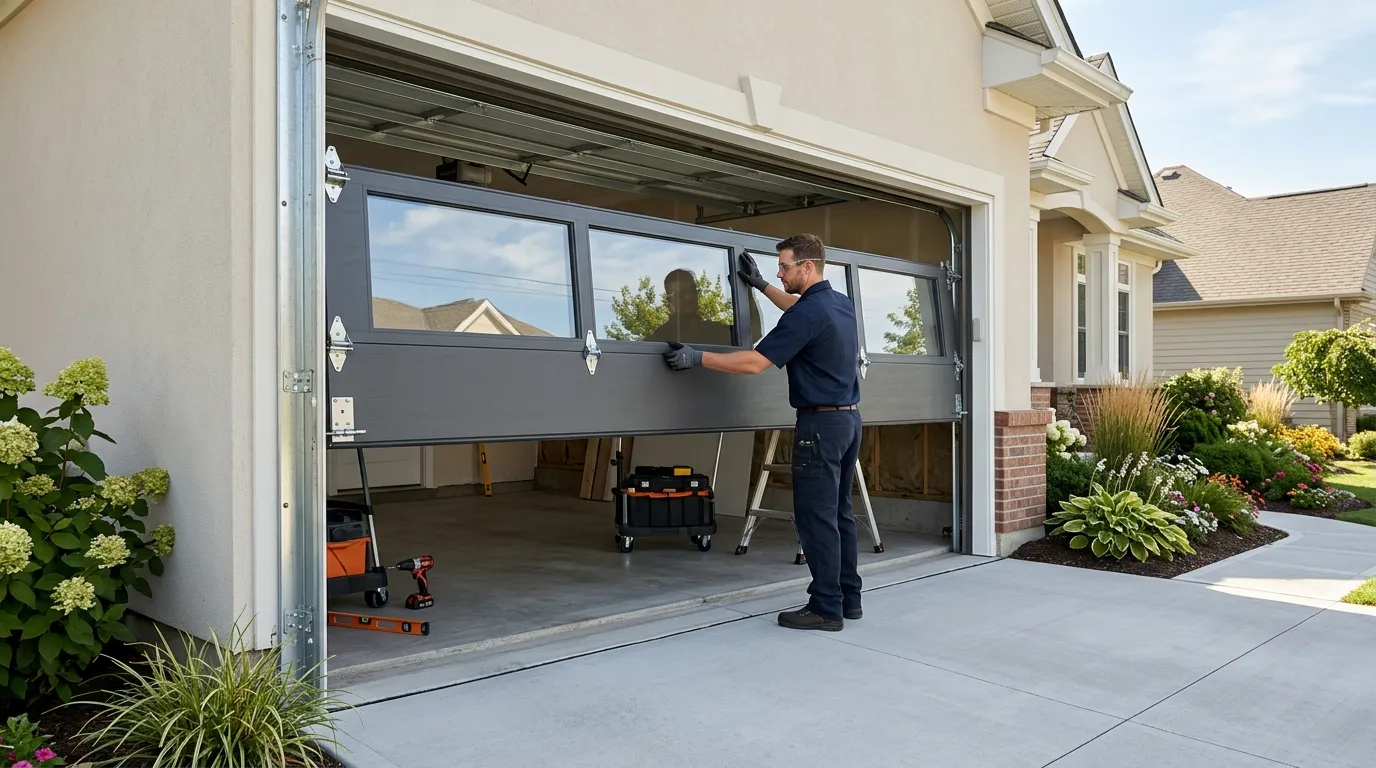
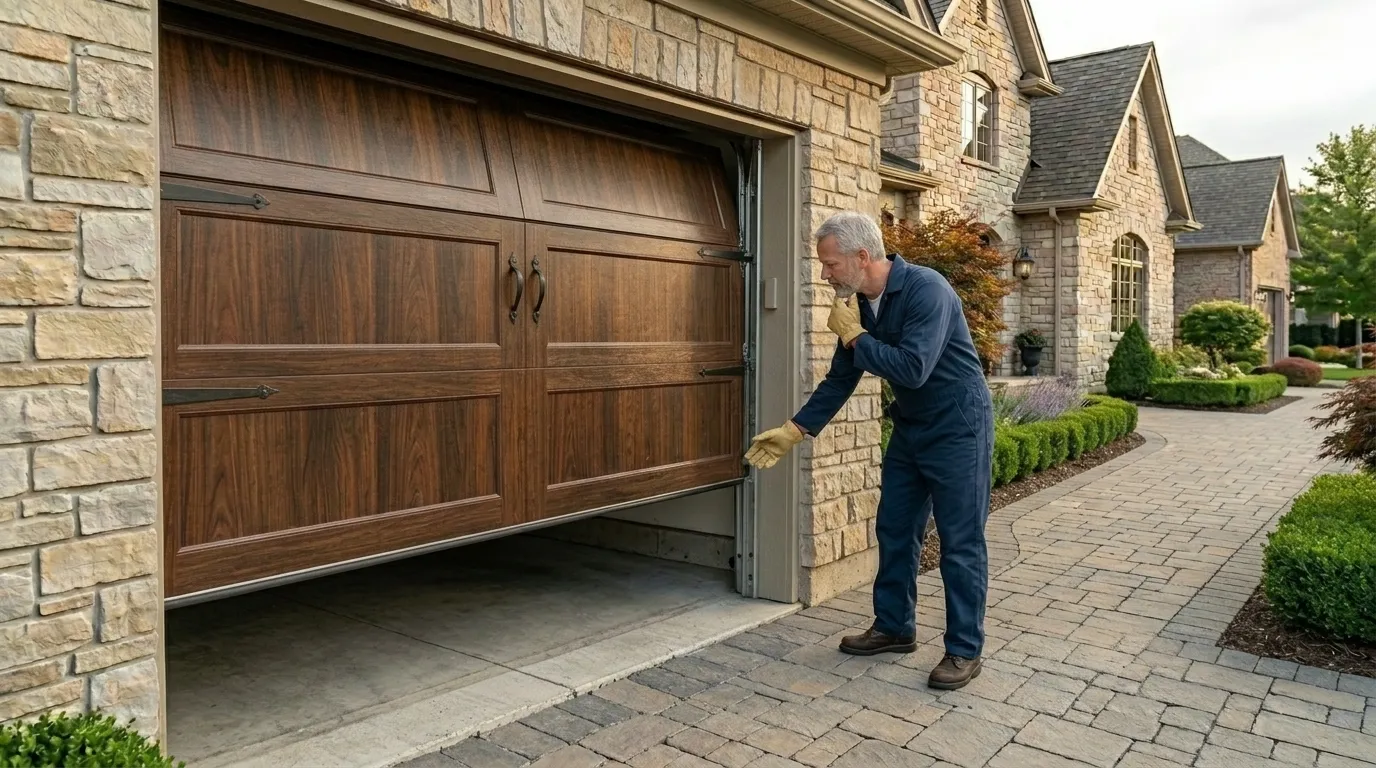
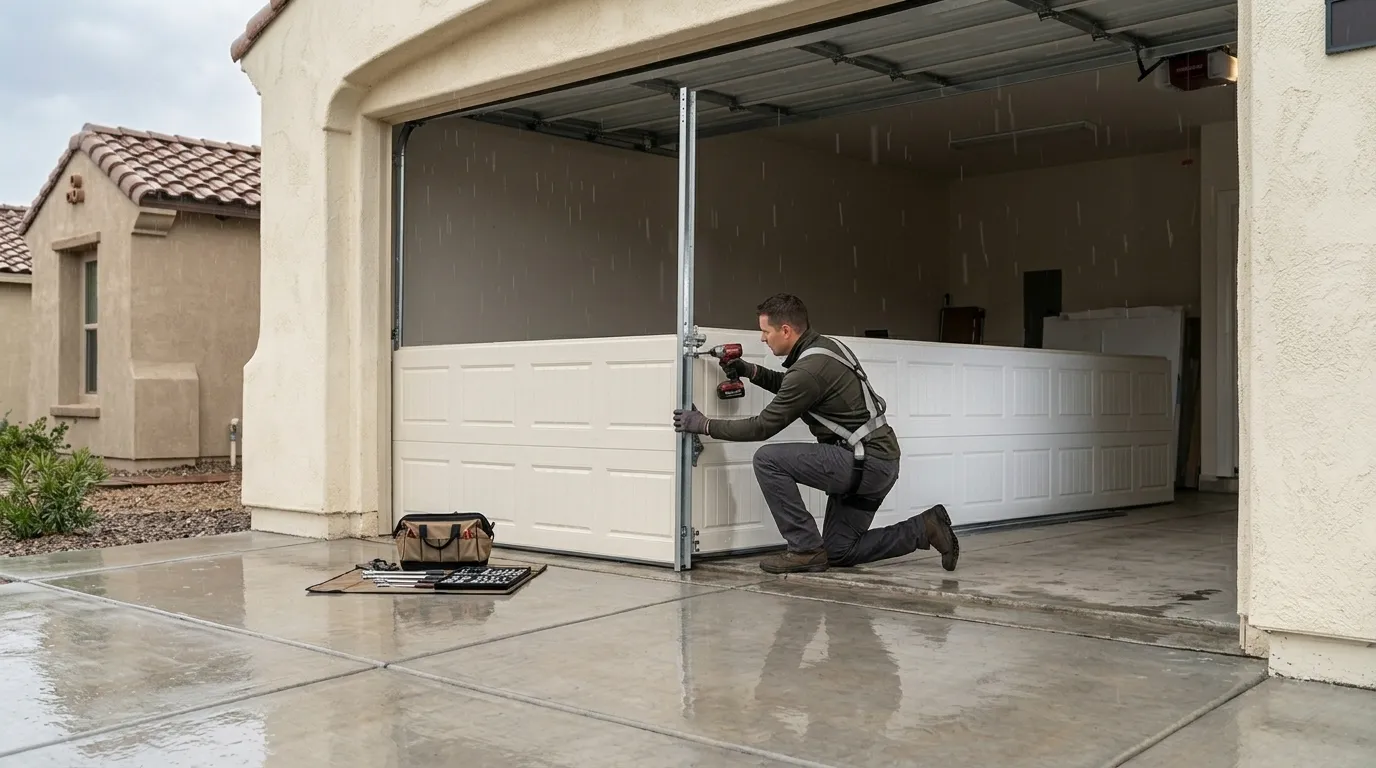
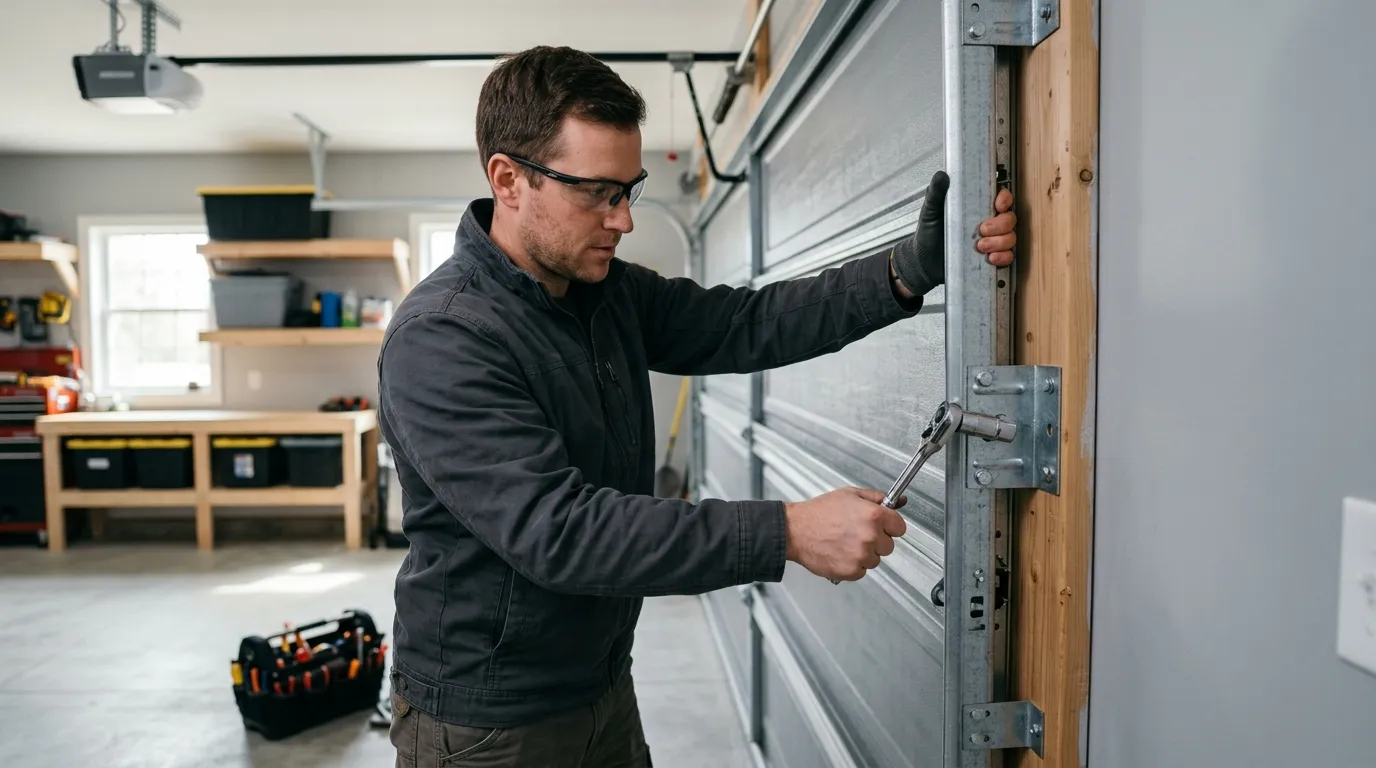
The complaint we hear most from Athens houses of this era is an opener that runs but won't fully close the door, reversing partway down, or a door that's suddenly heavy to lift by hand where it used to be balanced. Both point the same direction: a torsion spring that's lost tension after years of cold-weather cycling, or a safety sensor pair that's drifted out of alignment - common on chain-drive units installed when the house was new in the early '80s and never adjusted since. A door that slams the last six inches instead of settling is usually the spring, not the opener, even though the opener gets blamed first. If you're hearing a grinding or popping sound right before it sticks, don't keep running the opener through it - that's usually the spring near the end, and forcing it risks the cable next.