Parts We Carry
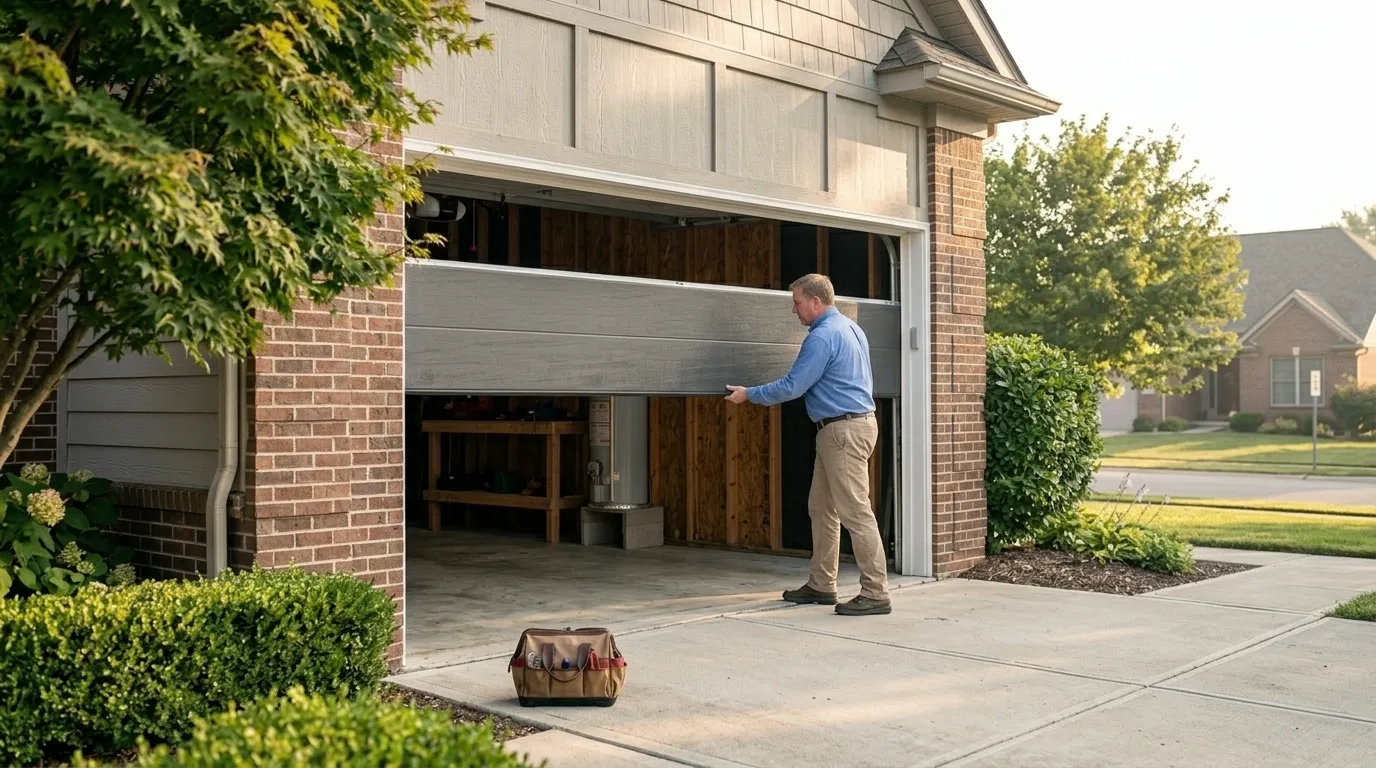
We stock two roller types on the truck: nylon rollers with sealed ball bearings, and steel rollers for doors where the track profile or the door weight calls for it. Nylon is quieter and doesn't need the periodic lubrication steel does, which matters if a door gets opened and closed often. Steel holds up better under heavier doors, including some of the older wood-panel doors still on houses from the Petersburg build era. We carry standard 2-inch stem rollers and the shorter stem length used on some older low-headroom track setups, since not every garage in a house built around 1961 has the clearance for today's standard hardware. What we don't carry on the truck is anything custom-fabricated - if a door needs a roller size nobody makes anymore, that's a conversation about replacing the track section, not a same-visit fix.
The Symptom
The complaint sounds almost the same every time: a grinding or rattling noise as the door travels, worse near the top or bottom of the run where the door slows down. Sometimes it's one loud clunk per roller pass - that's usually a roller with a flat spot or a cracked wheel, and you can often count the clunks to figure out how many rollers are bad. Other times it's a steady scraping the whole way, which points more to the track being rough or slightly bent rather than the rollers alone. If the door catches or hesitates at a specific spot on the track every time, that's often a roller that's worn down enough to have play in the bracket, letting the door wander sideways for a second before the next roller catches it.
What Can Go Wrong
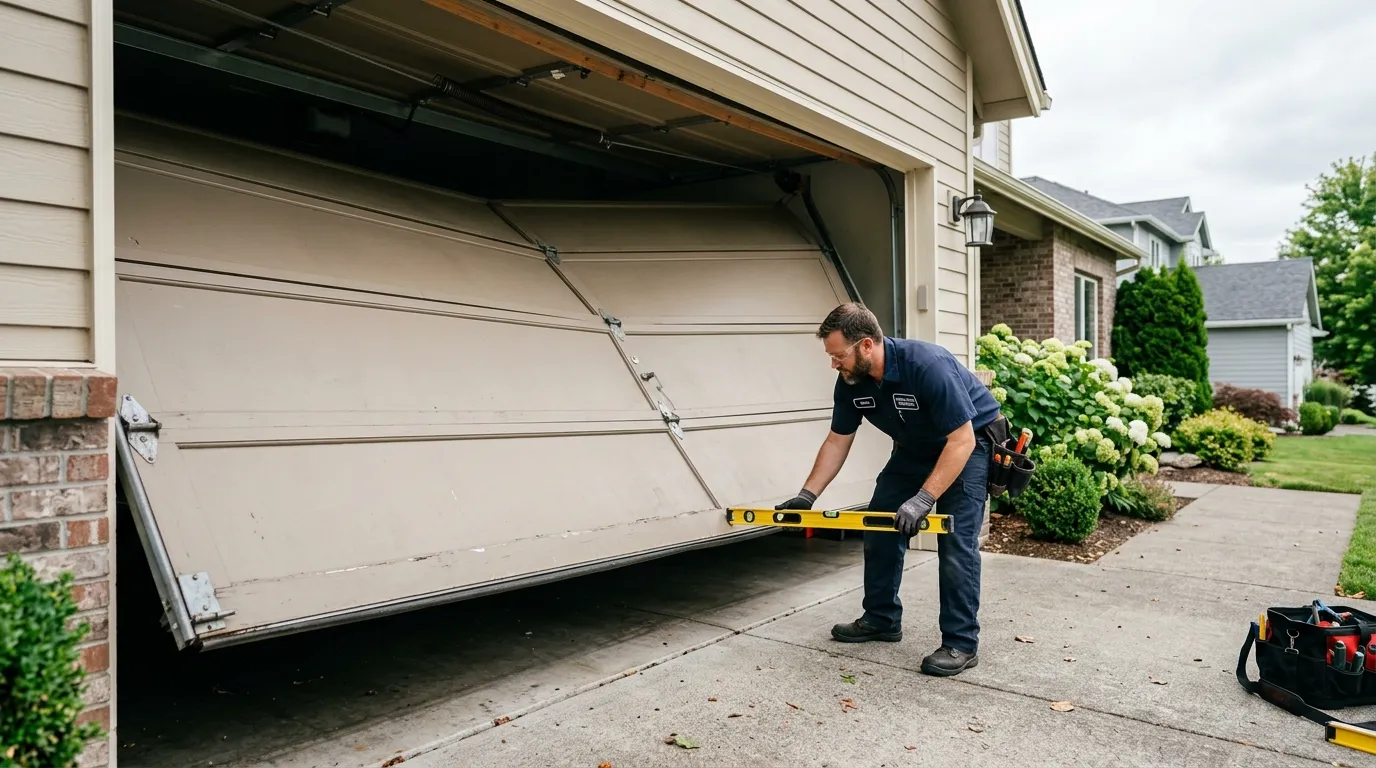
Worn rollers rarely fail alone. A roller that's lost its bearing can bind in the bracket and pull the track slightly out of true, and once the track is bent even a fraction, new rollers won't fix the noise - the track has to be straightened or replaced first. On older steel-roller doors we sometimes find the roller stem has worn a groove into the bracket itself, which means the bracket needs replacing along with the roller or the new part will wear the same way in a year. The cable can also take damage if a bad roller lets the door drop unevenly on one side, putting extra load on one cable while the other goes slack. None of that is common on a straightforward roller swap, but on a door that's been making noise for months before anyone calls, we check the track and brackets before assuming rollers alone will solve it.
How Long It Takes
Petersburg sits about 19 miles from our shop in Springfield, so the drive is part of how the visit gets scheduled - we're not based in town and don't claim a local response time. Once the truck is there, a standard roller replacement on one door, top to bottom, usually runs under an hour if the track and brackets are sound. It takes longer if we find a bent section of track or a bracket that's worn out and needs swapping too, since that means removing more of the door assembly. We carry both nylon and steel rollers on the truck, so most jobs get finished the same visit without a second trip. The exception is a door where the roller size or stem length is non-standard for the low-headroom setups some older Petersburg garages have - those occasionally need us to order the right part and come back.