Parts We Carry
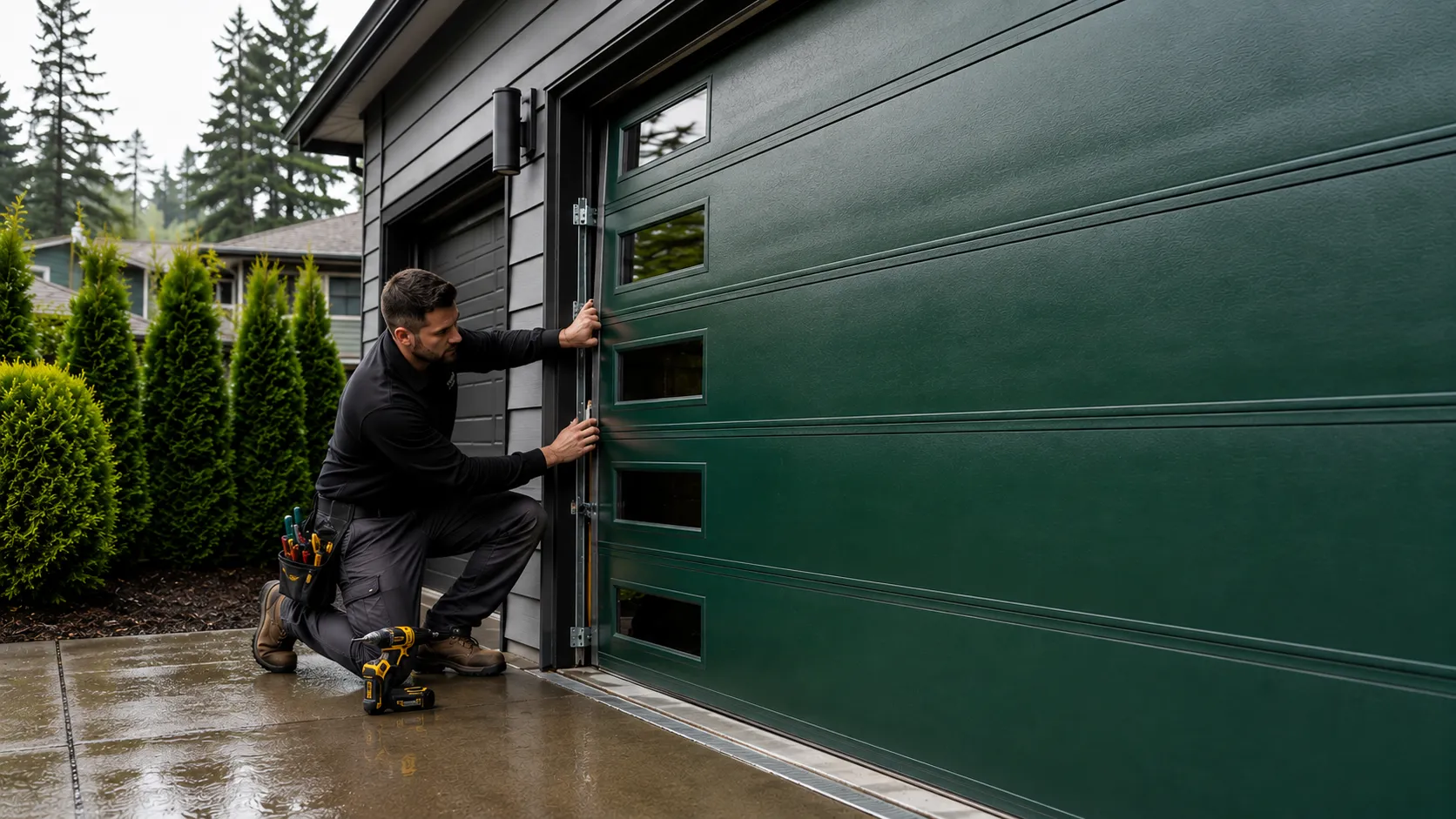
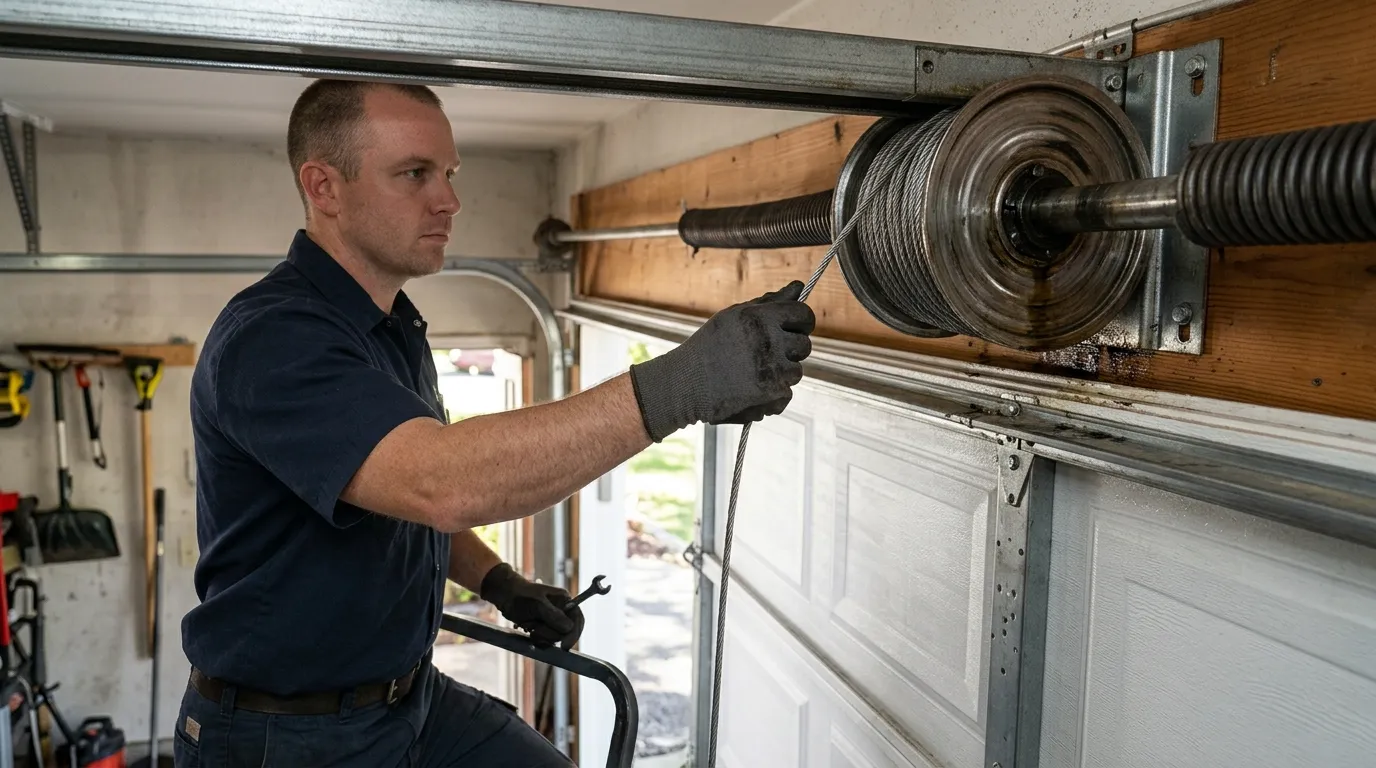
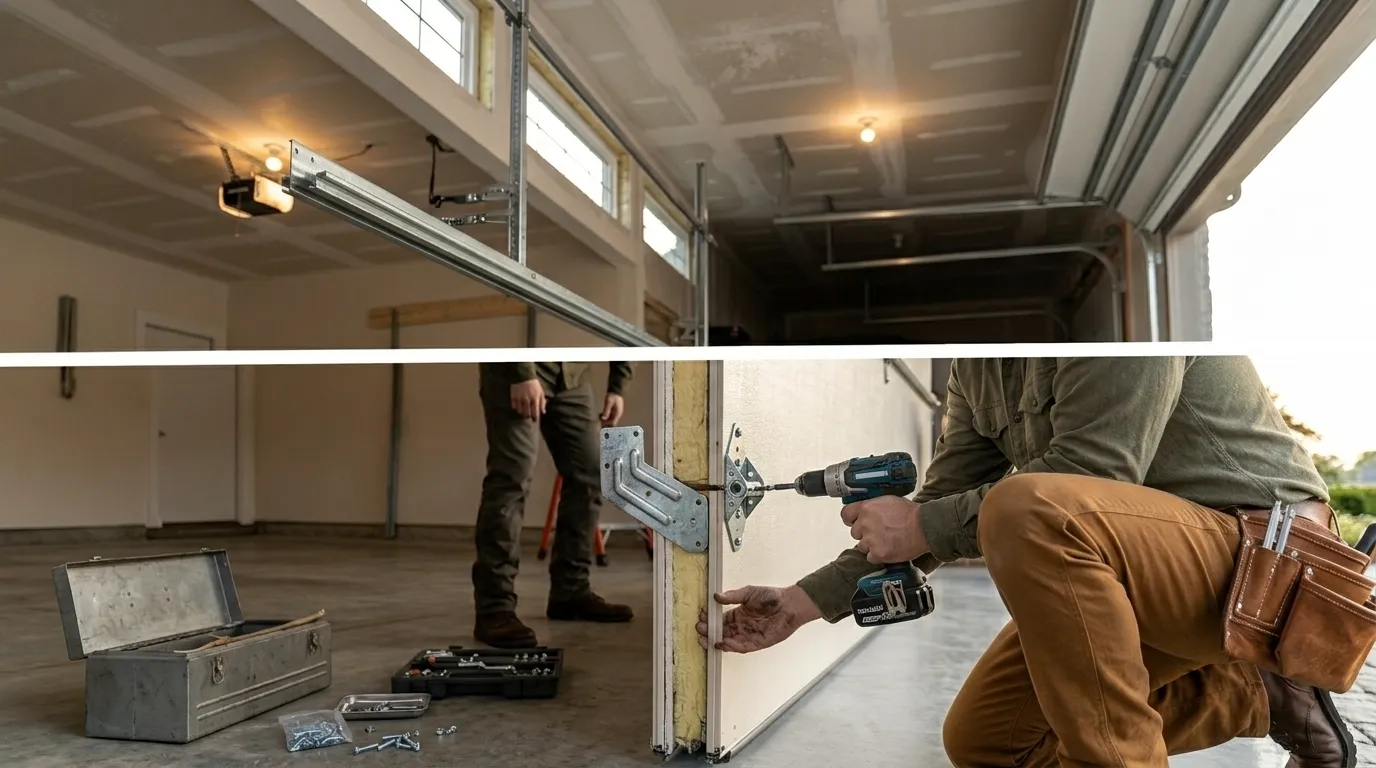
Petersburg's housing stock centers on 1961, a good decade ahead of the service area's overall median of 1973. Doors from that era were built with single torsion springs on lighter panels, or in a lot of cases extension springs mounted along the horizontal track rather than the torsion bar setup that became standard later. We carry both spring types on the truck along with the sheave pulleys and safety cables that extension setups need and that a lot of newer trucks don't stock. Rollers on doors this age are usually steel, not the sealed nylon kind, and they wear a groove into the track over enough winters that the whole track needs straightening or swapping, not just the roller. We keep standard-width steel track sections and universal roller brackets on hand because a custom-cut piece for a door this old can mean a special order and a wait, which we'll tell you about upfront if that's what your door needs.
The Symptom
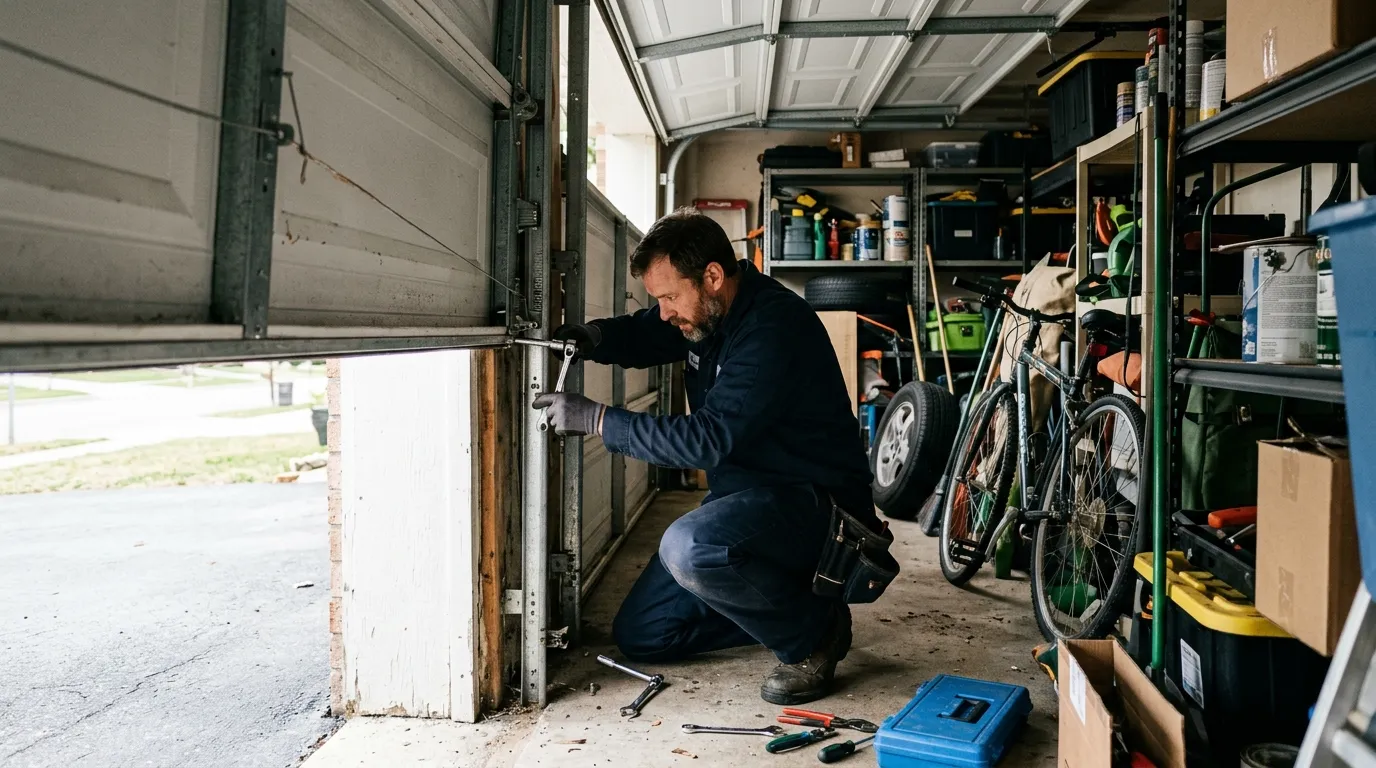
The complaint we hear most from doors built around Petersburg's 1961 median is a door that runs unevenly - one side dropping faster than the other, or the door hanging crooked by an inch or two when it's down. On a torsion door that's usually a spring going soft on one side while the other still holds tension. On an extension-spring door, from the same era, it's often one cable stretched more than its partner, or a pulley wearing unevenly. Either way it's not cosmetic. A door running crooked is putting side load on rollers and track that were never designed for it, and that wear compounds fast once it starts. The second common symptom is a door that groans or bangs on the way up - old steel rollers in a track that's picked up rust pitting over sixty winters make a distinct sound, and it's worth having someone listen to it before it becomes a jammed door on a cold morning.
What Can Go Wrong
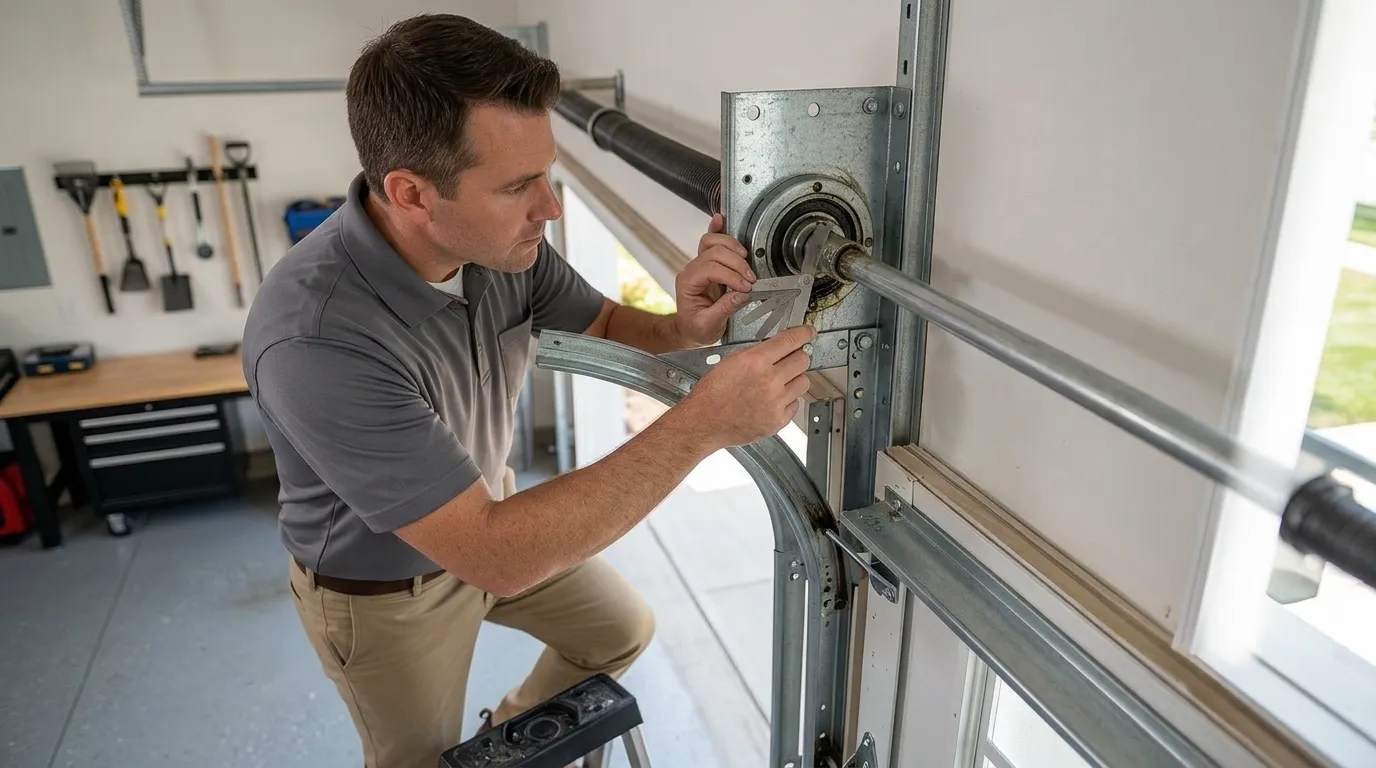
A torsion spring that finally snaps on a door this old doesn't just stop working - it can whip the bar it's wound around and damage the center bracket, which turns a spring swap into a bracket and spring job. On extension-spring doors, a cable that lets go with the door partway open can drop that side of the door hard, and if a homeowner or a car happens to be under it, that's a real injury risk, not a hypothetical one. We've also seen, on doors this age, a track pulled loose from a jamb that's shifted slightly over sixty years of settling - common in housing from Petersburg's era across the region - which means the fix isn't just re-hanging the track but re-anchoring it into wood that may itself need attention. Deferred maintenance on a door this old rarely stays small; the parts are old enough that one failure tends to stress the part next to it.
How Long It Takes
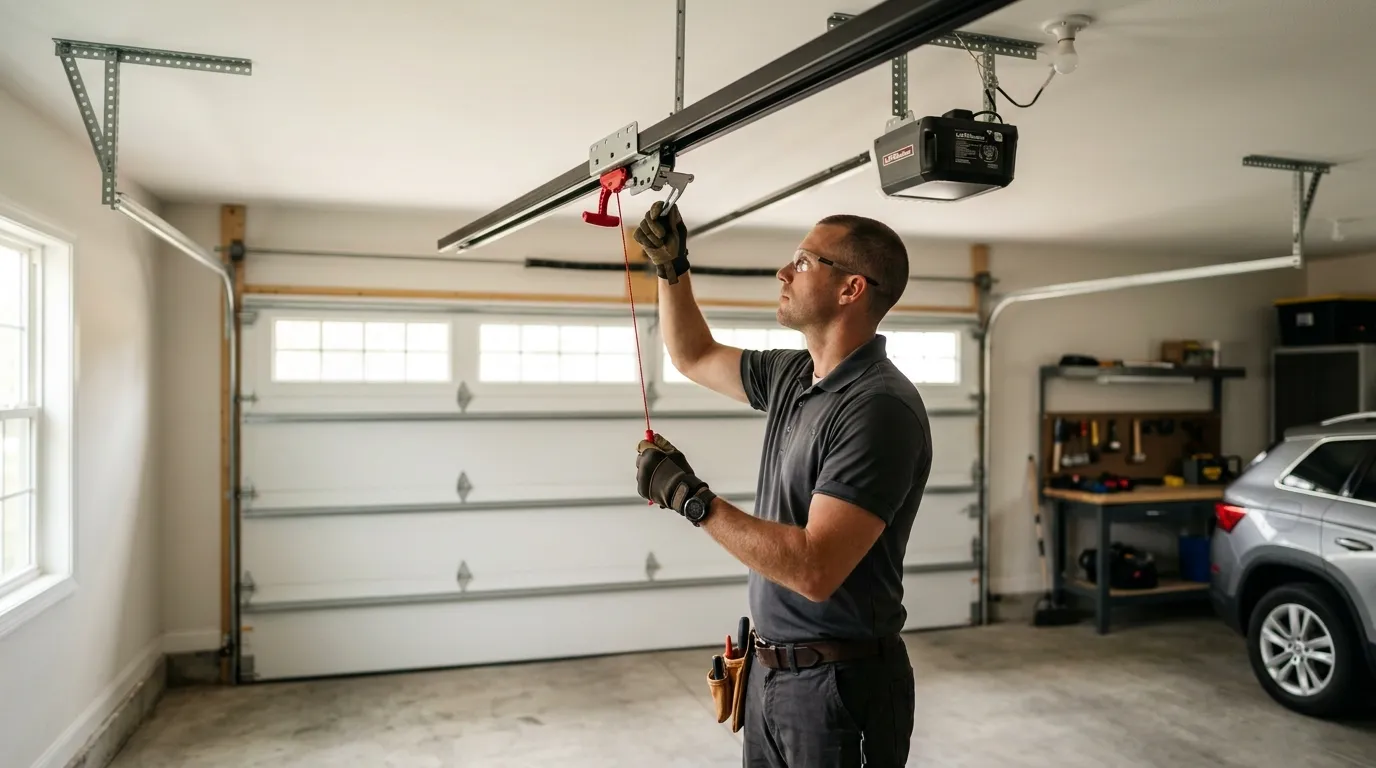
We won't promise a same-day slot for Petersburg the way we might for a town five minutes from the shop - at 19 miles out, a Petersburg call gets scheduled as its own trip, not squeezed into gaps between closer jobs. Once we're on site, a standard tune-up and inspection on a door this age usually turns into a slightly longer visit than on a newer door, simply because there's more to check: spring tension on both sides, cable condition, track alignment, and the bracket and jamb that a sixty-year-old house has had time to shift. If a spring or cable needs replacing outright, that's additional time and parts, and if it's a size or type we don't carry on the truck, that can mean a second trip. We'd rather tell you that up front than promise a fast fix and come back with an excuse.