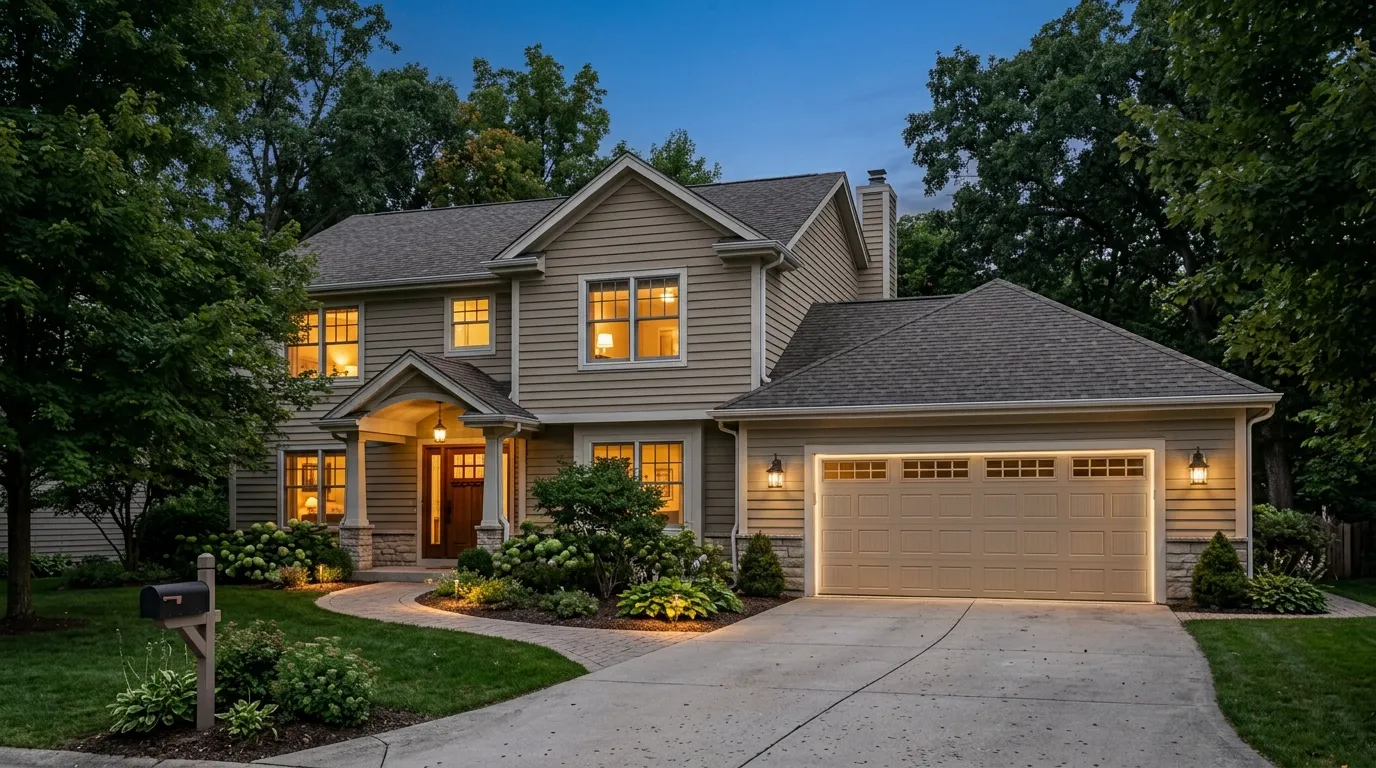
Chatham's houses mostly went up around 1995, later than most of the service area. That means original chain-drive openers, not the older screw-drive units. Here's what that means for repair.
Most houses in Chatham went up around 1995, which puts this suburb noticeably newer than the 1957-2002 spread across the rest of the service area. That matters for openers because a house built in the mid-90s almost always went up with a chain-drive or belt-drive unit already installed, not the older screw-drive models common on houses from the 1960s and 70s elsewhere in the area.
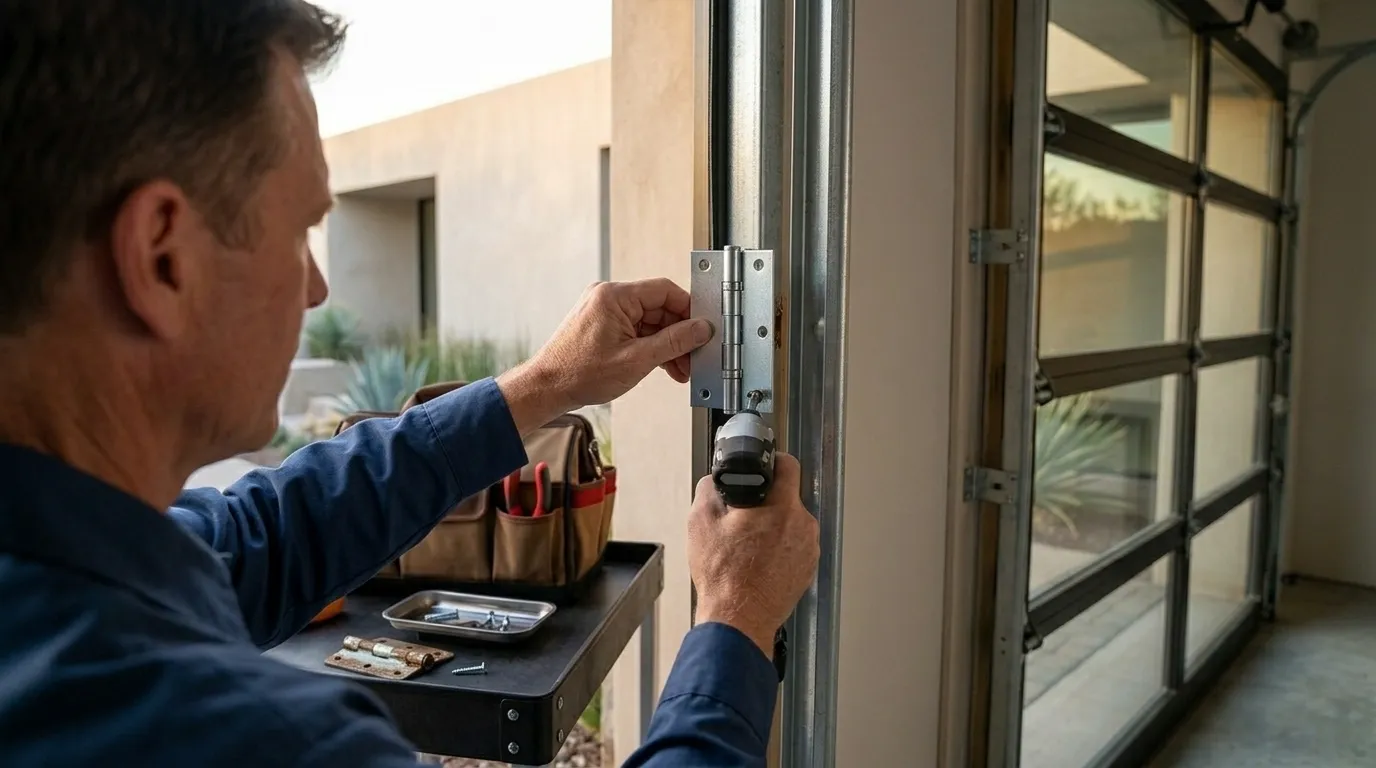
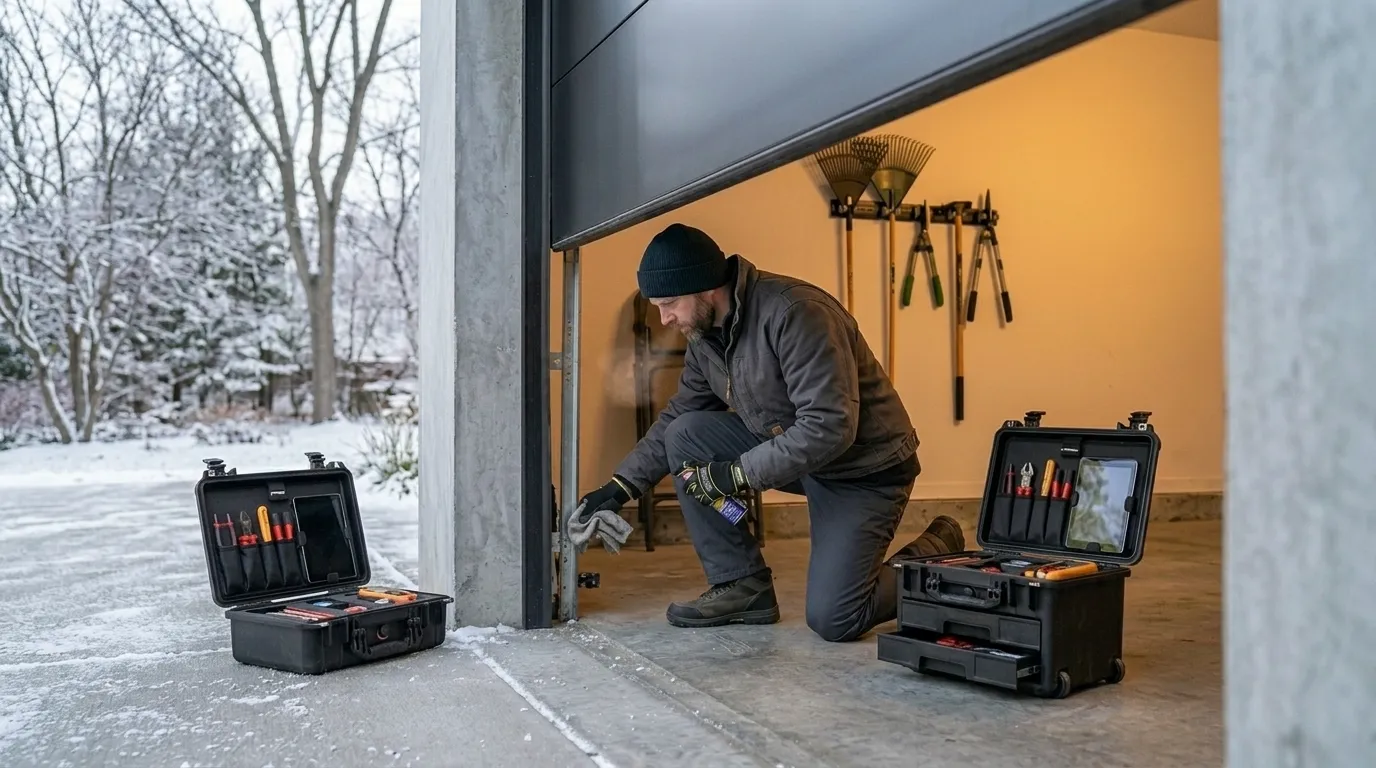
What we usually find failing on an opener that age is the logic board, the drive gear (the small plastic or nylon gear inside the housing that strips after enough cycles), or the capacitor that gives the motor its starting kick. Wall control wiring also degrades after three decades, especially where it runs along an unheated wall in a cold-climate winter like this region gets. If the opener has never been replaced, which is common in a house this age since the original unit often still works, we're usually dealing with parts that are original to the build - not aftermarket replacements installed at some point in between.
We don't stock every logic board for every 1990s opener brand on the truck. Some boards are discontinued and need to be sourced, which can add a day or two versus a same-visit fix.
How Long It Takes
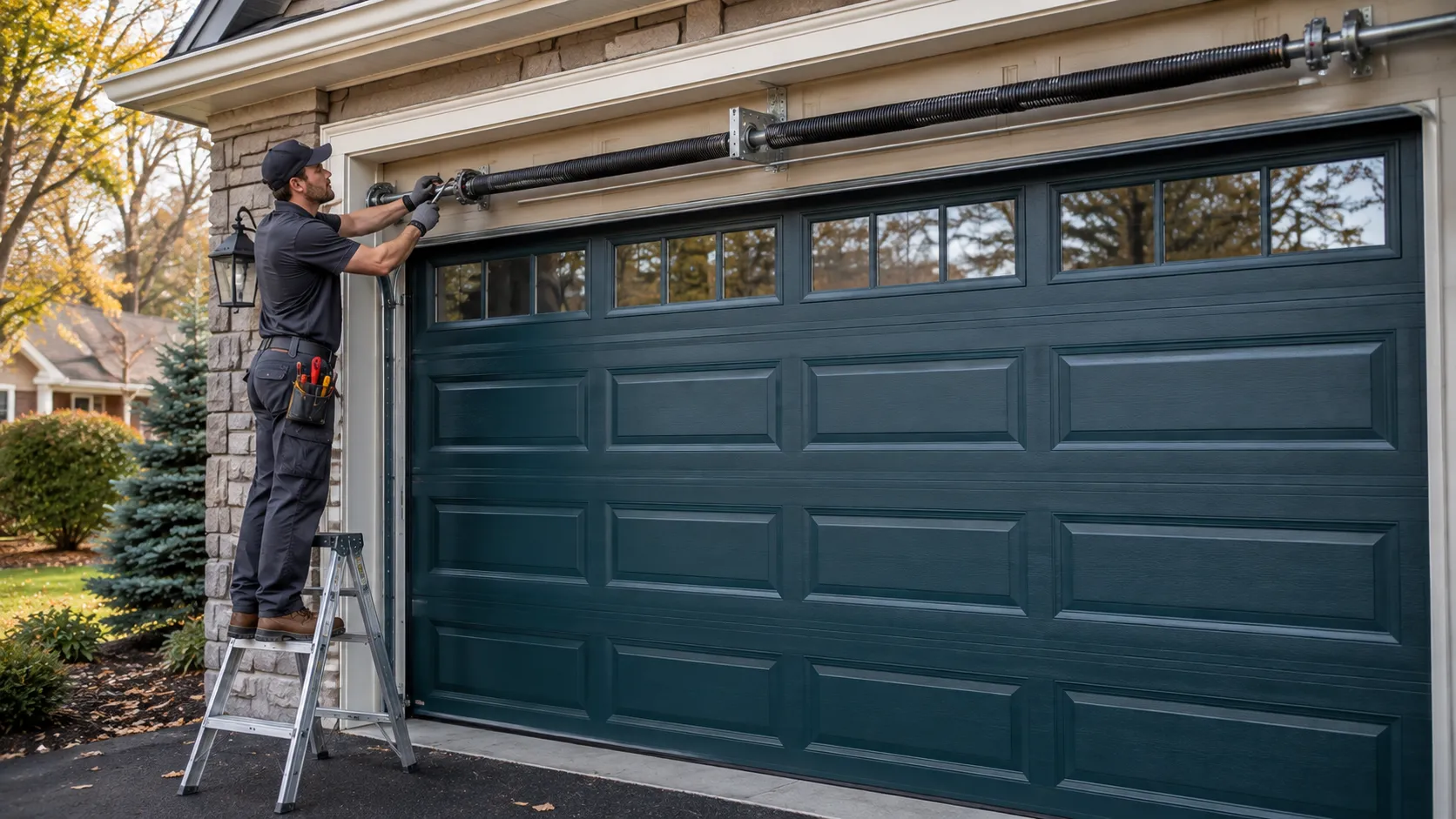
We come out of Springfield, about 8 miles from Chatham, so there's no local branch to shorten the drive - the time you wait is the drive time plus the job itself. A straightforward fix, like a failed capacitor or a worn drive gear, is usually a single visit once we're on site. A logic board that has to be ordered is the exception, not the rule, but on an opener that's been running since the house was built, it does happen.
We don't quote a fixed turnaround here because it depends on what's actually wrong once we open the unit up, and on a 1990s opener that's often something we don't know until we're looking at it in person.
Can You Do This Yourself
Some of this is safe to check before you call anyone. Make sure the wall button and the remote both fail the same way - if only the remote fails, it's a battery or a lost signal, not the opener. Check that the safety eyes near the floor track are aligned and the light on them isn't blinking, since a knocked eye is the single most common reason an opener won't close on a house of any age.
What we don't recommend doing yourself: opening the motor housing, working on the logic board, or touching anything connected to the trolley and chain under tension. On an opener that's original to a house built in the mid-90s, the housing and internal wiring have had three decades to become brittle, and taking it apart without knowing what you're looking at is how a simple fix turns into a bigger one. If the opener is original and starting to show its age broadly - not just one part - replacement is often the more honest answer than another repair.
What You Pay
We don't post a flat price here because opener repair cost depends entirely on what's actually broken - a capacitor swap is a different job from a logic board that has to be special-ordered for a 1990s unit. What we can tell you about this area specifically: median household income in Chatham runs around $106,030, well above the roughly $79,008 median across the broader service area, and across the 11,632 owner-occupied houses in that wider area, opener repair tends to be a smaller share of a homeowner's decision-making here than in older parts of the region where hardware failures are more frequent and repair-versus-replace comes up more often.
We'll give you a number after we've looked at the unit, not before. If a repair would cost close to what a new opener runs, we'll say so rather than patch something that's going to fail again in a year.
How it works
From “it’s stuck” to “it’s fixed”
01
Tell us what’s wrong
Describe the symptom - won’t open, loud bang, opener runs but the door won’t move.
02
On-site diagnosis
A technician tests the door under power and by hand and finds what actually failed.
03
Clear, up-front plan
You get the fix that’s needed and what drives the cost - before any work starts.
04
Repaired & tested
The repair is done, the door is set true and tested, and the work area left clean.
Serving Springfield, IL - tell us what your door’s doing and we’ll take it from there.
Why does my opener feel newer than my neighbor's house in Springfield?
Chatham's housing mostly dates to around 1995, later than much of the broader Springfield service area, which spans houses built from 1957 up through 2002. A newer build year usually means a chain or belt-drive opener from the factory rather than the older screw-drive units common on 1960s and 70s houses elsewhere.
Do you have a branch in Chatham?
No. We work out of Springfield and drive to Chatham for calls, about 8 miles each way. There's no local depot, so response depends on the drive plus whatever the job itself needs once we're there.
Is it worth repairing a 30-year-old opener?
Sometimes. If it's one part failing - a capacitor, a drive gear - a repair makes sense. If the housing, wiring, and drive system are all showing wear at once because the unit is original to a mid-90s build, replacement is often the better use of your money than repeated repairs.
Ready to get your garage door sorted?
Tell us what it’s doing and where you are in Springfield - we’ll take it from there.