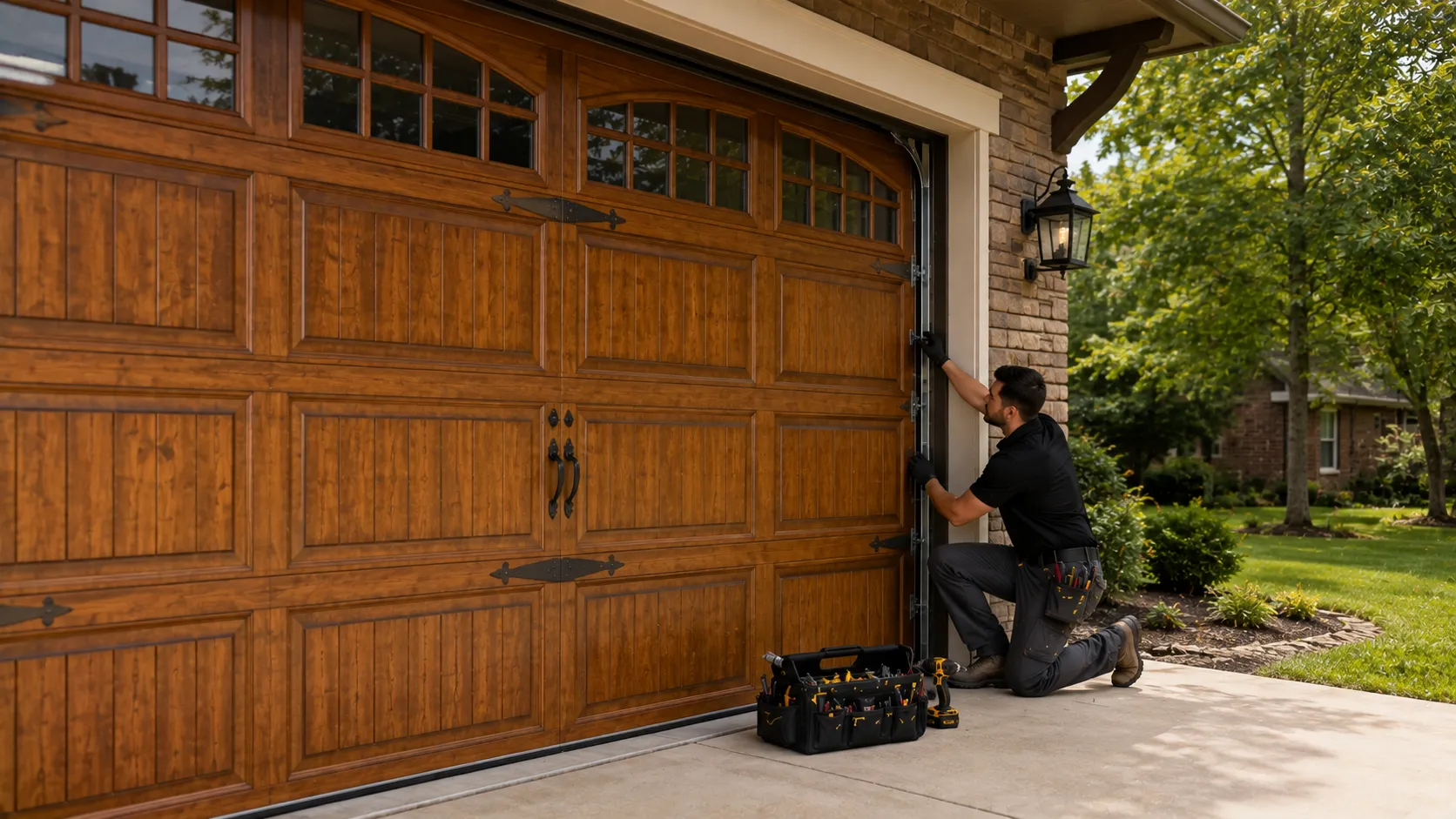
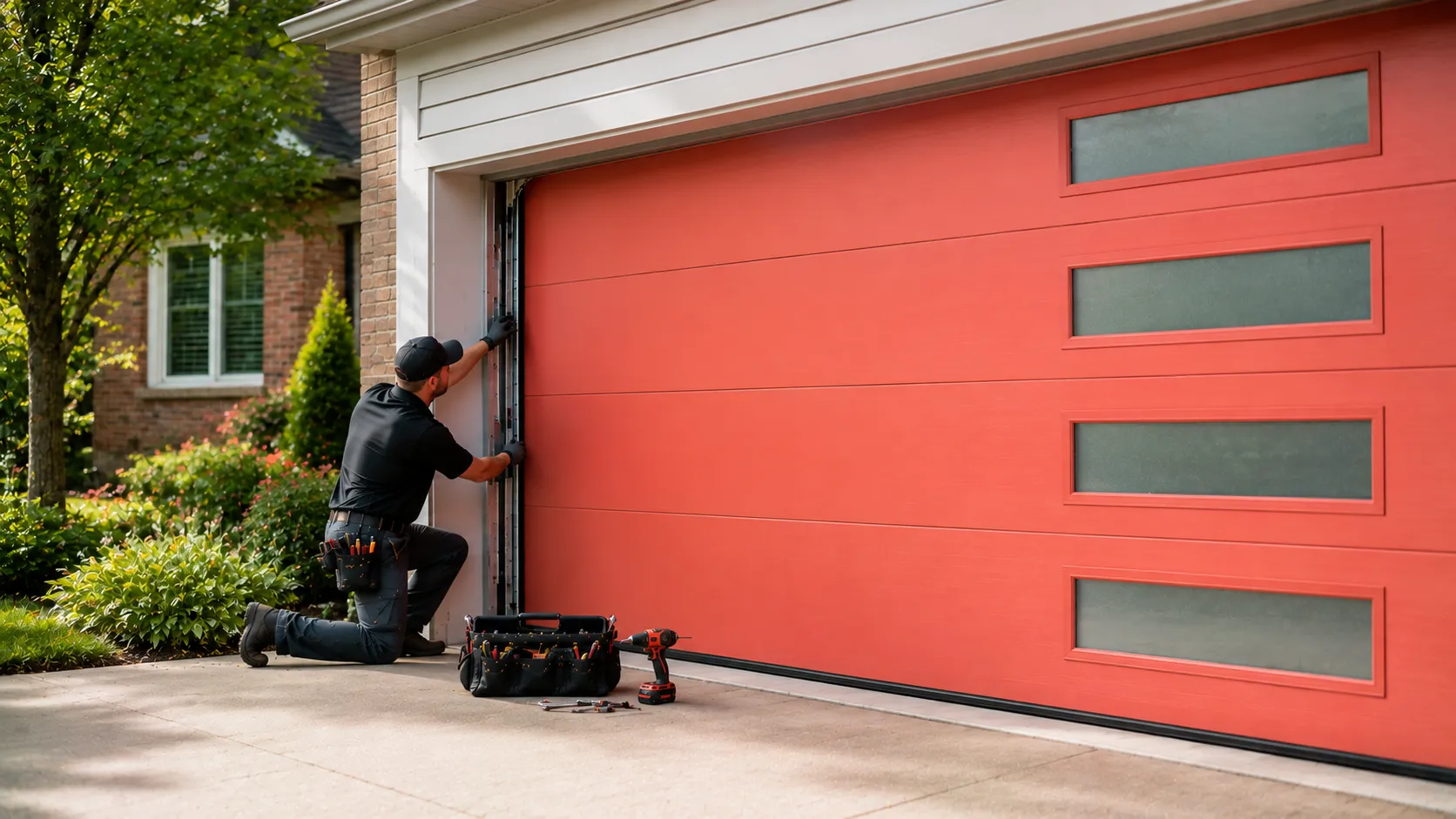
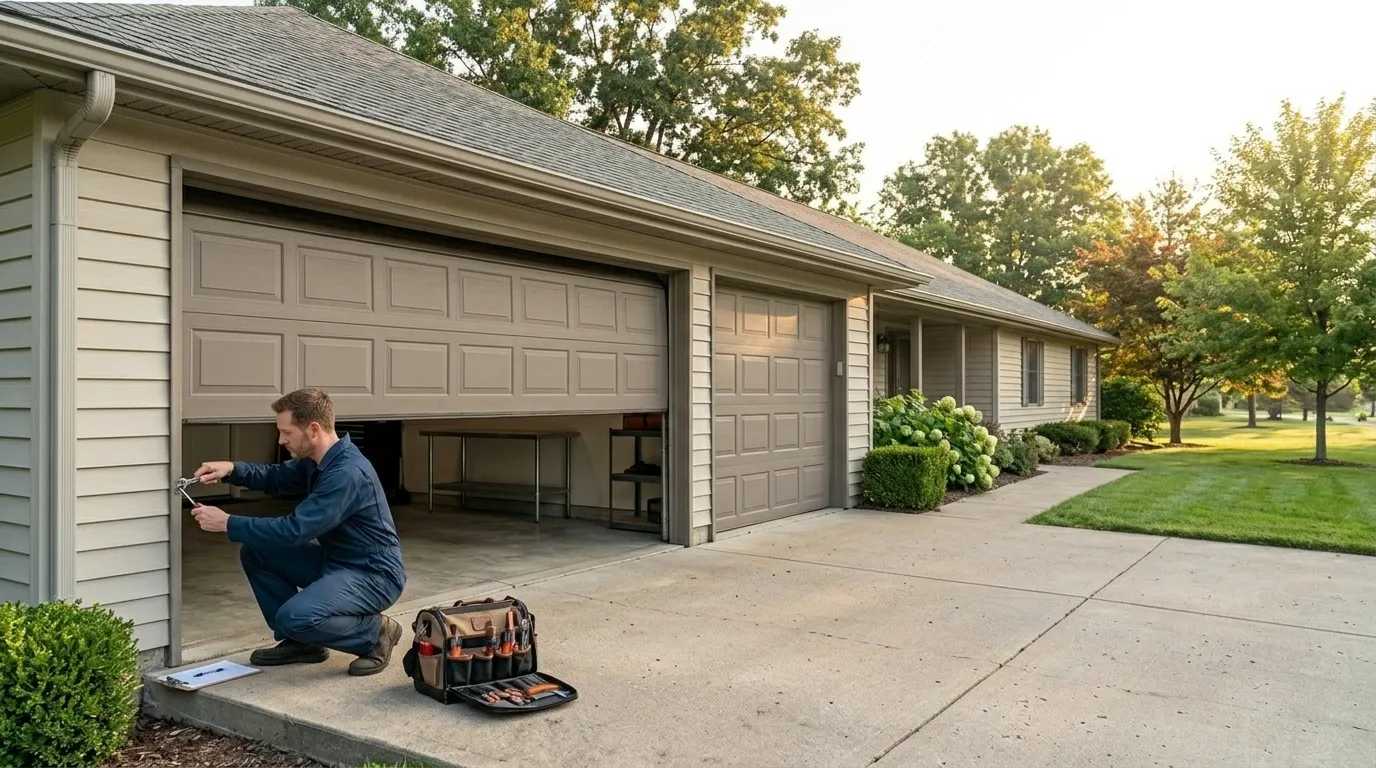
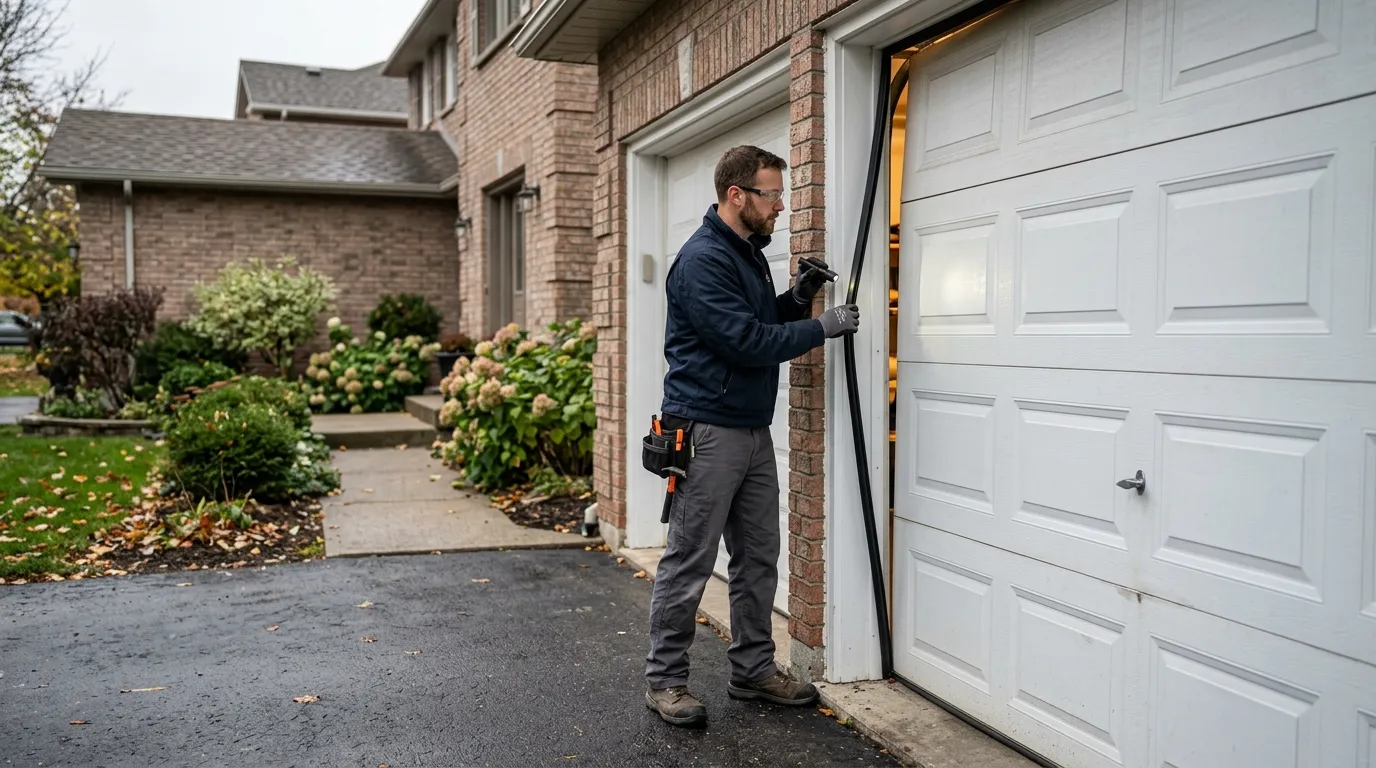
Chatham's houses mostly went up around 1995 - later than most of the service area. That build era decides the spring, opener, and panel you likely have. We cover the call from Springfield.
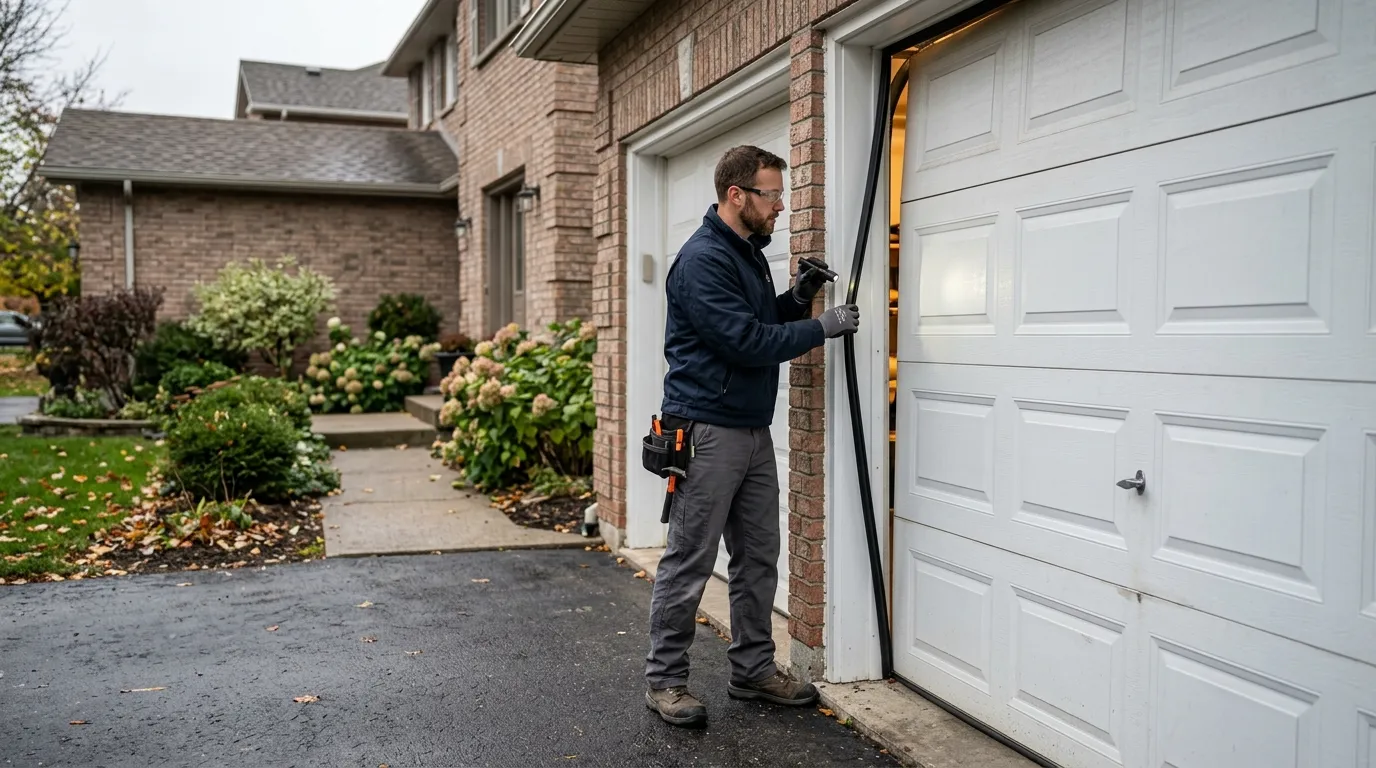
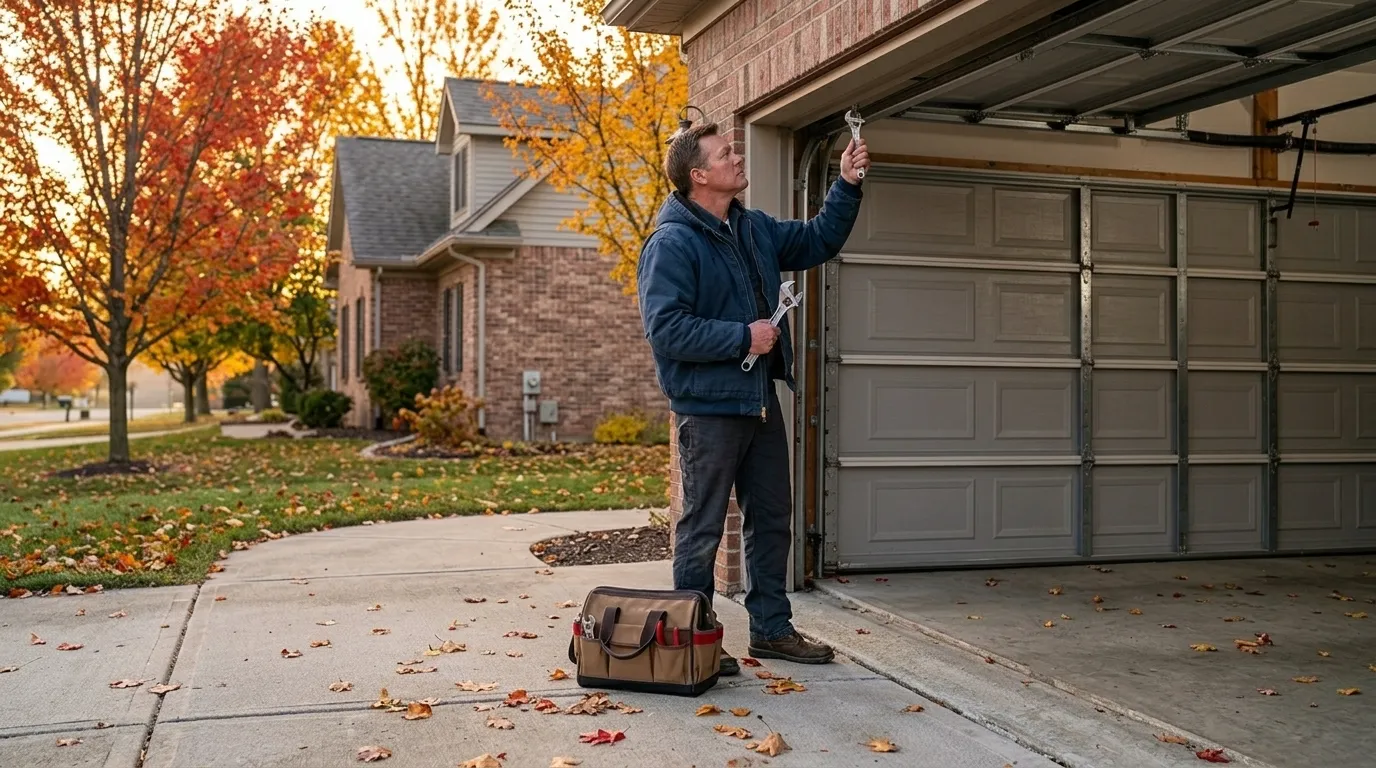
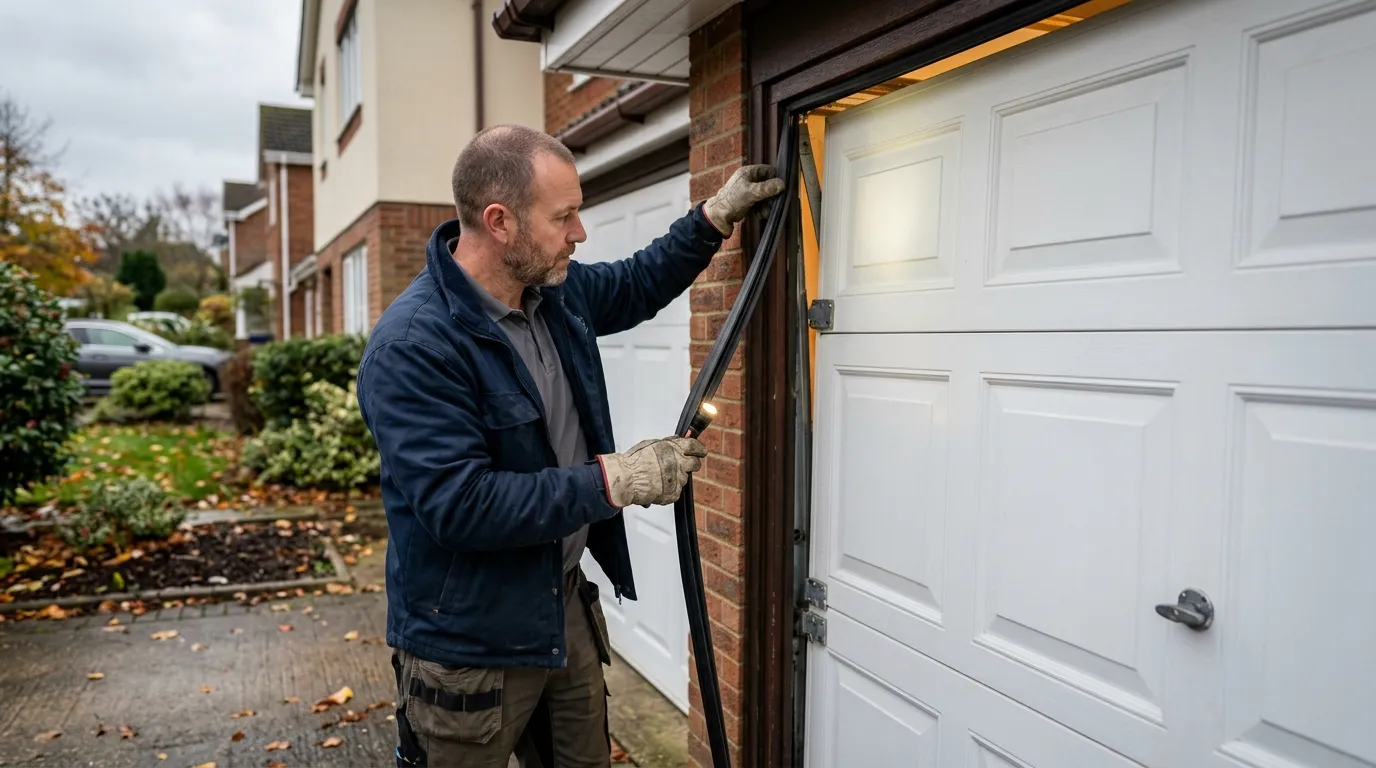
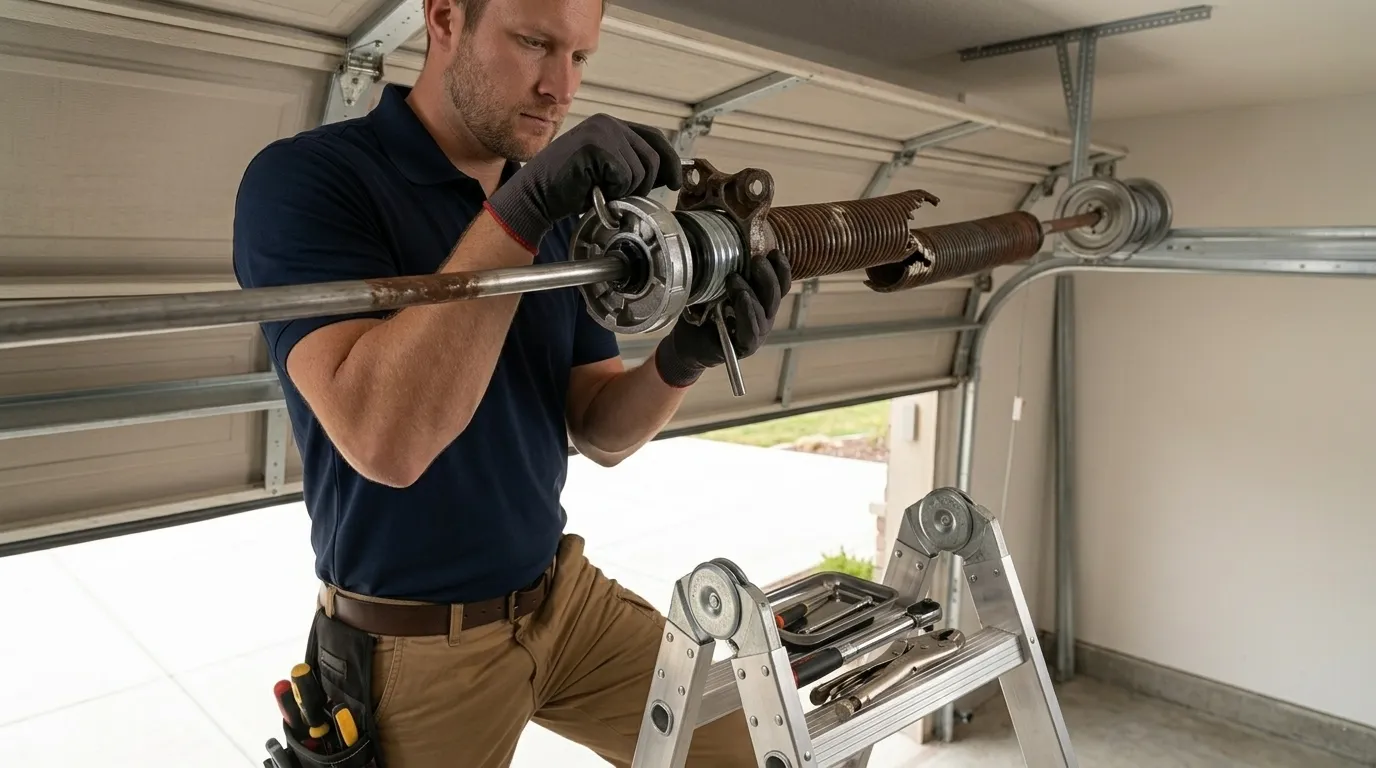
Chatham's housing stock mostly went up around 1995, a solid two decades after the older sections of Springfield were filling in between 1957 and 2002. That's late enough that the standard door specified in nearly every build here was a steel raised-panel unit on a torsion spring, not the older extension-spring, wood-panel setups you still find in the earlier parts of the service area. It also means the opener that came with the house was already required to carry a photo-eye safety sensor pair - federal law made that mandatory in 1993, so a Chatham garage built in 1995 had it from day one. When we get a call from Chatham, the fault is usually one of three things: a torsion spring that's fatigued after two-plus decades of cycles, a photo-eye sensor knocked out of alignment (often from a bump or a shelf installed too close to the track), or a roller and hinge set that's just worn out from age. The winters here are cold enough that hardened grease and stiff cables show up as a slow, groaning door before they show up as a dead one - catching that early saves the cable.
How Long It Takes
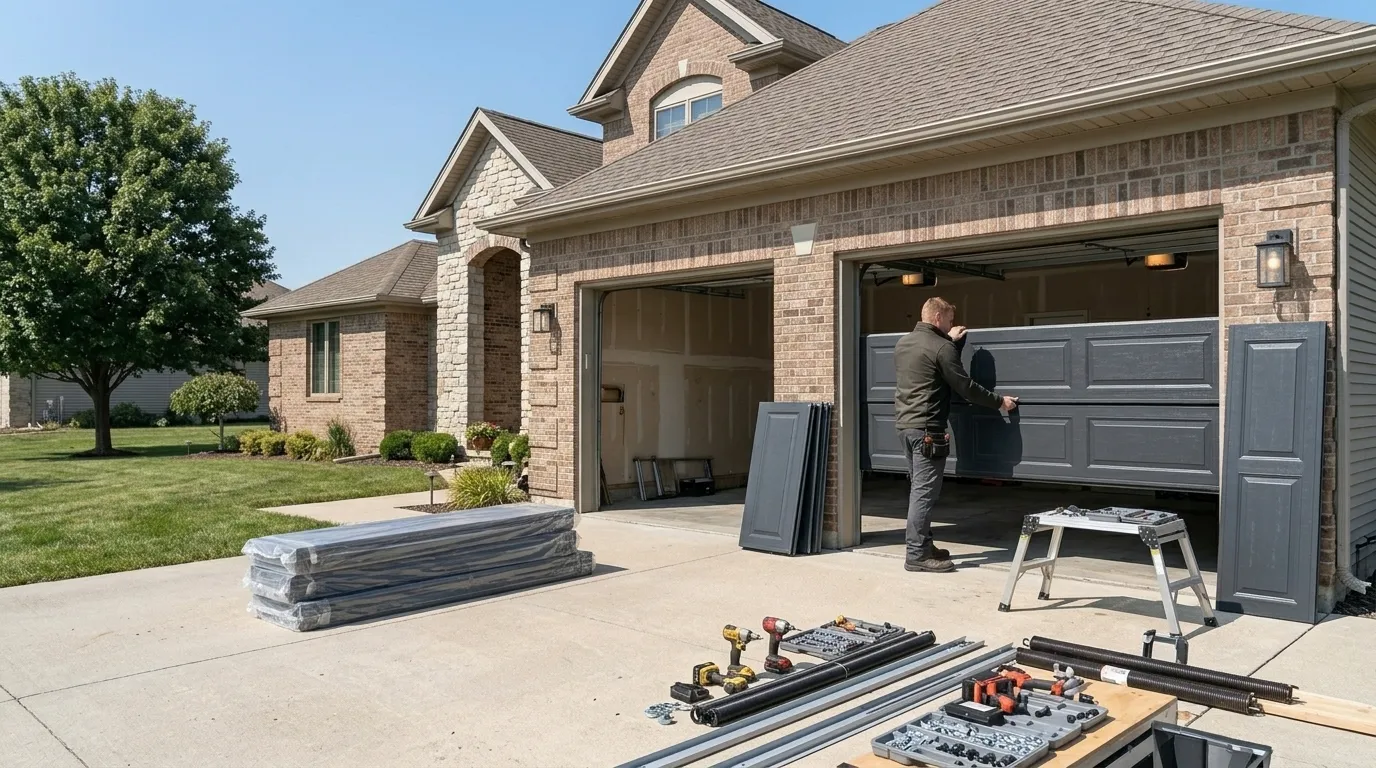
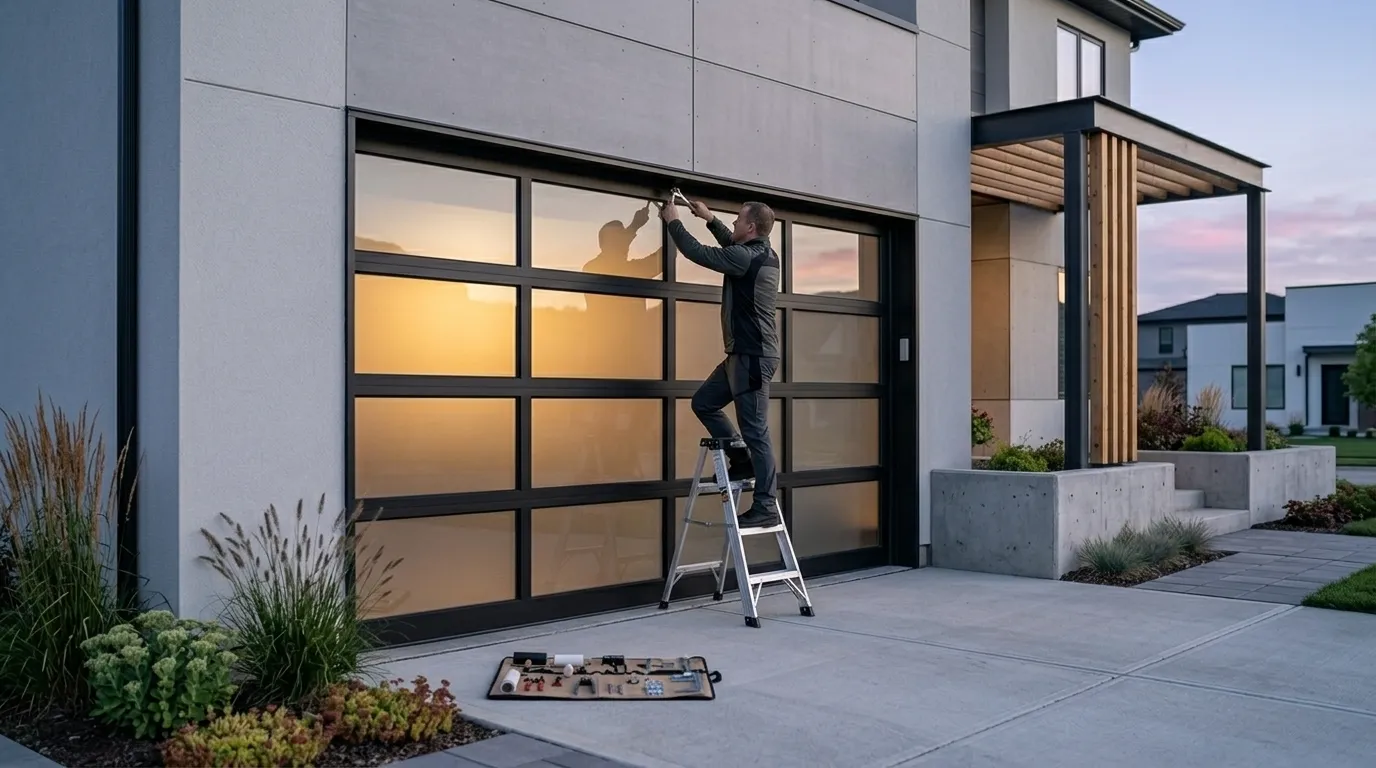
A spring swap or sensor realignment on a door from this era is usually a single visit - the hardware is standard, factory-original, and parts for a 1995-vintage steel door aren't hard to source. What adds time isn't the repair itself, it's the drive: Chatham sits about 8 miles out from Springfield, so figure that into when the truck can get there, especially if the call comes in outside a normal route. If a panel needs replacing because of dents or storm damage, that can run longer if the exact profile isn't a common stock item - we'll tell you straight if we're waiting on a part rather than guessing at a timeline.
Can You Do This Yourself
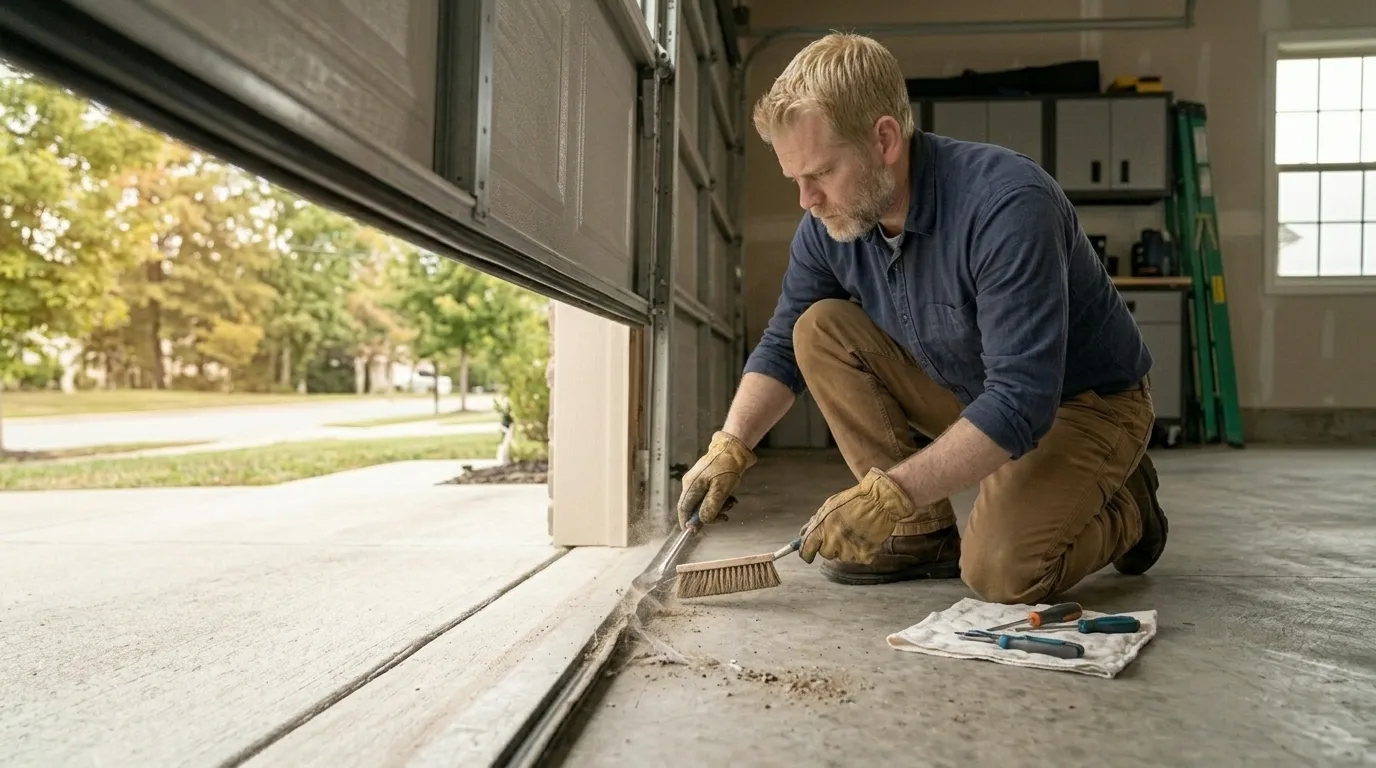
Some of this is genuinely fine to handle on your own. Realigning a photo-eye sensor, tightening loose hinge bolts, or lubricating rollers and the track are jobs most homeowners can do safely with basic tools. A torsion spring is not one of them. It's wound under enough tension to break a wrist or worse if the winding bars slip, and that's true whether the door is brand new or twenty-five years old. If your door won't move, or it moves but drops fast on one side, that's a spring or cable problem - stop opening it manually and get it looked at rather than working around it.
What You Pay
Chatham's median household income runs well above the rest of the service area's - over $106,000 against a service-area median of $79,008 - and homeowners here more often ask for the better-grade spring or a quieter belt-drive opener rather than the cheapest fix that gets the door moving again. We don't carry a separate price list for Chatham; the job costs what the parts and labor cost wherever it happens. With roughly 5,621 households in Chatham, it's a smaller pocket than most of the 14 areas we cover, but because the houses went in within a tight build window, the hardware is consistent from one address to the next, which usually means a more predictable quote than in an older, mixed-era neighborhood.
How it works
From “it’s stuck” to “it’s fixed”
01
Tell us what’s wrong
Describe the symptom - won’t open, loud bang, opener runs but the door won’t move.
02
On-site diagnosis
A technician tests the door under power and by hand and finds what actually failed.
03
Clear, up-front plan
You get the fix that’s needed and what drives the cost - before any work starts.
04
Repaired & tested
The repair is done, the door is set true and tested, and the work area left clean.
Serving Springfield, IL - tell us what your door’s doing and we’ll take it from there.
Why would a door from the 1990s already need a new spring?
Torsion springs are rated for a number of open-close cycles, typically somewhere around 10,000. A door used a few times a day for two to three decades will hit that range regardless of how well built the house was. Age of the house doesn't protect the spring - cycle count does.
Do Chatham garages have the newer safety sensors already?
Almost certainly yes. Federal law required photo-eye sensors on residential opener installs starting in 1993, and Chatham's housing stock mostly dates from around 1995, so the original opener would have had them built in. If yours doesn't respond to a hand wave under the door, the sensors are likely just knocked out of alignment.
Is a same-day repair guaranteed for Chatham?
We don't promise a response time for Chatham specifically - we run the job from Springfield, about 8 miles away, and timing depends on the day's route. We'll give you a real window when you call rather than a number that isn't ours to promise.
Will a repair cost more here than in Springfield?
The parts and labor rates don't change by town. What sometimes changes is the ask - Chatham's median household income is noticeably higher than the service area average, and some homeowners here opt for a better-grade spring or a quieter opener rather than the minimum fix.
Ready to get your garage door sorted?
Tell us what it’s doing and where you are in Springfield - we’ll take it from there.